Security Solutions for Homes, Businesses & Fleet Management
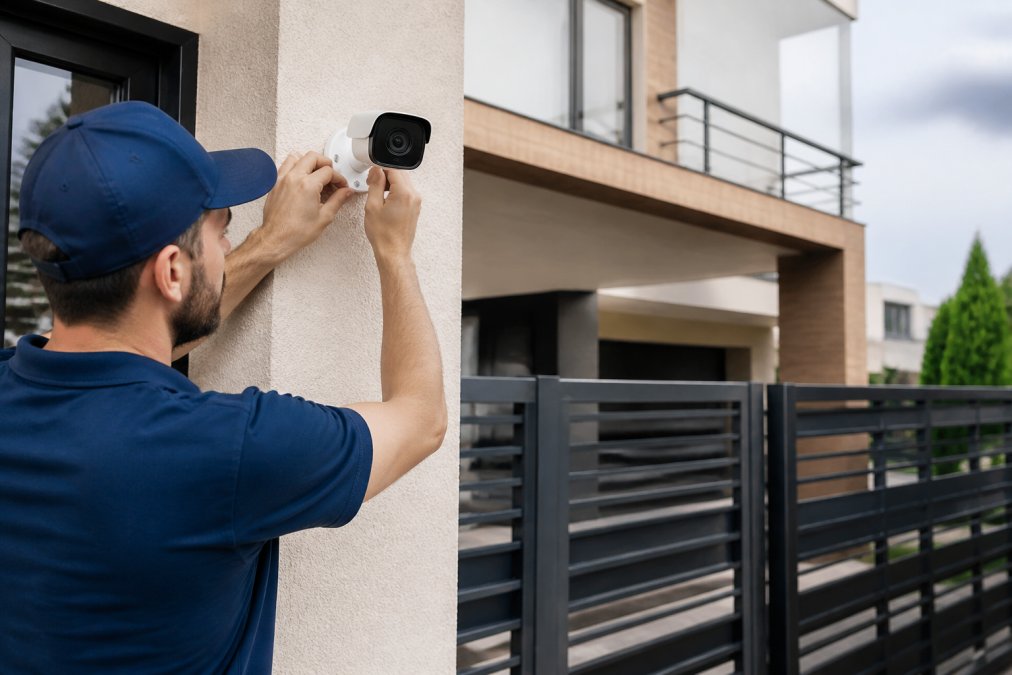
Security solutions for homes, businesses, and vehicles explained. Discover GPS tracking, access control, smart locks, and fleet management options. Learn.
Table of Contents
- Why Unified Security Solutions Matter Across Every Property Type
- Residential Smart Lock Security Benefits for Modern Homeowners
- Commercial Access Control Installation: What Businesses Need to Know
- Fleet Management GPS Tracking Systems and Vehicle Security
- Cybersecurity for Connected Vehicle Fleets
- Insurance Premium Reduction Through Verified Security Upgrades
- Comprehensive Security Solutions: Unified Dashboard Management
- How to Choose a Professional Locksmith and Security Provider
- Frequently Asked Questions
Last Updated: August 26, 2026
Why Unified Security Solutions Matter Across Every Property Type
Security gaps don't stay isolated. A vulnerability in your vehicle fleet can expose your business operations. A weak commercial entry point can compromise the residential property attached to it. At Lock it All Locksmithing, we see this pattern repeatedly: property owners who treat home, business, and vehicle security as three separate problems end up with three separate weak points.
Comprehensive security solutions for homes, businesses, and vehicles work best when they're designed as a connected system rather than a patchwork of unrelated products. A unified approach means your access control data, GPS-enabled vehicle monitoring, and residential smart locks all feed into a single picture of who has access to what, and when.
Treating these layers as one ecosystem rather than three separate line items is how serious property owners manage risk at scale.
Residential Smart Lock Security Benefits for Modern Homeowners
Most break-ins exploit the simplest entry: an unlocked door, a copied key, or a lock that hasn't been rekeyed after a tenant change. Residential smart locks address all three with a single hardware upgrade.
Smart locks eliminate physical key duplication risk entirely. Access is granted through PIN codes, key fobs, or mobile credentials, each of which can be revoked instantly. When you move into a property, you have no way of knowing how many copies of the original key exist. Upgrading to a smart lock solves this permanently.
Smart Lock Features That Actually Reduce Risk
The features worth paying attention to aren't the flashy ones. Auto-lock timers, access logs, and remote arm/disarm capability do more real-world work than voice assistant integration.
- Access logs: Every entry and exit is timestamped, useful for verifying contractor access and producing incident records.
- Temporary credentials: Grant time-limited access to guests or service workers without issuing a physical key.
- Remote access: Lock or unlock from anywhere via mobile app.
- Tamper alerts: Automated notifications trigger if the lock is manipulated or forced.
- Integration with broader security systems: Smart locks that connect with alarm systems and video surveillance create a complete entry-point record.
A common mistake is buying a smart lock without having a professional verify the door frame and deadbolt alignment. A sophisticated lock on a poorly fitted door frame provides less protection than a basic deadbolt installed correctly.
Commercial Access Control Installation: What Businesses Need to Know
Commercial access control installation is a different discipline from residential lock work. The stakes are higher, the compliance requirements are more specific, and the failure modes are more consequential. A business that loses control of who can enter its server room, cash handling area, or after-hours spaces faces significant liability exposure.
The core function of a commercial access control system is to replace static physical keys with dynamic, auditable credentials. Card readers, key fobs, PIN pads, and biometric scanners all serve this function, but the right choice depends on your threat model, staff size, and how often your access roster changes.
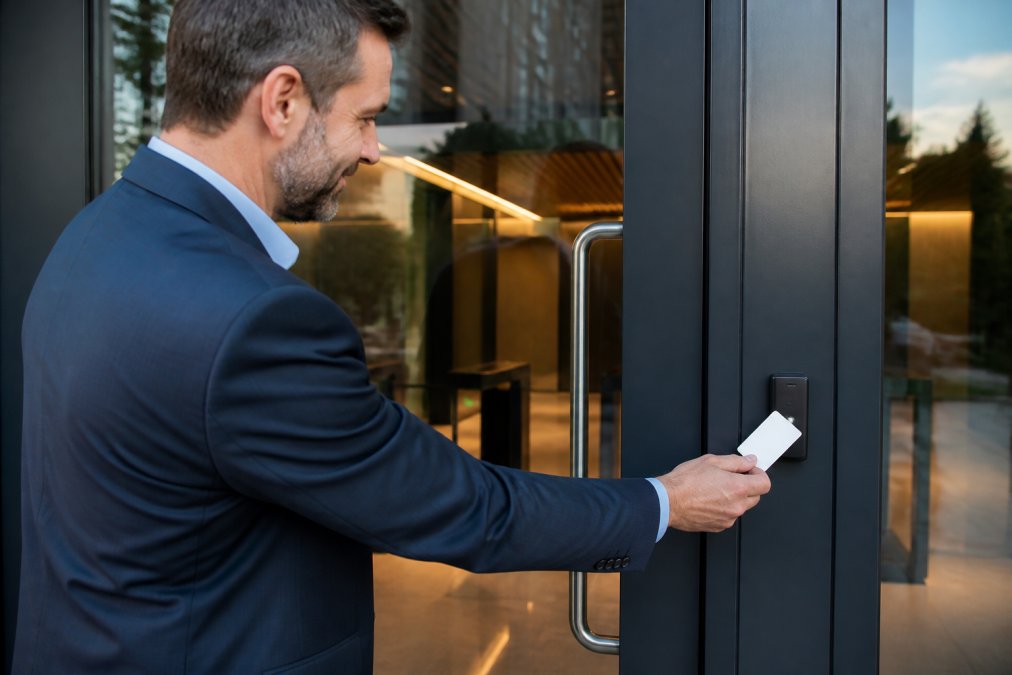
According to NIST guidelines on physical access control systems, layered credential systems that combine something you have (a card) with something you know (a PIN) significantly reduce unauthorized entry risk compared to single-factor systems.
Choosing the Right Access Control Setup for Your Business Size
The right setup scales with operational complexity, not just headcount.
| Business Size | Recommended System Type | Key Consideration |
|---|---|---|
| 1-10 employees | Standalone keypad or smart lock | Low credential management overhead |
| 10-50 employees | Card reader with cloud management | Remote user provisioning, audit logs |
| 50-200 employees | Multi-door access control platform | Zone-based permissions, integration with HR |
| 200+ employees | Enterprise access control with API | Full telematics integration, compliance reporting |
Small businesses often underinvest here. A single keypad with a shared code that never changes is not access control. Cloud-based management platforms solve this by revoking user credentials centrally the moment someone's employment ends, with no locksmith call required.
Fleet Management GPS Tracking Systems and Vehicle Security
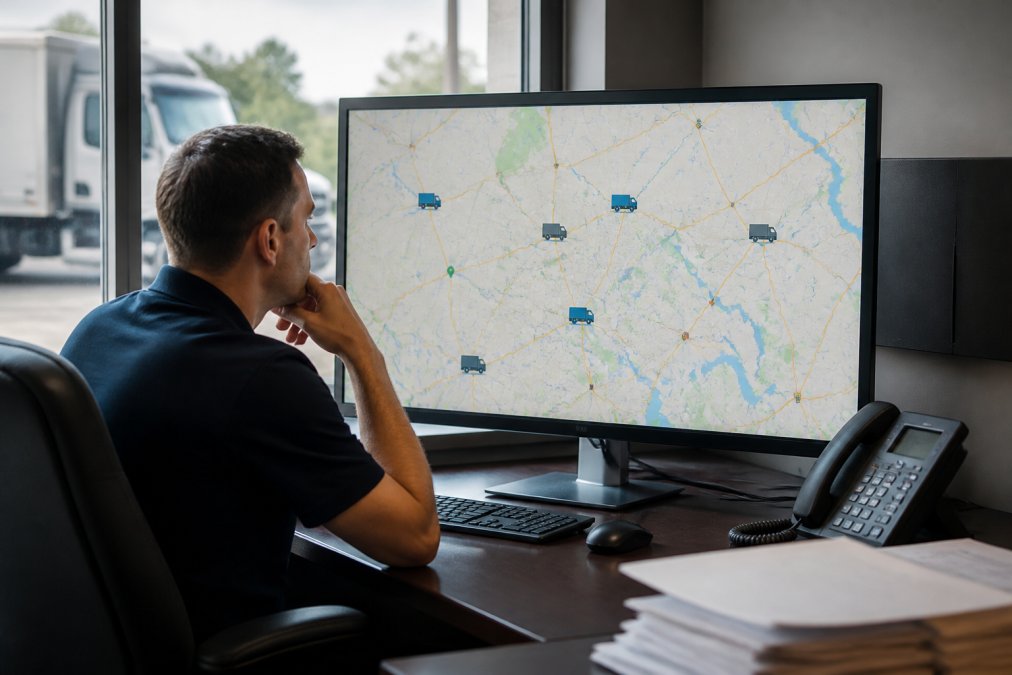
Fleet management security is where operational efficiency and physical asset protection converge. GPS-enabled tracking systems show you where your vehicles are and generate data-driven insights into driver behavior, route accuracy, fuel consumption, and maintenance needs that directly affect your bottom line.
Real-time monitoring means you know when a vehicle leaves a designated zone, when it's being driven outside authorized hours, and when it's stationary for longer than expected.
Driver Behavior Monitoring and Dash Cam Integration
Driver behavior monitoring is one of the highest-return investments in commercial vehicle protection. Hard braking, rapid acceleration, sharp cornering, and speeding events are all captured by modern telematics hardware. Fleets that act on this data see measurable reductions in collision rates and maintenance costs over time.
Dash cam integration adds a second layer. Forward-facing and cabin-facing cameras provide incident documentation that resolves insurance disputes and identifies coaching opportunities. AI-powered dash cams now flag distracted driving events in real time, triggering automated notifications to fleet managers.
A practical implementation approach:
- Deploy GPS hardware across all vehicles before adding dash cams
- Establish baseline driver behavior scores during the first 30 days
- Introduce dash cams with a clear policy communicated to drivers in advance
- Review scorecards weekly for the first quarter
- Use coaching sessions tied to specific recorded events
Driver behavior data is only useful if someone acts on it consistently. The hardware is the easy part; turning data into coaching is where most programs stall.
Theft Prevention, Asset Recovery, and Immobilizers
Vehicle theft is a persistent operational risk for commercial fleets. GPS-enabled tracking improves recovery rates, but combining tracking with immobilizers creates a significantly stronger deterrent. An immobilizer prevents the engine from starting without the correct credential, making a stolen vehicle effectively inoperable even if the GPS unit is disabled.
Pairing a GPS tracking platform with geofence alerts and automated notifications gives you both deterrence and recovery capability. When a vehicle crosses a perimeter boundary outside authorized hours, the alert reaches a fleet manager immediately.
Cybersecurity for Connected Vehicle Fleets
Connected car technology has transformed vehicle fleets into networked endpoints, and networked endpoints can be attacked. Modern fleet telematics hardware communicates over cellular networks, and cloud-based management platforms are software systems with login credentials, API access, and user permission structures. Every one of those elements is an attack surface.
A compromised fleet management account gives an attacker real-time vehicle locations, driver schedules, and potentially the ability to trigger remote access functions. According to CISA guidance on transportation sector cybersecurity, transportation and logistics organizations face increasing targeting from threat actors seeking operational disruption.
Practical cybersecurity controls for connected vehicle fleets:
- Multi-factor authentication on all fleet management platform accounts
- Role-based access control so dispatchers, drivers, and administrators have only required permissions
- Regular credential audits to remove access for former employees and contractors
- Hardware firmware updates applied on schedule
- Incident response plan that includes vehicle location data as a protected asset class
Insurance Premium Reduction Through Verified Security Upgrades
Security investments pay back through more than loss prevention. Verified security upgrades across residential, commercial, and fleet assets create documented risk reduction that insurers recognize and price accordingly.
For commercial properties, access control installation with audit logs demonstrates to underwriters that unauthorized entry is both deterred and detectable. For vehicle fleets, GPS tracking with driver behavior monitoring provides evidence of active risk management. For residential properties, smart lock installation and alarm system integration reduce break-in probability.
The key word is "verified." Insurers respond to documented, professionally installed systems. A professional installation record, system certification, and ongoing monitoring subscription all contribute to the documentation package that supports a premium reduction request.
According to Insurance Information Institute guidance on home security discounts, many insurers offer discounts for professionally monitored alarm systems and certified security upgrades. The discount range varies by carrier and coverage type, but the principle applies across residential, commercial, and fleet insurance lines.
Comprehensive Security Solutions: Unified Dashboard Management
The practical challenge with multi-layer security is management overhead. A homeowner who also runs a small business with a vehicle fleet is potentially managing three separate platforms, three sets of alerts, and three different vendor relationships. Unified dashboard management becomes a genuine operational advantage.
Comprehensive security solutions for homes, businesses, and vehicles are most effective when they surface into a single interface. Modern platforms like Alarm.com for Business offer cross-property management that spans commercial security, access control, and video surveillance under one login. Pairing this with a fleet telematics platform that supports API integration creates a unified view of your entire security posture.
The practical checklist for unified dashboard implementation:
- Identify all current security systems and their management interfaces
- Audit which systems support API or third-party integration
- Select a primary management platform that covers the majority of your assets
- Configure automated notifications for all perimeter and access events
- Establish a single incident reporting workflow that covers all property types
- Review the unified dashboard weekly during the first 90 days
Remote access capability is the thread that connects all of this. The ability to arm or disarm a commercial alarm, check a vehicle's location, and verify a smart lock event from a single mobile interface is what makes unified management practical.
How to Choose a Professional Locksmith and Security Provider
Most people search for a locksmith only when something has already gone wrong. Choosing a security provider before you need one is the professional approach.
The criteria that matter:
Licensing and verification. Locksmith licensing requirements vary by state. In Tennessee, verify that any provider you engage holds current credentials and carries liability insurance. Ask for documentation before work begins.
Service scope. A provider who handles automotive, residential, and commercial work brings a unified perspective that a specialist cannot. When your car key programming, commercial access control installation, and home lock rekeying all come from the same team, coordination overhead disappears.
Transparency on outcomes. A reputable provider will tell you upfront what they can and cannot do. Vague answers about capability are a warning sign.
Emergency response. After-hours lockout response is a real test of a provider's operational reliability. Ask about response times and whether emergency rates differ from standard service rates before you need the answer at 2 a.m.
Lock it All Locksmithing covers all three domains: automotive key replacement and key fob programming, residential lock rekeying and smart lock installation, and commercial access control. For vehicle owners with modern key systems, the team handles advanced programming without requiring a dealership visit. Reach the team directly at 615-810-7304.
According to Associated Locksmiths of America consumer guidance on choosing a locksmith, consumers should always request a written estimate before work begins and verify that the provider's name, address, and license number appear on any invoice.
| Security Layer | Core Upgrade | Primary Benefit | Professional Service Required |
|---|---|---|---|
| Residential | Smart lock installation | Eliminate key duplication risk | Yes, for proper frame alignment |
| Commercial | Access control with audit logs | Auditable credential management | Yes, for compliance documentation |
| Vehicle fleet | GPS telematics + dash cams | Driver behavior data + theft recovery | Yes, for hardware integration |
| Cross-platform | Unified dashboard management | Single-pane visibility across all assets | Recommended for initial setup |
The real difference between a security provider and a locksmith who just cuts keys comes down to whether they understand the system you're building, not just the hardware they're installing.
=== FAQ ANSWERS (audit these too, same rules) ===
[1] Q: What are the essential components of a comprehensive security system? A: A complete security setup covers three layers: physical access control (locks, deadbolts, smart locks), surveillance (cameras, dash cams), and monitoring or alerting systems (GPS tracking, alarm panels, mobile notifications). For businesses and fleets, telematics and driver behavior tools add a fourth operational layer. Each layer addresses a different risk, and gaps in any one of them create vulnerabilities that the others cannot compensate for on their own.
[2] Q: How do GPS tracking and dash cams improve fleet security? A: GPS-enabled tracking gives fleet managers real-time visibility into every vehicle's location, route accuracy, and idle time. Dash cams add a visual record of incidents, which supports insurance claims and driver coaching. Combined, these tools reduce unauthorized vehicle use, speed up theft recovery, and generate the data-driven insights operators need to cut fuel waste and maintenance costs. Most telematics platforms also send automated notifications when a vehicle leaves a designated geofence zone.
[3] Q: What should I look for in a professional locksmith and security provider? A: Verify that the provider carries liability insurance, and can document experience with both residential and commercial systems. Ask whether they handle modern vehicle key programming and access control installation, not just traditional lock work. A credible provider will give you a clear scope of work before starting, charge transparently, and stand behind their labor. Avoid providers who cannot explain their process or who pressure you into unnecessary hardware upgrades on the spot.
[4] Q: How does fleet management security differ from standard commercial security? A: Commercial security protects fixed assets: doors, server rooms, inventory. Fleet security focuses on mobile assets that move across public roads and change location constantly. That requires GPS tracking, ELD compliance tools, driver behavior monitoring, and theft recovery systems rather than perimeter alarms. Fleet security also involves regulatory compliance under FMCSA rules for commercial vehicles, adding a layer of documentation and reporting that static commercial systems do not require.
Frequently Asked Questions
[1] Q: What are the essential components of a comprehensive security system?
A: A complete security setup covers three layers: physical access control (locks, deadbolts, smart locks), surveillance (cameras, dash cams), and monitoring or alerting systems (GPS tracking, alarm panels, mobile notifications). For businesses and fleets, telematics and driver behavior tools add a fourth operational layer. Each layer addresses a different risk, and gaps in any one of them create vulnerabilities that the others cannot compensate for on their own.
[2] Q: How do GPS tracking and dash cams improve fleet security?
A: GPS-enabled tracking gives fleet managers real-time visibility into every vehicle's location, route accuracy, and idle time. Dash cams add a visual record of incidents, which supports insurance claims and driver coaching. Combined, these tools reduce unauthorized vehicle use, speed up theft recovery, and generate the data-driven insights operators need to cut fuel waste and maintenance costs. Most telematics platforms also send automated notifications when a vehicle leaves a designated geofence zone.
[3] Q: What should I look for in a professional locksmith and security provider?
A: Verify that the provider carries liability insurance, and can document experience with both residential and commercial systems. Ask whether they handle modern vehicle key programming and access control installation, not just traditional lock work. A credible provider will give you a clear scope of work before starting, charge transparently, and stand behind their labor. Avoid providers who cannot explain their process or who pressure you into unnecessary hardware upgrades on the spot.
[4] Q: How does fleet management security differ from standard commercial security?
A: Commercial security protects fixed assets: doors, server rooms, inventory. Fleet security focuses on mobile assets that move across public roads and change location constantly. That requires GPS tracking, ELD compliance tools, driver behavior monitoring, and theft recovery systems rather than perimeter alarms. Fleet security also involves regulatory compliance under FMCSA rules for commercial vehicles, adding a layer of documentation and reporting that static commercial systems do not require.
Protecting your home, business, and vehicle fleet with disconnected point solutions leaves gaps that compound over time. Lock it All Locksmithing delivers automotive, residential, and commercial security services under one roof, from expert car key replacement and key fob programming to commercial access control installation and residential smart lock upgrades. Call 615-810-7304 to get started with a provider who understands the full security picture, not just the lock in front of them.
Why Nashville drivers choose Lock it All Locksmithing
We are a locally owned, licensed and insured mobile locksmith serving Nashville and the surrounding Middle Tennessee communities. You speak directly with the technician who does the work, get an honest price before we dispatch, and we arrive in a fully stocked service vehicle so most jobs finish in a single visit — usually within 20 to 45 minutes of arriving. No towing, no dealership appointment, no surprise fees.
How the visit works
- Tell us the details: call, text or send the quote form with your vehicle's year, make and model, or a description of your lock problem.
- Get an exact price: we quote parts, cutting, programming and travel up front.
- We come to you: our mobile workshop meets you at home, work or roadside.
- Done on the spot: keys are cut, programmed and tested with you before we leave.
Areas we serve
Nashville, Murfreesboro, Franklin, Hendersonville, Smyrna, La Vergne, Antioch, Brentwood, Mount Juliet, Lebanon and the surrounding towns across Middle Tennessee.
What our customers say
- "Fast, professional and honest — had a new key for my truck programmed in under half an hour." — Adrian Fiorito, 5 stars.
- "Great service and fair pricing. Came out same day and solved the problem right away." — George Yacoub, 5 stars.
- "Very knowledgeable and friendly. Highly recommend for anyone needing a locksmith in Nashville." — Jan Daoud, 5 stars.
Rated 5 stars across 100+ verified Google reviews. Call or text 615-810-7304 or email info@lia-locksmith.com.