Residential Lock Rekeying Costs 2026: Full Guide
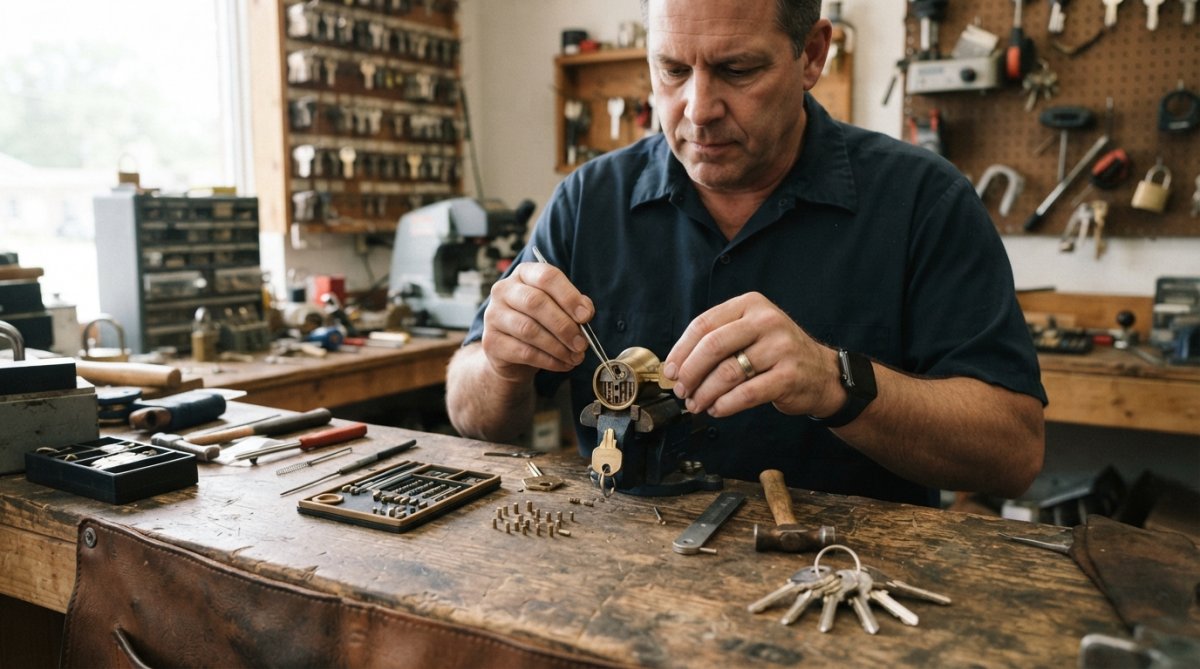
Lock rekeying costs in 2026 depend on lock type, cylinders, and service fees. Get a transparent breakdown and find out what to expect. Call for a quote.
Table of Contents
- What Residential Lock Rekeying Costs Cover in 2026
- Understanding the Locksmith Service Call Fee
- Rekeying vs Replacing Locks: Which Makes More Sense?
- How to Identify Your Lock Type Before Calling a Locksmith
- DIY Lock Rekeying Kits: Savings vs. Risk
- Smart Locks, Master Key Systems, and Lock Rekeying Costs
- Warranty, Insurance, and Home Security Implications
- Conclusion
Last Updated: August 25, 2026
What Residential Lock Rekeying Costs Cover in 2026
Lock rekeying costs consist of two components: the locksmith's service call fee and the per-cylinder labor charge for re-pinning each lock. Residential lock rekeying reconfigures the internal pin tumblers inside a lock cylinder so that only a new key will operate it. The existing hardware stays in place; only the key pins inside the tumbler mechanism are changed.
Cost Per Cylinder vs. Cost Per Door
Most locksmiths price rekeying work by the cylinder, not the door. A standard entry door with a deadbolt and door knob lock has two cylinders. A double-cylinder deadbolt (keyed on both sides) counts as two cylinders in one lock body. Before calling for an estimate, count your cylinders, not your doors.
High-security cylinders with restricted keyways or security pins take longer to re-pin and typically carry a higher per-cylinder charge. Standard residential locks with common keyways are the fastest and least expensive to service.
| Lock Type | Cylinders per Unit | Relative Rekeying Complexity |
|---|---|---|
| Standard deadbolt | 1 | Low |
| Double-cylinder deadbolt | 2 | Low-Medium |
| Door knob/lever lock | 1 | Low |
| High-security cylinder | 1 | High |
| Mortise lock | 1-2 | Medium-High |
| Padlock | 1 | Low |
Contact Lock it All Locksmithing directly for current pricing on your specific lock configuration, since rates vary based on cylinder count, lock brand, and service timing.
Factors That Affect Your Final Bill
Lock brand and keyway: Proprietary or restricted keyways require brand-specific key pins and follower tools. Some high-security manufacturers only authorize certified dealers to rekey their cylinders, limiting your locksmith options and increasing labor rates.
Number of cylinders: The per-cylinder charge multiplies. A five-door home with a deadbolt and knob lock on each entry door has ten cylinders.
Service timing: Standard business hours carry the lowest rates. Evening, weekend, and holiday calls trigger surcharges that substantially increase the total.
Travel distance: Many locksmiths apply a travel fee on top of the base service call fee, particularly in rural or suburban areas.
Key cutting: If you need new keys cut as part of the rekeying service, key duplication charges apply per key.
Understanding the Locksmith Service Call Fee
The service call fee is the flat charge a locksmith applies just for arriving at your location, separate from labor or hardware costs. This fee covers the locksmith's travel time, fuel, and administrative overhead of dispatching a technician.
A common mistake is comparing providers on per-cylinder rates alone without accounting for service call fees. A locksmith with a low per-cylinder rate and a high service call fee may cost more overall than one with a slightly higher per-cylinder rate and lower dispatch charge. Always ask for both figures when requesting an estimate.
According to the Angi cost guide for locksmith services, service call fees vary significantly by region and provider, so getting itemized quotes is the only reliable way to compare total costs.
After-Hours and Emergency Surcharges
Emergency locksmith calls outside standard business hours carry an after-hours surcharge that can represent a significant portion of the total bill. The surcharge typically applies after 6 p.m. on weekdays, all day on weekends, and on federal holidays.
If your situation allows flexibility, scheduling rekeying during standard business hours reduces your total cost considerably. Always confirm whether the service call fee applies even if the work cannot be completed, and what the policy is if additional issues are discovered on site.
Rekeying vs Replacing Locks: Which Makes More Sense?
Rekeying changes only the key pins inside the lock cylinder. The lock body, strike plate, and door hardware remain unchanged. It costs less and makes sense when your existing hardware is in good condition and you simply need to invalidate old keys.
Replacing means removing the entire lock assembly and installing new hardware. It costs more but gives you the opportunity to upgrade your security grade, change the lock style, or address worn or damaged hardware that rekeying cannot fix.
As the ANSI/BHMA grading standards for residential door hardware outline, residential locks are graded 1 through 3, with Grade 1 offering the highest security. If your current locks are Grade 3 and you're upgrading to Grade 1, replacement is the only path.
When Rekeying Is the Right Call
Rekeying is the right call when:
- You've moved into a new home and want to invalidate the previous owner's keys
- A tenant has moved out and you need key control restored
- A key has been lost or stolen but the lock itself is undamaged
- You want all exterior locks to operate on a single key
- Your lock hardware is in good condition and meets your security standards
When Full Hardware Replacement Wins
Replacement makes more sense when:
- The lock cylinder or mechanism is worn, damaged, or malfunctioning
- You're upgrading from a lower to a higher security grade
- You want to add a deadbolt to a door that currently only has a knob lock
- You're switching to smart lock technology that requires different hardware
- The door frame or strike plate has been compromised and needs simultaneous repair
How to Identify Your Lock Type Before Calling a Locksmith
Knowing your lock type before you call saves time, prevents miscommunication, and gives you a more accurate estimate.
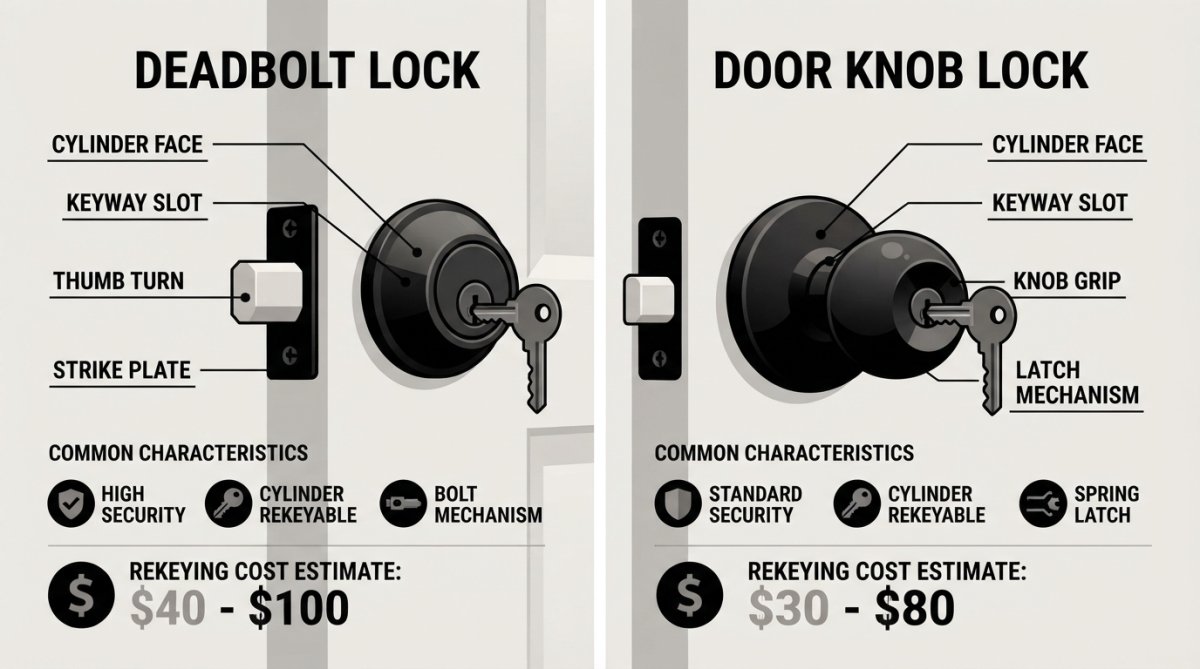
Deadbolt: A rectangular bolt that extends into the door frame. Single-cylinder deadbolts have a keyway on the exterior and a thumb turn on the interior. Double-cylinder deadbolts have a keyway on both sides.
Door knob or lever lock: The lock cylinder is integrated into the knob or lever handle itself. The keyway is visible on the exterior face of the knob.
Mortise lock: A rectangular lock body that sits inside a pocket cut into the door edge, identifiable by a large rectangular faceplate on the door edge.
Padlock: A portable, shackle-style lock. Rekeying is possible on many padlocks but depends on the brand and model.
High-security cylinder: Visually similar to a standard deadbolt or knob lock but identifiable by brand markings or manufacturer stamps on the cylinder face. These require brand-specific tools and pins to rekey.
If you're unsure what you have, photograph the lock face and the door edge faceplate before calling. A locksmith can usually identify the lock type from a photo and give you a more accurate quote.
DIY Lock Rekeying Kits: Savings vs. Risk
DIY rekeying kits are available for several popular residential lock brands and can reduce the cost of rekeying to the price of the kit itself, eliminating the service call fee and labor charges.
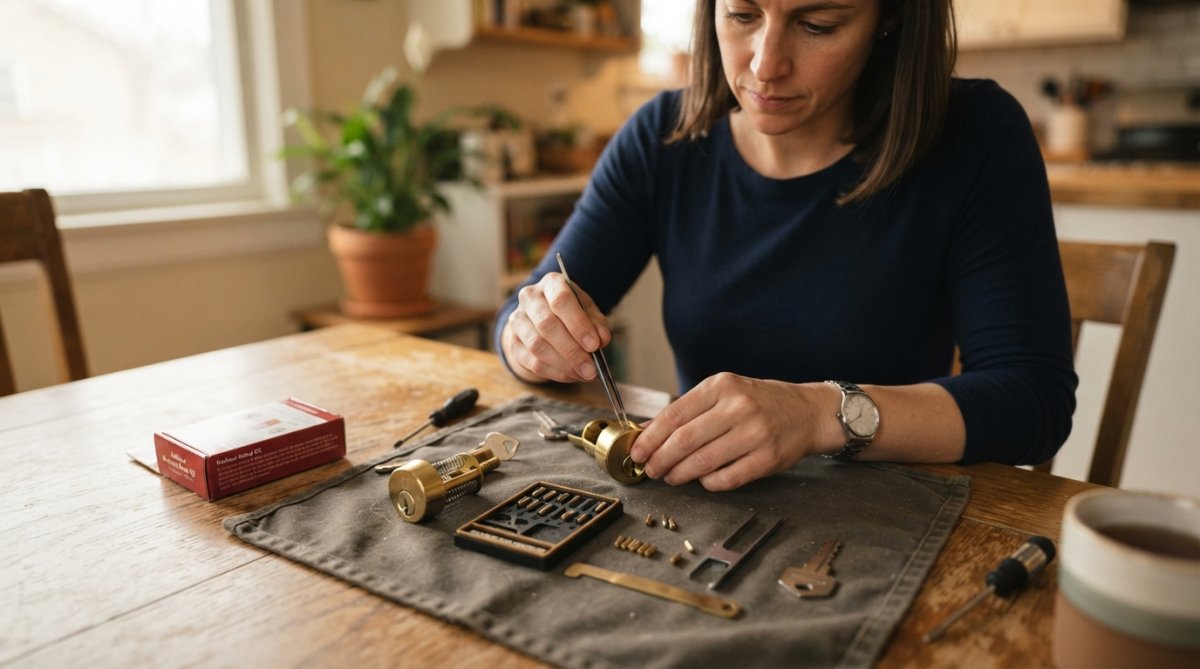
The process involves removing the cylinder from the lock body, using a follower tool to push out the existing key pins, inserting new pins matched to your new key, and reassembling the cylinder. Most kits include the follower tool, new key pins in multiple sizes, and instructions.
The process requires the correct kit for your specific lock brand and model. Key pins come in multiple sizes (typically measured in thousandths of an inch), and inserting the wrong size pin will result in a lock that either doesn't operate at all or operates with both the old and new key.
Common mistakes include using the wrong kit for the lock brand, dropping and losing small key pins during disassembly, inserting pins in the wrong order, and damaging the lock body during reassembly. For a single lock on a budget, DIY is worth attempting if you're mechanically comfortable and have the correct kit. For multiple locks, high-security cylinders, or any lock showing signs of wear, a professional locksmith is the more reliable choice.
Smart Locks, Master Key Systems, and Lock Rekeying Costs
Two scenarios consistently catch homeowners off guard when budgeting for lock rekeying costs: smart lock installations and master key systems.
Smart Lock Compatibility and Rekeying Limitations
Many smart locks use proprietary lock cylinders, electronic keypads, or Bluetooth/Z-Wave communication modules rather than conventional pin tumbler mechanisms. Some smart lock models include a physical key cylinder as a backup that can be rekeyed using standard methods. Others have no key cylinder at all.
For smart locks that do include a rekeyable cylinder, the process is the same as a standard deadbolt, but the lock body must be removed carefully to avoid damaging electronic components. Not all locksmiths have experience with smart lock hardware; confirm that the technician has worked with your specific brand before booking.
If you're transitioning from traditional locks to smart locks, the work involved is a full hardware replacement, not a rekey. According to the U.S. Department of Homeland Security's home security guidance, maintaining physical key backup options for smart lock systems is a recommended security practice, particularly for emergency access scenarios.
Master Key System Costs and Key Control
A master key system allows one master key to operate multiple locks, while individual locks each have their own unique change key. This is common in multi-unit residential properties and rental properties.
Setting up a master key system involves re-pinning every lock cylinder with both the individual change key pins and master wafer pins, which adds complexity and time to each cylinder. The per-cylinder cost for master key setup is higher than standard rekeying.
Restricted keyway systems prevent unauthorized key duplication at hardware stores, meaning new keys can only be cut by authorized dealers. This adds a per-key cost but significantly reduces the risk of unauthorized copies.
Warranty, Insurance, and Home Security Implications
Most residential lock manufacturers provide a limited warranty on their hardware. Rekeying performed by a professional locksmith using the manufacturer's approved pins and tools typically does not void this warranty. DIY rekeying may void the warranty if the lock is damaged during the process or if non-OEM pins are used.
From a homeowner's insurance perspective, your insurer may have specific requirements about the security grade of locks on entry doors. Some policies require Grade 1 deadbolts on all exterior entry points as a condition of coverage. If you're rekeying lower-grade hardware, you're maintaining existing coverage conditions. If a security upgrade is needed to meet policy requirements, rekeying won't satisfy that requirement; you'll need hardware replacement.
A home security assessment from a qualified locksmith can identify gaps in your current door hardware, strike plate installation, and lock grade before you commit to a rekeying or replacement project. As noted in the Insurance Information Institute's guidance on home security and insurance, documented security upgrades can sometimes support a conversation with your insurer about policy terms.
Lock rekeying is a security decision, not just a cost decision. Re-pinning a weak cylinder keeps your keys exclusive but doesn't make the lock stronger. If your residential security goals have changed, treat the rekeying appointment as an opportunity to evaluate the entire door hardware setup.
Most homeowners underestimate how quickly lock rekeying costs add up across a full property, especially when service call fees, after-hours surcharges, and multiple cylinders are factored in together. Lock it All Locksmithing provides transparent, itemized quotes for residential rekeying, covering everything from standard deadbolts to high-security cylinders and master key system setup across Tennessee. Call us at 615-810-7304 to get an accurate estimate for your specific situation before any work begins.
Frequently Asked Questions
Is it cheaper to rekey locks or replace them entirely?
Rekeying is almost always less expensive than full hardware replacement. When you rekey, a locksmith technician replaces only the key pins inside the lock cylinder, leaving the existing door hardware in place. Replacing a lock means purchasing new deadbolts, knobs, or levers plus paying for installation labor. If your current locks are in good condition and you simply need to void old keys, rekeying delivers the same security result at a fraction of the cost. Contact a locksmith for a specific quote based on your lock type and number of cylinders.
What factors influence residential lock rekeying costs?
Several variables move the final price: the number of lock cylinders being rekeyed, the lock brand and keyway type, whether you have standard or high-security cylinders, the service call fee and any travel fee, and whether the work is done during regular business hours or as an emergency after-hours call. Homes with multiple entry doors, deadbolts, and garage locks will cost more than a single-door job. A locksmith estimate should itemize labor and any hardware separately so you can see exactly what you are paying for.
Can I rekey my own locks with a DIY kit?
DIY lock rekeying kits are available for common residential lock brands and can work for straightforward standard locks when you follow the instructions carefully. The process involves disassembling the lock cylinder, swapping out the key pins to match a new key, and reassembling without damaging the tumbler mechanism. The risk is that an error during re-pinning can compromise lock integrity or leave the cylinder difficult to operate. High-security cylinders, smart locks, and master key systems are not suitable for DIY rekeying and require a professional locksmith technician.
Does rekeying a lock actually improve home security?
Rekeying improves residential security by voiding all previously cut keys, which is critical after moving into a new home, losing a key, or ending a tenant relationship. The lock cylinder itself stays the same, so if the existing hardware is a basic standard lock, rekeying will not upgrade its resistance to lock picking or forced entry. For a genuine security upgrade, pair rekeying with a switch to high-security cylinders or a deadbolt with a reinforced strike plate. A home security assessment with a licensed locksmith can identify the weakest points on your entry doors.
What is a locksmith service call fee and do I pay it if the job can't be completed?
A service call fee, sometimes called a trip fee or travel fee, covers the locksmith technician's time and transportation to reach your property. Most locksmiths charge this fee regardless of whether the job is completed, because the cost of dispatch is incurred the moment the technician rolls out. Before booking, ask the locksmith to clarify their policy: some providers apply the service call fee toward the total if work proceeds, while others charge it separately. Get this confirmed in writing or over the phone before the technician arrives to avoid surprises.
How long does it take to rekey a residential lock?
A single lock cylinder typically takes a professional locksmith technician five to fifteen minutes to rekey once they are on site. Rekeying a full home with multiple entry doors, including front, back, side, and garage locks, usually takes between thirty minutes and an hour depending on lock brand, keyway compatibility, and whether all locks are being matched to a single key. Unusual lock brands or high-security cylinders with restricted keyways can add time. The service call and setup time are separate from the actual re-pinning work.
Will rekeying affect my homeowner's insurance or lock warranty?
Rekeying performed by a licensed locksmith generally does not void a lock manufacturer's warranty, since the internal key pins are a serviceable component. However, DIY rekeying that causes visible damage to the cylinder could affect warranty claims. On the insurance side, some homeowner policies offer discounts for documented deadbolt installation or security upgrades; ask your insurer whether a professional rekeying service qualifies. If your policy requires specific lock grades per ANSI/BHMA standards, confirm your existing hardware meets that rating before deciding between rekeying and replacement.
This article was written using GrandRanker
Why Nashville drivers choose Lock it All Locksmithing
We are a locally owned, licensed and insured mobile locksmith serving Nashville and the surrounding Middle Tennessee communities. You speak directly with the technician who does the work, get an honest price before we dispatch, and we arrive in a fully stocked service vehicle so most jobs finish in a single visit — usually within 20 to 45 minutes of arriving. No towing, no dealership appointment, no surprise fees.
How the visit works
- Tell us the details: call, text or send the quote form with your vehicle's year, make and model, or a description of your lock problem.
- Get an exact price: we quote parts, cutting, programming and travel up front.
- We come to you: our mobile workshop meets you at home, work or roadside.
- Done on the spot: keys are cut, programmed and tested with you before we leave.
Areas we serve
Nashville, Murfreesboro, Franklin, Hendersonville, Smyrna, La Vergne, Antioch, Brentwood, Mount Juliet, Lebanon and the surrounding towns across Middle Tennessee.
What our customers say
- "Fast, professional and honest — had a new key for my truck programmed in under half an hour." — Adrian Fiorito, 5 stars.
- "Great service and fair pricing. Came out same day and solved the problem right away." — George Yacoub, 5 stars.
- "Very knowledgeable and friendly. Highly recommend for anyone needing a locksmith in Nashville." — Jan Daoud, 5 stars.
Rated 5 stars across 100+ verified Google reviews. Call or text 615-810-7304 or email info@lia-locksmith.com.