How to Program a Car Key Fob Safely: 2026 Guide
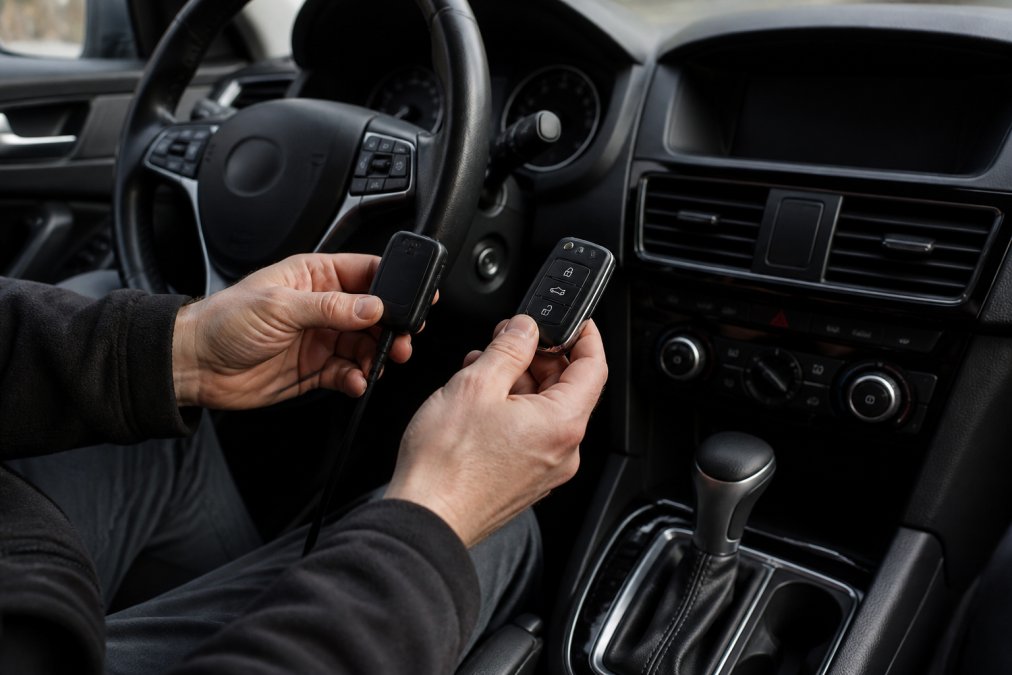
Program car key fob safely with this step-by-step guide. Learn DIY methods, OBD2 tools, and when to call a locksmith. Find the right approach for your.
Table of Contents
- What You'll Need Before You Program a Car Key Fob
- Step-by-Step Key Fob Programming Sequence
- Best OBD2 Key Programmer Options for DIY Use
- Security Risks of DIY Key Fob Programming
- Troubleshooting Common Key Fob Pairing Issues
- Car Key Fob Programming Cost: What Affects the Price
- Locksmith Key Fob Programming Services vs. the Dealership
- Conclusion
Last Updated: August 23, 2026
Learning how to program a car key fob safely is one of those tasks that looks simple on the surface but has real consequences when it goes wrong. This guide covers every step of the process, from identifying your key fob type to post-programming verification, so you can make an informed decision about whether to tackle it yourself or call a professional.
Below, we'll walk through the exact programming sequence, the tools you'll need, the security risks most guides skip over, and what separates a clean installation from one that creates new problems.
What You'll Need Before You Program a Car Key Fob
Preparation is where most DIY attempts fail. Skipping this phase doesn't save time, it costs it.
Identifying Your Key Fob Type and FCC ID
A key fob is a small electronic remote that communicates with your vehicle's receiver module via radio frequency to control functions like remote entry, trunk release, and in some cases, remote start. Before any programming attempt, you need to know exactly what type of fob you're working with.
Flip the fob over. The FCC ID is printed on the back label, a string of letters and numbers registered with the Federal Communications Commission. This ID tells you the exact frequency and RF signal protocol your fob uses. You can verify compatibility through the FCC ID database for wireless devices, which lists every registered remote entry device by manufacturer and model.
Key fob types fall into three broad categories:
- Basic remote entry fobs, use a fixed RF signal and are often programmable without tools
- Transponder chip fobs, contain an embedded chip that communicates with the immobilizer system; require programming to match the vehicle's BCM
- Proximity sensor fobs (smart keys), communicate continuously with the vehicle via a LIN network or CAN bus; almost always require professional diagnostic tools
Knowing which type you have determines everything that follows.
Checking Vehicle Compatibility and the Owner's Manual
The owner's manual is the single most underused resource in key fob programming. Many vehicles from the mid-2000s onward include a manual programming sequence in the appendix, a specific combination of ignition cycles, door actions, and button presses that puts the vehicle into pairing mode. Check there first.
If you're using an aftermarket remote rather than an OEM key fob, verify compatibility using the vehicle identification number. Aftermarket fobs must match the FCC ID of the original remote and operate on the same frequency. A mismatch here means the receiver module will never recognize the signal, regardless of how correctly you execute the programming sequence.
Step-by-Step Key Fob Programming Sequence
Manual programming works on many vehicles, but the sequence must be followed precisely. A missed step typically means starting over from scratch.
Close all doors before beginning. Have all keys and fobs you want to program on hand, many vehicles exit programming mode after the first successful pairing and will erase any fobs not programmed in the same session.
Standard manual programming sequence (varies by vehicle, confirm in your owner's manual):
- Enter the vehicle and close all doors
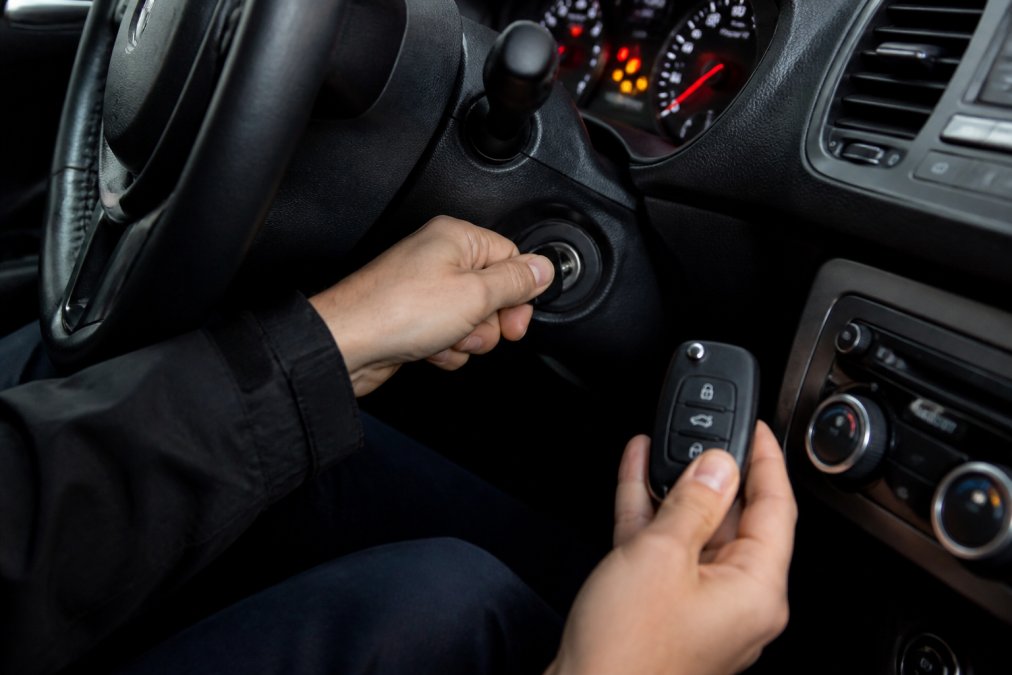
- Insert the key into the ignition (do not start the engine)
- Cycle the ignition from OFF to ON a specific number of times within a set time window, this is the ignition cycle sequence that triggers pairing mode
- Listen or watch for a lock/unlock cycle from the doors, which signals the vehicle has entered programming mode
- Within 30 seconds, press the LOCK button on the fob you want to program
- Wait for another lock/unlock confirmation
- Repeat for any additional fobs
- Turn the ignition to OFF to exit programming mode
Understanding Ignition Cycles and Pairing Mode
The ignition cycle count is not arbitrary. The vehicle's BCM monitors ignition state transitions as a security protocol to confirm an authorized user is initiating the pairing sequence. Most vehicles require between 4 and 8 rapid transitions from OFF to RUN (not START) within 10 seconds. Exceeding the time window resets the count.
Pairing mode is the temporary state in which the receiver module accepts new rolling code signals from remotes. The rolling code system is a security feature that generates a new encrypted code with each button press, preventing signal replay attacks. Once the vehicle exits pairing mode, it stops accepting new codes.
Manual Programming vs. OBD-II Port Methods
Manual programming via ignition cycles works well for older and mid-range vehicles. For newer models, particularly those from 2018 onward, the OBD-II port method is often the only option.
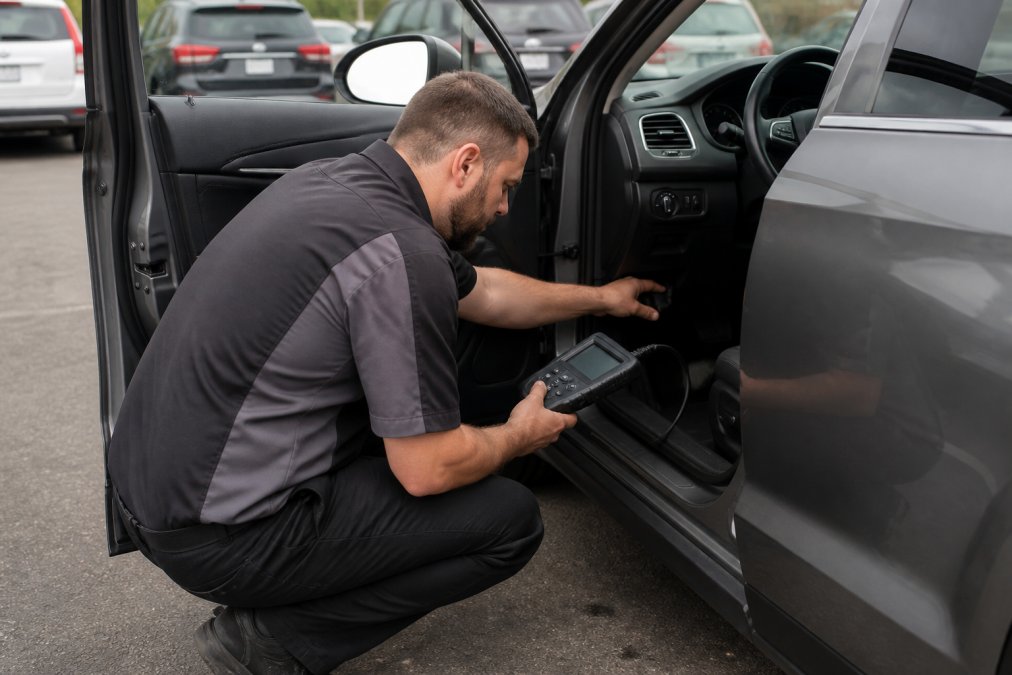
OBD-II port programming connects a diagnostic tool to the vehicle's OBD-II port, which provides direct access to the BCM and immobilizer system. The tool sends a programming command that writes the new fob's transponder chip data directly to the vehicle's memory. This method works on vehicles where the manual sequence has been disabled or where the security protocol requires cryptographic key matching.
| Method | Best For | Tools Required | Skill Level |
|---|---|---|---|
| Manual ignition cycle | Pre-2018 vehicles with basic remotes | None | Beginner |
| OBD-II diagnostic tool | 2018+ vehicles, transponder fobs | Programmer device | Intermediate |
| Dealer/locksmith software | Smart keys, proximity fobs, luxury vehicles | Proprietary software | Professional |
Best OBD2 Key Programmer Options for DIY Use
The best OBD2 key programmer for a DIY user is one that explicitly lists your vehicle's year, make, and model in its compatibility database before you buy it. Generic compatibility claims are common and often misleading.
When evaluating a programmer, check for these capabilities:
- Transponder chip programming, essential for any fob with an immobilizer chip
- EEPROM reading/writing, required for some vehicles where the BCM stores key data in a chip that must be read directly
- PIN code reading, some vehicles require the security PIN before accepting new keys; a programmer that can extract this from the BCM saves a dealership trip
- Live vehicle data, confirms the programmer is communicating correctly with the CAN bus or LIN network
According to the National Locksmith Automotive Security resource center, many consumer-grade OBD-II programmers cover a broad range of domestic vehicles but have significant gaps with European and Asian imports. Verify coverage before purchasing.
Security Risks of DIY Key Fob Programming
This is the section most guides skip, and it's the one that matters most.
Programming a key fob means adding an authorized device to your vehicle's security system. Done correctly, that's straightforward. Done carelessly, it creates vulnerabilities.
The rolling code risk: If you program a fob and then lose it, that fob still holds a valid rolling code sequence. Any receiver module that hasn't been fully re-paired will still accept it. The correct response to a lost fob is not just buying a replacement, it's erasing all stored fobs and re-pairing only the ones you want active.
Aftermarket fob security: Not all aftermarket remotes implement rolling code properly. Some use fixed RF signals, which are vulnerable to signal capture and replay. A determined attacker with basic radio equipment can record a fixed-code signal and replay it to unlock your vehicle. OEM fobs and quality aftermarket units use rolling code encryption to prevent this.
Immobilizer bypass risks: Some low-cost programmers advertise the ability to bypass the immobilizer system. This is a significant security trade-off, the immobilizer is the primary anti-theft layer in most modern vehicles. Disabling or bypassing it to make programming easier leaves the vehicle vulnerable to hot-wiring.
The National Insurance Crime Bureau vehicle theft prevention guidance consistently identifies keyless entry system vulnerabilities as a growing factor in vehicle theft. Maintaining the integrity of your programming process is part of responsible vehicle ownership.
Troubleshooting Common Key Fob Pairing Issues
The most common reason a key fob fails to pair is a dead or weak battery in the fob itself. Replace the battery first, always, before assuming a programming problem.
If battery replacement doesn't resolve it:
- Wrong ignition cycle count: Recount the required transitions from your owner's manual. The number varies significantly between manufacturers.
- Exceeded time window: The ignition cycle sequence must be completed within a specific time limit, often 10 seconds. Practice the motion before attempting.
- Not all fobs present: Many vehicles require all fobs to be programmed in a single session. If you only program one, the others may be erased.
- Wrong pairing mode signal: Some vehicles signal pairing mode with a single lock/unlock cycle; others use a horn chirp or door lock sound. Confirm which signal your vehicle uses.
- Receiver module fault: If the vehicle doesn't respond to any programming attempt, the receiver module itself may be faulty. This requires diagnostic confirmation.
Post-Programming Verification Steps
Verification is not optional. A fob that appears to pair successfully can still fail to operate correctly if the rolling code synchronization is off.
After programming, confirm each of the following:
- Lock button activates door locks from at least 30 feet away
- Unlock button releases all doors correctly
- Panic button triggers the alarm
- Trunk release (if equipped) functions
- Remote start (if equipped) initiates correctly
- Fob still functions after driving the vehicle and cycling the ignition
That last point matters. Some vehicles perform a final BCM check after the ignition is cycled post-programming. A fob that works in the driveway but fails after the first drive indicates an incomplete pairing that needs to be redone.
Car Key Fob Programming Cost: What Affects the Price
Car key fob programming cost varies based on several factors, none of which you should assume from a generic price list online.
The main cost drivers are:
- Vehicle type and year: Luxury vehicles and those with advanced proximity sensor systems require proprietary software and hardware. Programming a basic remote for an older domestic vehicle costs significantly less than programming a smart key for a recent European import.
- OEM vs. aftermarket fob: OEM key fobs sourced through a dealer carry a higher part cost. Quality aftermarket remotes cost less but must be verified for rolling code compliance.
- Method required: Manual programming requires no special tools. OBD-II programming requires equipment investment. Proprietary dealer-software programming carries the highest service cost.
- Number of fobs: Most services program all fobs in a single session. Programming additional fobs at the same time is almost always more cost-effective than separate visits.
For current pricing on key fob programming services, contact Lock it All Locksmithing directly for an accurate quote based on your specific vehicle and fob type. Pricing depends on the vehicle, the method required, and whether a replacement fob is needed.
Locksmith Key Fob Programming Services vs. the Dealership
The dealership is not always the right answer. For many vehicles, a qualified automotive locksmith can program key fobs using the same OEM-level diagnostic tools the dealer uses, often with faster turnaround and without requiring a service appointment days in advance.
Where the dealership has a genuine advantage is with proprietary systems, particularly newer vehicles that require manufacturer-specific software tied to the vehicle identification number and a live server connection to authorize new keys. Some automakers have restricted key programming to authorized dealers only, making locksmith programming technically impossible for those models. According to the Automotive Locksmith Association's technical guidance on key programming access, the number of vehicles with dealer-restricted programming has grown steadily over the past several years.
The honest comparison looks like this:
- Locksmith: Faster scheduling, often mobile service, competitive pricing, capable with the vast majority of vehicles on the road
- Dealership: Required for certain new models with manufacturer-restricted systems, OEM parts guaranteed, but slower turnaround and typically higher cost
For most vehicle owners, a qualified locksmith is the practical first call. If the locksmith determines your vehicle requires dealer-exclusive software, you'll know before spending time at the dealership.
Lock it All Locksmithing provides professional key fob programming services for automotive, residential, and commercial security needs. If you're unsure whether your vehicle can be programmed outside the dealership, call 615-810-7304 for a direct answer before committing to either option.
=== FAQ ANSWERS (audit these too, same rules) ===
[1] Q: Can you program a car key fob yourself without going to the dealership? A: Many vehicles support manual DIY programming through a sequence of ignition cycles and button presses, and some OEM remotes can be paired this way at no extra cost. However, transponder chip programming and rolling code synchronization on newer vehicles typically require an OBD-II diagnostic tool or professional equipment. If your owner's manual does not list a self-programming procedure, a locksmith or dealership is usually necessary to program a car key fob correctly.
[2] Q: What happens if you program a key fob incorrectly? A: An incorrect programming sequence can desynchronize your remote from the BCM (Body Control Module), leaving existing fobs unresponsive. In some cases, the immobilizer system may flag the attempt and require a reset via a diagnostic tool. Repeated failed attempts on vehicles with advanced security protocols can temporarily lock out the programming mode entirely. This is one reason professional locksmith key fob programming services are worth considering for modern or high-security vehicles.
[3] Q: How much does car key fob programming cost? A: Car key fob programming cost varies based on vehicle make, model year, fob type (OEM vs. aftermarket remote), and whether a diagnostic tool or dealer-level equipment is required. Basic manual programming on older vehicles costs far less than transponder or proximity sensor programming on late-model cars. Contact a qualified locksmith for an accurate quote specific to your vehicle's requirements rather than relying on generic price estimates.
[4] Q: Is it safe to program a key fob at home? A: Manual programming using ignition cycles is generally safe for vehicles that support it, provided you follow the exact sequence in your owner's manual. The main risks come from using incompatible aftermarket remotes, incorrect RF signal frequencies, or tools that write bad data to the BCM. For vehicles with CAN bus or LIN network-based keyless entry systems, a mistake can cause communication errors that require professional correction, so assessing your comfort level and your vehicle's complexity first is important.
Frequently Asked Questions
Can you program a car key fob yourself without going to the dealership?
Many vehicles support manual DIY programming through a sequence of ignition cycles and button presses, and some OEM remotes can be paired this way at no extra cost. However, transponder chip programming and rolling code synchronization on newer vehicles typically require an OBD-II diagnostic tool or professional equipment. If your owner's manual does not list a self-programming procedure, a locksmith or dealership is usually necessary to program a car key fob correctly.
What happens if you program a key fob incorrectly?
An incorrect programming sequence can desynchronize your remote from the BCM (Body Control Module), leaving existing fobs unresponsive. In some cases, the immobilizer system may flag the attempt and require a reset via a diagnostic tool. Repeated failed attempts on vehicles with advanced security protocols can temporarily lock out the programming mode entirely. This is one reason professional locksmith key fob programming services are worth considering for modern or high-security vehicles.
How much does car key fob programming cost?
Car key fob programming cost varies based on vehicle make, model year, fob type (OEM vs. aftermarket remote), and whether a diagnostic tool or dealer-level equipment is required. Basic manual programming on older vehicles costs far less than transponder or proximity sensor programming on late-model cars. Contact a qualified locksmith for an accurate quote specific to your vehicle's requirements rather than relying on generic price estimates.
Is it safe to program a key fob at home?
Manual programming using ignition cycles is generally safe for vehicles that support it, provided you follow the exact sequence in your owner's manual. The main risks come from using incompatible aftermarket remotes, incorrect RF signal frequencies, or tools that write bad data to the BCM. For vehicles with CAN bus or LIN network-based keyless entry systems, a mistake can cause communication errors that require professional correction, so assessing your comfort level and your vehicle's complexity first is important.
Programming a key fob without the right information is a fast way to end up with a security lockout, an erased transponder, or a fob that works once and never again. Lock it All Locksmithing handles key fob programming with professional diagnostic tools and the expertise to verify the job is complete before leaving your vehicle. Call 615-810-7304 to get a quote or schedule service.
This article was written using GrandRanker
Why Nashville drivers choose Lock it All Locksmithing
We are a locally owned, licensed and insured mobile locksmith serving Nashville and the surrounding Middle Tennessee communities. You speak directly with the technician who does the work, get an honest price before we dispatch, and we arrive in a fully stocked service vehicle so most jobs finish in a single visit — usually within 20 to 45 minutes of arriving. No towing, no dealership appointment, no surprise fees.
How the visit works
- Tell us the details: call, text or send the quote form with your vehicle's year, make and model, or a description of your lock problem.
- Get an exact price: we quote parts, cutting, programming and travel up front.
- We come to you: our mobile workshop meets you at home, work or roadside.
- Done on the spot: keys are cut, programmed and tested with you before we leave.
Areas we serve
Nashville, Murfreesboro, Franklin, Hendersonville, Smyrna, La Vergne, Antioch, Brentwood, Mount Juliet, Lebanon and the surrounding towns across Middle Tennessee.
What our customers say
- "Fast, professional and honest — had a new key for my truck programmed in under half an hour." — Adrian Fiorito, 5 stars.
- "Great service and fair pricing. Came out same day and solved the problem right away." — George Yacoub, 5 stars.
- "Very knowledgeable and friendly. Highly recommend for anyone needing a locksmith in Nashville." — Jan Daoud, 5 stars.
Rated 5 stars across 100+ verified Google reviews. Call or text 615-810-7304 or email info@lia-locksmith.com.