Residential Key Hierarchy: A Family Lock Plan
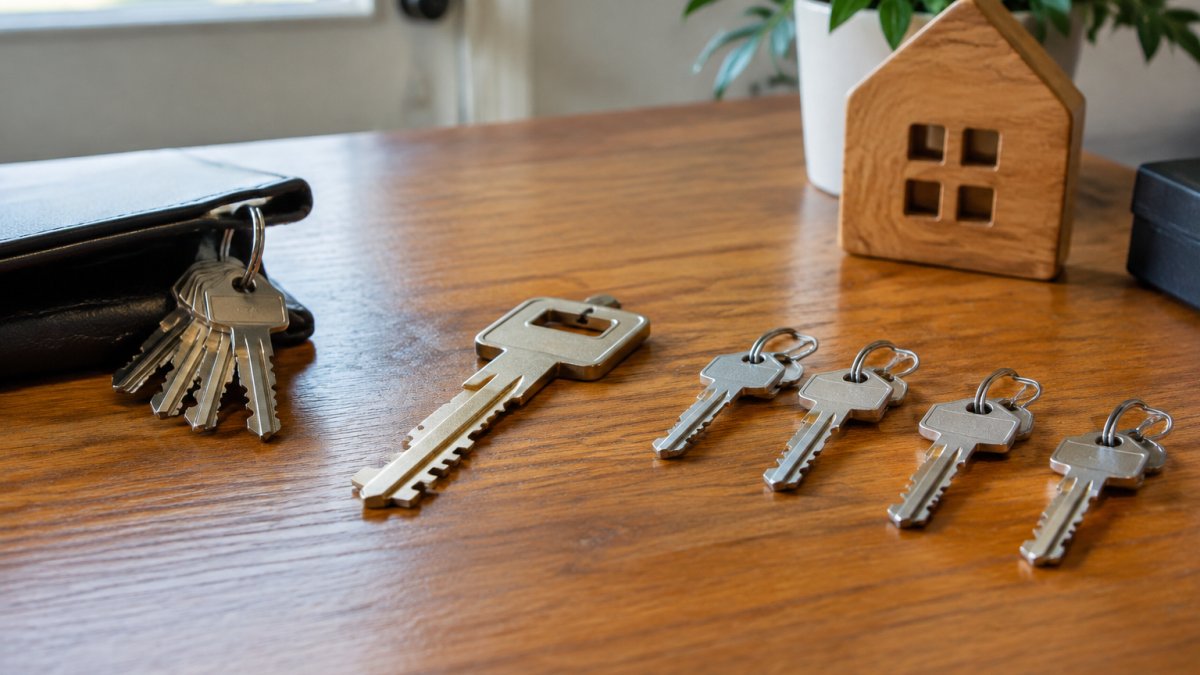
A residential key hierarchy keeps every family key accounted for. Learn how to plan spare keys, master key systems, and rekeying in a few clear steps.
Last Updated: November 4, 2026
Quick Summary
A residential key hierarchy sorts every exterior door into three access tiers: full access for adults, limited access for teens, caregivers and cleaners, and temporary access for guests and contractors. Map each door first, then choose spare-key holders and a master key system that matches those tiers.
- Mapping every exterior door and sorting it into access tiers takes about fifteen minutes.
- Tier 2 covers teens, caregivers and cleaners with one entry door only.
- Pick one or two nearby, trusted people to hold a spare house key.
- Rekeying resets the pins so old keys stop working and is the cheaper fix.
- If a master key goes missing, every lock in the system should be rekeyed.
Table of Contents
- Step 1: Map Every Door and Decide the Access Tiers
- Step 2: Decide Who Should Have a Spare House Key
- Step 3: Choose a Master Key System for a Home
- What to Do Next
- Frequently Asked Questions
Step 1: Map Every Door and Decide the Access Tiers
Planning a residential key hierarchy for families starts with a simple walk through your home. You list every exterior door, then sort them into access tiers. This step takes about fifteen minutes and saves hours of confusion later.
A residential key hierarchy is a system that gives each person a key to only the doors they need. It controls who reaches what, and it keeps spare keys from becoming master keys by accident.
Here is how to map your home:
- Tier 1 (full access): adults who live there. Front door, back door, garage entry.
- Tier 2 (limited access): teens, caregivers, cleaners. One entry door only.
- Tier 3 (no daily key): guests, contractors, neighbors. Temporary access only.
Walk each door and note its type: deadbolt, knob lock, or both. Check for a side gate or basement entry that is easy to forget. Those forgotten doors are where key control breaks down.
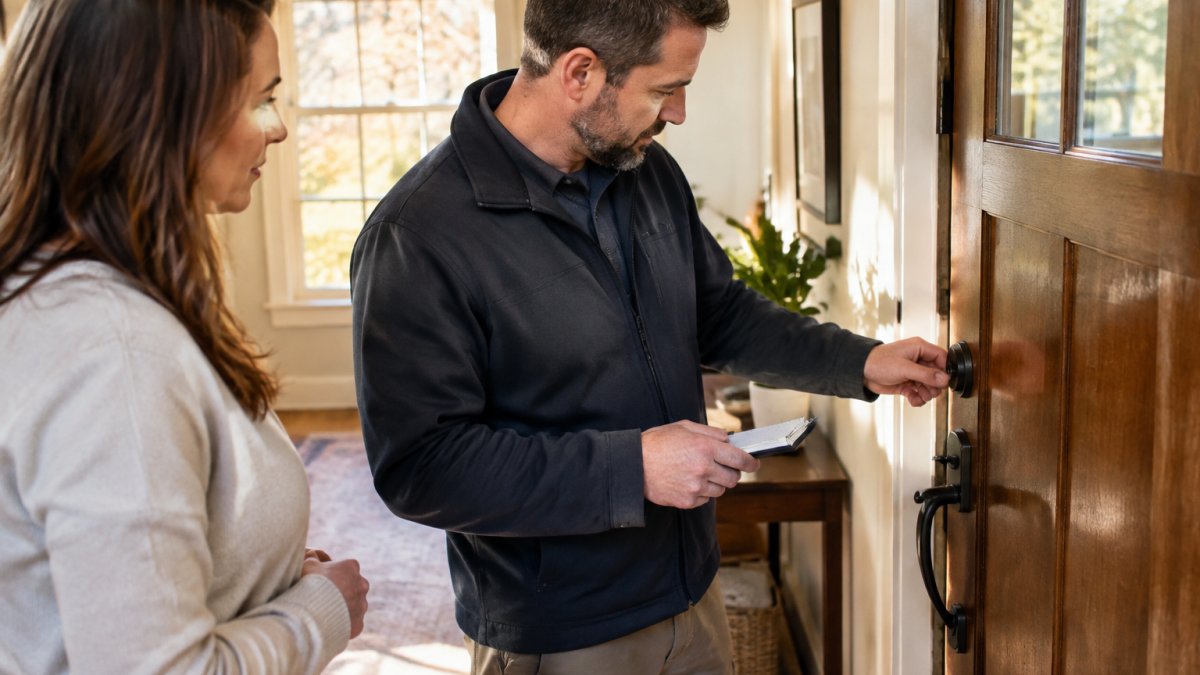
Here are the three access tiers the article uses to sort every exterior door.
| Tier | Who it covers | Access given |
|---|---|---|
| Tier 1 (full access) | Adults who live there | Front door, back door, garage entry |
| Tier 2 (limited access) | Teens, caregivers, cleaners | One entry door only |
| Tier 3 (no daily key) | Guests, contractors, neighbors | Temporary access only |
Step 2: Decide Who Should Have a Spare House Key
A spare key is only useful if you control it. The question of who should have a spare house key comes down to trust and reach. Pick one or two people who live close and can get to your door fast.
Good candidates:
- A neighbor you actually talk to
- A nearby family member
- A trusted friend with a flexible schedule
Skip the fake rock and the flowerpot. Anyone who has watched a home security segment knows those spots. A key safe with a combination, or a key held by a person, works better.
Rekeying vs changing locks matters here. Rekeying resets the pins so old keys stop working. That is the cheaper, faster fix when you move in or lose a key. Changing locks replaces the hardware itself.
For more ways to avoid ever needing that spare, see our guide on preventing house lockouts.
Step 3: Choose a Master Key System for a Home
A master key system for a home lets one key open several locks while each lock keeps its own key. Picture it like a small office building: the parent key opens everything, and each child key opens one door.
Three setups cover most families:
- Keyed alike: one key opens all exterior doors. Simple and cheap.
- Master keyed: a master opens all doors, and each person gets a key for their tier.
- High-security: restricted keys that cannot be copied without a card.
Pricing depends on the number of locks and the hardware involved. Contact Lock it All Locksmithing at 615-810-7304 for a quote.
Watch out: a master key system is only as safe as its weakest copy. If one master key goes missing, every lock in the system should be rekeyed.
For more home security and lockout guides, browse our locksmith blog.
What to Do Next
Sorting your doors into tiers, choosing the right spare-key holders, and picking a master key system turns a pile of keys into a plan. That plan is what keeps a lost key from becoming a break-in.
Lock it All Locksmithing provides expert locksmith services across Tennessee, including car key replacement, key fob programming, and remote start installation. Call 615-810-7304 to get started with Lock it All Locksmithing and secure every door in your home.
Frequently Asked Questions
How many keys should a family have for their home?
A workable rule is one key per adult driver, one spare kept off-site with a trusted neighbor or relative, and one emergency key in a locked box or with a property manager. Children old enough to come home alone need their own. Anything beyond that adds copies you cannot track. Write down who holds each key in your residential key hierarchy so a lost key never turns into a guessing game about which locks need rekeying.
Is it safer to rekey a lock or replace it?
Rekeying changes the pins inside your existing lock so old keys stop working, which costs less than new hardware and solves most lost-key problems. Replacing makes more sense when the lock is worn, the deadbolt is not up to current security standards, or you want a keypad or smart lock. A locksmith can inspect your door hardware and tell you which option fits.
What should I do if a family member loses a house key?
Treat the key as compromised and rekey the locks it opened, especially if it carried any ID or was lost near home. Check your key log to see which doors that key reached. If your home uses a master key system for a home, only the affected tier needs new pins, not the whole house. Then issue a replacement key, update the log, and remind the family not to label keys with the address.

Why Nashville drivers choose Lock it All Locksmithing
We are a locally owned, licensed and insured mobile locksmith serving Nashville, Antioch, Brentwood, Franklin, Smyrna, La Vergne, Murfreesboro, Hermitage and Mt. Juliet. You speak directly with the technician who does the work, get an honest price before we dispatch, and we arrive in a fully stocked service vehicle so most jobs finish in a single visit — usually within 20 to 45 minutes of arriving. No towing, no dealership appointment, no surprise fees.
How the visit works
- Tell us the details: call, text or send the quote form with your vehicle's year, make and model, or a description of your lock problem.
- Get an exact price: we quote parts, cutting, programming and travel up front.
- We come to you: our mobile workshop meets you at home, work or roadside.
- Done on the spot: keys are cut, programmed and tested with you before we leave.
Areas we serve
Nashville, Antioch, Brentwood, Franklin, Smyrna, La Vergne, Murfreesboro, Hermitage and Mt. Juliet. If you're outside these areas, call 615-810-7304 to confirm whether we can help.
What our customers say
Best locksmith in town excellent service and great price !!
— Adrian Fiorito, 5 stars.Very wonderful service, strong quality, great prices, and it does not take long.
— George Yacoub, 5 stars.Great customer service - Professional - Fast Highly recommend.
— Jan Daoud, 5 stars.
Rated 5 stars across 100+ verified Google reviews. Call or text 615-810-7304 or email info@lia-locksmith.com.