How to Change Lock Pins at Home Safely
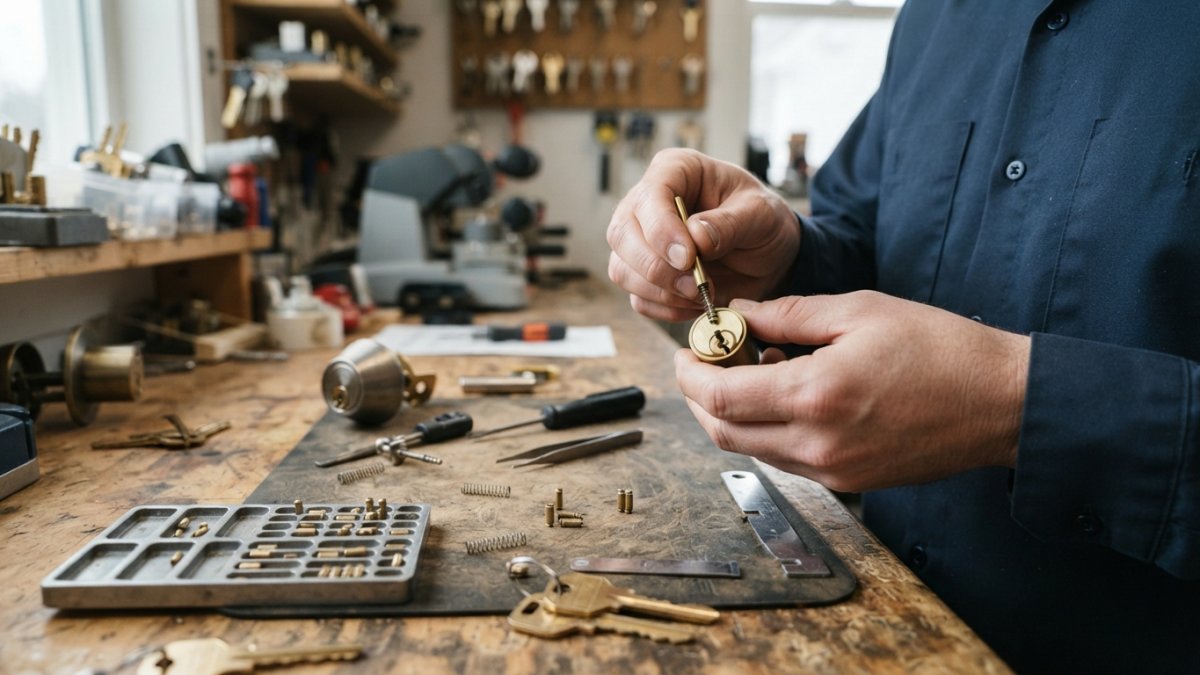
Lock pins can be changed at home with the right kit and careful steps. Learn how to check lock compatibility, reassemble the cylinder, and test the key.
Last Updated: November 4, 2026
Quick Summary
To change lock pins at home, use a compatible pinning kit and the lock maker’s instructions to replace the cylinder’s pin combination for a new key. Keep the door open, work one chamber at a time using the correct pinning chart and follower, then test the new key before reinstalling the cylinder.
- Identify the lock brand and cylinder type before choosing a pinning kit.
- Use a parts tray and eye protection to contain small pins and springs.
- Do not guess pin sizes; follow the lock maker’s chart.
- Stop and call a locksmith if the cylinder binds or the pin layout is unclear.
Table of Contents
- How to Change Lock Pins at Home: Tools and Preparation
- How to Change Lock Pins at Home, Step by Step
- Rekeying vs. Changing Locks: Choose the Right Next Step
- Frequently Asked Questions
How to Change Lock Pins at Home: Tools and Preparation
Changing pins rekeys a lock: the cylinder stays in place, but its pin combination changes to fit a different key. Identify the brand and cylinder type first, since pin sizes and disassembly methods vary. Follow the manufacturer’s instructions or use a compatible kit.
Gather the following before starting:
- A compatible pinning kit with the correct pins and plug follower.
- The new key, rekeying instructions, and any required retaining tool.
- A well-lit work surface, parts tray, and cloth to contain pins.
- Eye protection; small springs can shift or eject.
Check that the lock works smoothly and the cylinder is undamaged; rekeying may not fix sticking, binding, or forced hardware. Confirm you are authorized to change it and that everyone who needs access can get the new key.
Keep the door open and the original key and removed parts together. Use the lock maker’s pinning chart, work over a tray, and handle one chamber at a time; a photo can help with reassembly.
Use the kit’s instructions and lock’s pin chart; pin sizes and color coding vary by brand.
If you cannot identify the cylinder, obtain the correct follower and pin sizes, or organize parts, stop and ask a locksmith before opening the plug. A misplaced spring or incorrect pin can make the cylinder unreliable.
How to Change Lock Pins at Home, Step by Step
Follow the lock maker’s instructions; procedures vary by cylinder. Rekeying changes the pin combination to match a new key, but does not repair a worn cylinder or damaged hardware.
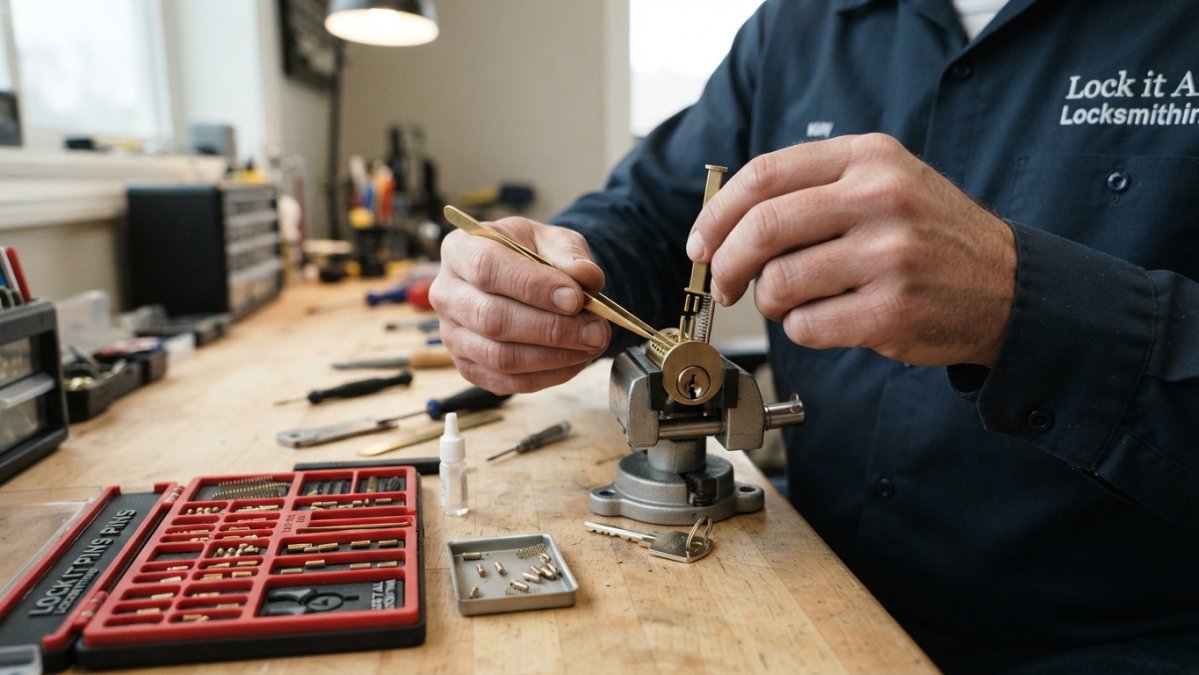
- Keep the door open and remove the cylinder as directed. Follow the lock-specific procedure; do not force or pry the hardware.
- Confirm the new key and pinning chart. Verify the key fits and use the maker’s chart or kit instructions to identify chamber pin sizes; do not guess.
- Open the cylinder with the correct follower. It supports the upper pins and springs as you remove the plug. Keep it aligned to prevent parts scattering.
- Change the pins in the specified order. Organize each chamber and install only charted sizes. Pins must align at the shear line with the new key; incorrect pins can prevent turning or make operation unreliable.
- Reassemble without forcing the plug. Follow the maker’s sequence and keep the follower and plug aligned. Stop if the plug catches or a pin or spring is out of place.
- Test before reinstalling. With the cylinder secured, insert, remove, and turn the new key through its normal range. Check that the old key no longer works; keep the door open.
- Reinstall and test with the door open. Operate the lock with the new key and cycle the handle or deadbolt several times. Close the door only after it works smoothly from both sides, as applicable.
If the new key sticks, the plug binds, the cylinder feels loose, or operation is inconsistent, do not force it or rely on it for security. Remove it from service and have a locksmith inspect it.
Rekeying changes which key operates the cylinder without replacing the lock body. If the cylinder is damaged or worn, or you cannot verify the pin layout, replace or professionally service the hardware.
Follow these steps in order, using the lock maker’s instructions throughout.
| Step | What to do | Check or caution |
|---|---|---|
| 1 | Keep the door open and remove the cylinder | Follow the lock-specific procedure; do not force hardware |
| 2 | Confirm the new key and pinning chart | Do not guess chamber pin sizes |
| 3 | Open the cylinder with the correct follower | Keep it aligned to prevent parts scattering |
| 4 | Change pins in the specified order | Install charted sizes; align pins at the shear line |
| 5 | Reassemble without forcing the plug | Stop if the plug catches or a pin or spring is out of place |
| 6 | Test the new key before reinstalling | Check that the old key no longer works; keep the door open |
| 7 | Reinstall and test with the door open | Close the door only after smooth operation from both sides, as applicable |
Rekeying vs. Changing Locks: Choose the Right Next Step
Rekey a working lock to stop old keys from working; replace damaged, worn, or unsuitable hardware.
Costs depend on the lock and work required, so ask for a quote. Lock it All Locksmithing provides residential locksmith services. Read about residential rekeying costs or locksmith services.
If the cylinder resists, the lock is damaged, or you cannot confirm the pin layout, stop and call a locksmith. Contact Lock it All Locksmithing at 615-810-7304 to discuss home rekeying.
Frequently Asked Questions
How does rekeying a lock work?
Rekeying changes the small pins inside a compatible lock cylinder so it works with a new key. The lock stays in place, but its old key no longer operates it once the new pin arrangement is installed correctly. For a home project, use a kit made for the exact lock brand and model, keep the pins organized, and test the new key before reinstalling the cylinder.
What tools do you need to rekey a door lock?
The tools depend on the lock and kit. A compatible rekeying kit typically supplies the replacement pins and specialized tools for accessing the cylinder; you may also need basic tools to remove the lock or cylinder. Check the kit instructions against your lock’s model before starting. If the cylinder is damaged, unfamiliar, or does not match the kit, stop rather than forcing parts.
Is rekeying a lock cheaper than replacing it?
Rekeying keeps a compatible lock and changes its key, while replacement involves installing a different lock. Which costs less depends on the lock, its condition, the work required, and whether you do it yourself or hire a locksmith. Ask for a quote that separates labor and parts, and confirm whether your existing lock can be rekeyed before choosing replacement.


Why Nashville drivers choose Lock it All Locksmithing
We are a locally owned, licensed and insured mobile locksmith serving Nashville, Antioch, Brentwood, Franklin, Smyrna, La Vergne, Murfreesboro, Hermitage and Mt. Juliet. You speak directly with the technician who does the work, get an honest price before we dispatch, and we arrive in a fully stocked service vehicle so most jobs finish in a single visit — usually within 20 to 45 minutes of arriving. No towing, no dealership appointment, no surprise fees.
How the visit works
- Tell us the details: call, text or send the quote form with your vehicle's year, make and model, or a description of your lock problem.
- Get an exact price: we quote parts, cutting, programming and travel up front.
- We come to you: our mobile workshop meets you at home, work or roadside.
- Done on the spot: keys are cut, programmed and tested with you before we leave.
Areas we serve
Nashville, Antioch, Brentwood, Franklin, Smyrna, La Vergne, Murfreesboro, Hermitage and Mt. Juliet. If you're outside these areas, call 615-810-7304 to confirm whether we can help.
What our customers say
Best locksmith in town excellent service and great price !!
— Adrian Fiorito, 5 stars.Very wonderful service, strong quality, great prices, and it does not take long.
— George Yacoub, 5 stars.Great customer service - Professional - Fast Highly recommend.
— Jan Daoud, 5 stars.
Rated 5 stars across 100+ verified Google reviews. Call or text 615-810-7304 or email info@lia-locksmith.com.