How Security Upgrades Lower Business Insurance Premiums
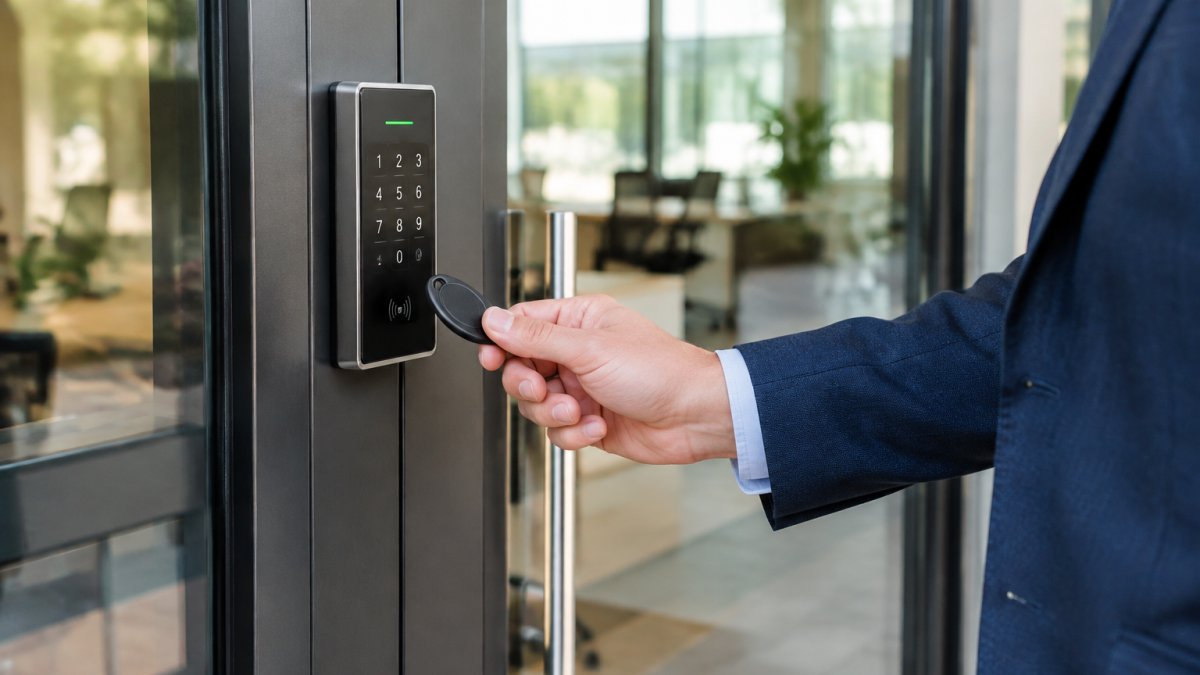
Security upgrades can lower business insurance premiums by reducing risk. Learn how to document improvements and get the discounts your carrier offers.
Last Updated: November 4, 2026
Quick Summary
Security upgrades lower business insurance premiums by reducing loss probability, reducing loss severity, and giving underwriters confidence in your risk. Carriers reward documented, inspected, and maintained protection, not effort, so you must prove each device exists, works, and is maintained. Submit your file to your agent 30 to 60 days before renewal.
- Monitored alarms, CCTV, and sprinkler systems are the upgrade types most commercial property policies recognize.
- Calculate payback by dividing annual premium savings by total installed cost.
- Access control logs entries and revokes access instantly, reducing internal theft and after-hours intrusion risk.
- Your documentation file must prove equipment exists, works, and is maintained.
- Test alarms and cameras monthly and keep monitoring contracts active with no lapse.
Table of Contents
- Why Security Upgrades Lower Business Insurance Premiums
- Commercial Property Insurance Discounts for Security You Can Qualify For
- The Impact of Access Control Systems on Business Insurance
- How to Document Security Upgrades for Insurance Carriers
- Smart Security Devices and Maintenance That Keep Credits in Place
- Getting Your Security Upgrades Inspected and Documented
- Frequently Asked Questions
Why Security Upgrades Lower Business Insurance Premiums
Most business owners treat insurance as a fixed cost. It isn't.
Business owners often ask whether security measures actually move their premium.
Here's what most guides get wrong. They list security measures and stop there. Carriers don't reward effort. They reward documented, inspected, maintained protection.
Security upgrades work on premiums through three levers:
- Lower loss probability. Monitored alarms and cameras make burglary less likely, so the carrier expects fewer claims.
- Lower loss severity. Fire suppression and access control limit how bad a single event gets.
- Underwriting confidence. Clean documentation tells the underwriter your risk is what you say it is.
Below, we'll walk through which upgrades earn credits, how to calculate the return, and exactly what to hand your carrier.
Commercial Property Insurance Discounts for Security You Can Qualify For
Discounts vary by carrier, state, and building type, so no single list applies to everyone. What matters is knowing which categories underwriters recognize. Ask your agent which credits your policy form allows before you spend a dollar.
Monitored Alarms, Cameras, and Sprinkler Credits
Three upgrade types show up on most commercial property policies:
- Monitored alarm systems. A system that signals a central station earns more credit than a local siren. The monitoring contract is the proof.
- CCTV surveillance. Cameras help with claims investigations and deterrence. Carriers usually want to see coverage of entries, the register, and the lot.
- Sprinkler systems and fire suppression. These often carry the largest credits because fire is the costliest property loss for most buildings.
Calculating the ROI of Your Upgrades
Run the math before you buy.
Annual premium savings ÷ total installed cost = payback period.
Say a monitored alarm plus camera package costs a set amount and your agent quotes an annual credit. Divide the credit into the cost. That's your years to break even.
Watch out: don't buy equipment hoping for a credit you never confirmed. Ask your agent for the credit in writing first.
The Impact of Access Control Systems on Business Insurance
Access control is the upgrade owners underestimate. A keyed lock can be copied in minutes and nobody knows who holds a key.
That matters to underwriters for two reasons. First, it reduces internal theft and after-hours intrusion risk. Second, it produces a record.
For businesses with high-value inventory, server rooms, or controlled substances, access control often helps more than cameras alone.
If you want an overview of the options, our team explains security solutions for homes, businesses, and fleet management, including access control, smart locks, and GPS tracking.
How to Document Security Upgrades for Insurance Carriers
Documentation is where most discount requests die. You installed the system, but the underwriter never saw proof, so the credit never appeared. The fix is to build the file around the three questions every underwriter is answering, then submit it in a form they can process without a follow-up email.
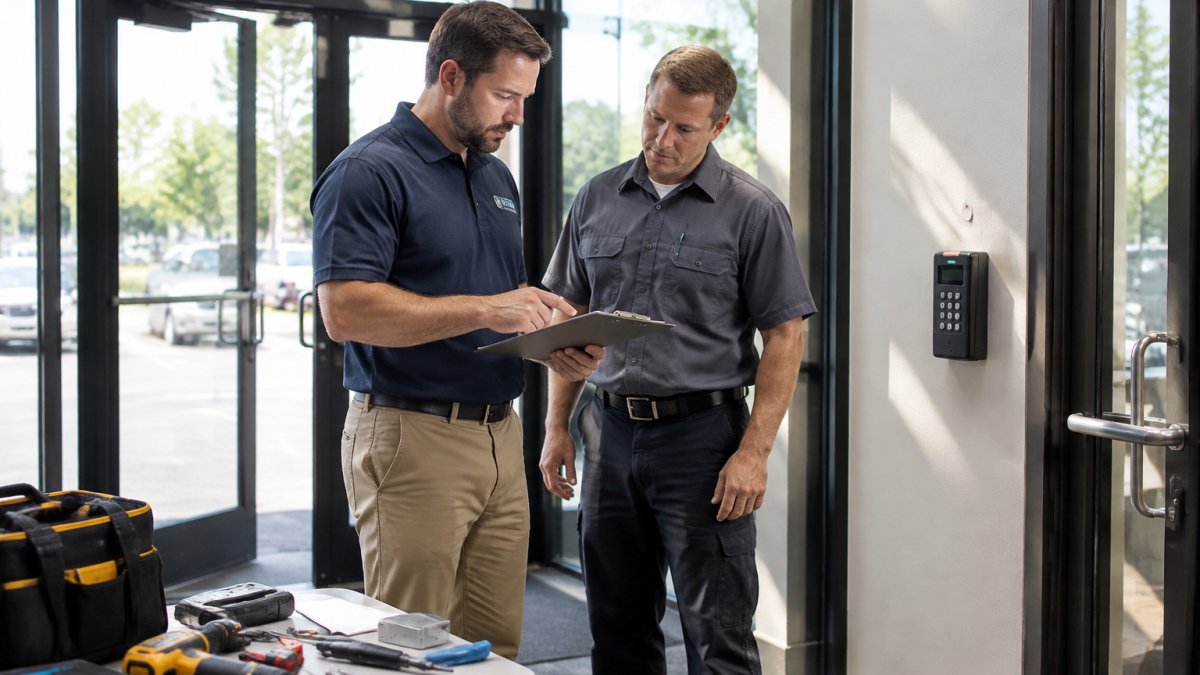
The Three Questions Your File Must Answer
- Does the equipment exist? Answered by a dated, itemized invoice and a photo of each device in place.
- Does it work? Answered by an inspection report or a signed test record from the installing or monitoring company.
- Is it maintained? Answered by a service log showing test dates and any repairs.
If any one of those three is missing, the underwriter has grounds to defer the credit, and a deferred credit at renewal is the same as no credit.
Documentation Checklist
Build one folder per policy period and keep it identical year to year:
- Equipment schedule. Make, model, serial number, location, and install date for every device. A spreadsheet beats a shoebox.
- Installation invoices. Dated and itemized, showing the contractor's name and license where required.
- Monitoring contract. The central station agreement with the station's name and the monitoring term. Underwriters want to see the station is listed and the contract is active.
- Photographs. One wide shot per device showing it mounted and powered, plus shots of each protected entry, the register area, and the lot.
- Inspection certificate. The fire or alarm inspection report from the inspecting company, with the date and pass/fail result.
How to Submit the File So the Credit Sticks
Send the package to your agent at least 30 to 60 days before renewal, not after. Ask the agent to confirm in writing which credits were applied and which were declined, and why.
Keep the same file structure at every renewal. Underwriters recognize a consistent submission and spend less time questioning it. A file that changes shape every year invites re-verification.
What Underwriters Actually Look For
Watch out: do not send a photo of a device that is not on the equipment schedule, and do not list a device you cannot produce an invoice for. Mismatches between the schedule, the photos, and the invoices are the fastest way to get a file flagged for review and a credit delayed past renewal.
Build one folder per policy period around the three questions every underwriter is answering.
| Question | Proof required |
|---|---|
| Does the equipment exist? | Dated, itemized invoice and photo of each device |
| Does it work? | Inspection report or signed test record |
| Is it maintained? | Service log showing test dates and repairs |
Smart Security Devices and Maintenance That Keep Credits in Place
Smart locks, connected cameras, and IoT sensors can strengthen a file, but they cut both ways. A device that goes offline and stays offline looks like no protection at all. Some carriers now ask whether remote monitoring is active and whether firmware is current.
Keep credits from slipping with a simple routine:
- Test alarms and cameras monthly and log the date.
- Replace batteries on schedule, before they fail.
- Keep monitoring contracts active with no lapse in coverage.
- Save every service invoice in the same file.
- Review the whole setup with your agent at each policy renewal.
Proactive maintenance is the cheapest insurance you'll ever buy. A lapsed monitoring contract can quietly erase a credit you paid good money to earn.
Getting Your Security Upgrades Inspected and Documented
An inspection turns your installation into evidence. For alarms and sprinklers, the inspecting company issues a report your carrier may accept.
Schedule inspections before renewal, not after. That gives you time to fix anything the inspector flags and still submit a clean file.
One more point on claims-free history. Every year without a loss improves how your carrier sees you.
Frequently Asked Questions
How much can security upgrades reduce business insurance premiums?
Discounts vary by carrier and policy, so there is no single percentage. Insurers typically apply credits for monitored alarm systems, CCTV surveillance, sprinkler systems, and access control, and the size of each credit depends on your building, industry, and claims history. The practical step is to ask your agent which specific credits your policy offers, then get those upgrades installed and documented. A professional risk assessment and a clean documentation file are what turn an upgrade into an actual premium reduction at renewal.
Do security cameras and monitored alarm systems qualify for insurance discounts?
Monitored alarm systems usually carry more weight than cameras alone because a monitoring contract proves someone responds to an alert. Cameras support burglary prevention and can help with claims, but carriers often treat them as a supporting measure rather than a standalone credit. To claim both, keep the monitoring agreement, the installation invoice, and the equipment list on file. Ask your underwriter how each device is classified on your policy so you are not paying for hardware that earns no credit.
How do I document security improvements for my insurance provider?
Build a file that includes installation invoices, equipment model numbers, monitoring contracts, photos of each device in place, and the date of installation. Add a professional risk assessment or security audit report if you have one, plus records of proactive maintenance. Send the package to your agent before policy renewal, not after, and ask for written confirmation of which credits were applied. Keep the file updated whenever you add access control, replace a panel, or change monitoring providers.
Does access control reduce commercial insurance costs?
Access control systems can lower premiums because they limit who enters a facility and create a record of entry, which reduces both burglary and internal loss exposure. Carriers that write commercial property insurance discounts for security often credit keypad, fob, or card-based systems when they replace standard keys. The credit is not automatic. You need the installation documentation and, in some cases, a certificate showing the system meets the carrier's specification. Ask your agent what proof the underwriter requires before you buy.
Your premium won't drop on its own. It drops when you install the right protection and prove it to your carrier. Lock it All Locksmithing handles commercial access control and high-security lock installations, and we help you keep the documentation your insurer wants. Call us at 615-810-7304 to review your building's entry points and get the paperwork started.

Why Nashville drivers choose Lock it All Locksmithing
We are a locally owned, licensed and insured mobile locksmith serving Nashville, Antioch, Brentwood, Franklin, Smyrna, La Vergne, Murfreesboro, Hermitage and Mt. Juliet. You speak directly with the technician who does the work, get an honest price before we dispatch, and we arrive in a fully stocked service vehicle so most jobs finish in a single visit — usually within 20 to 45 minutes of arriving. No towing, no dealership appointment, no surprise fees.
How the visit works
- Tell us the details: call, text or send the quote form with your vehicle's year, make and model, or a description of your lock problem.
- Get an exact price: we quote parts, cutting, programming and travel up front.
- We come to you: our mobile workshop meets you at home, work or roadside.
- Done on the spot: keys are cut, programmed and tested with you before we leave.
Areas we serve
Nashville, Antioch, Brentwood, Franklin, Smyrna, La Vergne, Murfreesboro, Hermitage and Mt. Juliet. If you're outside these areas, call 615-810-7304 to confirm whether we can help.
What our customers say
Best locksmith in town excellent service and great price !!
— Adrian Fiorito, 5 stars.Very wonderful service, strong quality, great prices, and it does not take long.
— George Yacoub, 5 stars.Great customer service - Professional - Fast Highly recommend.
— Jan Daoud, 5 stars.
Rated 5 stars across 100+ verified Google reviews. Call or text 615-810-7304 or email info@lia-locksmith.com.