Why Car Key Fobs Stop Working: 7 Causes & Fixes
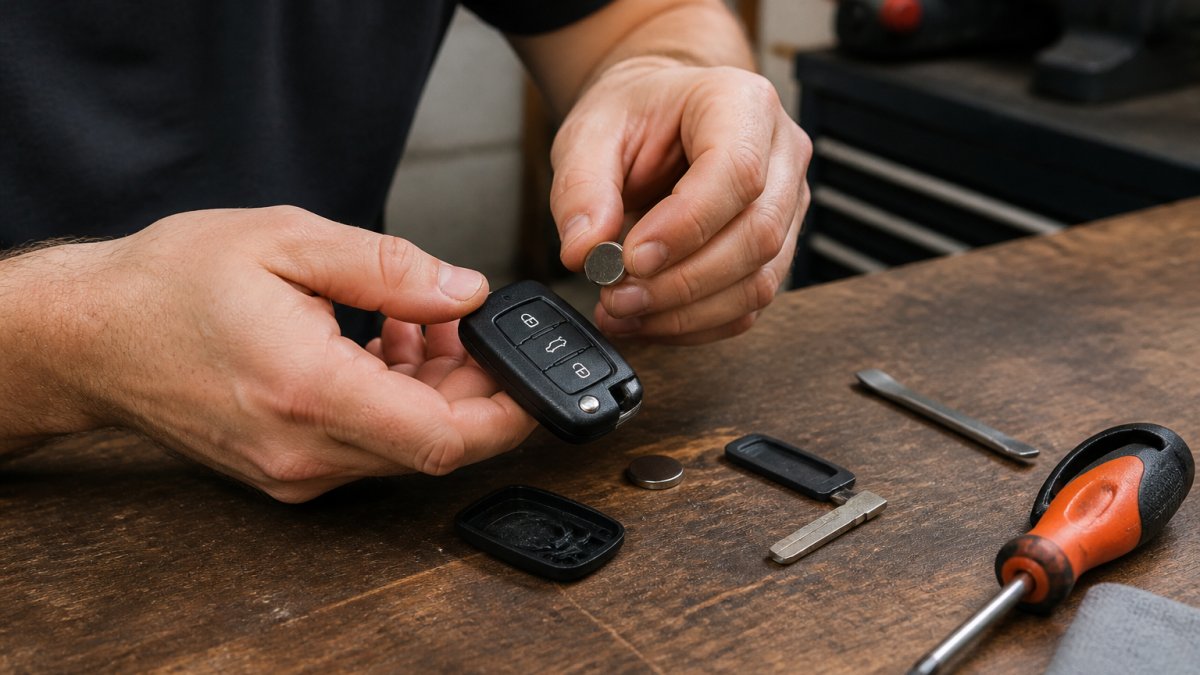
Why car key fobs stop working: dead batteries, signal interference, or vehicle faults. Learn to diagnose the problem and fix it fast.
Table of Contents
- Why Car Key Fobs Stop Working: Start With the Battery
- Key Fob Not Working After Battery Replacement? Check These First
- Physical Damage, Water, and Wear: When the Fob Itself Fails
- Signal Interference and Reduced Operating Range
- Car Not Recognizing Key Fob? Vehicle-Side Causes to Rule Out
- How to Reprogram a Key Fob (and When You Need a Locksmith)
- Emergency Entry and Starting When Your Fob Dies Completely
- Frequently Asked Questions
Last Updated: October 9, 2026
Why Car Key Fobs Stop Working: Start With the Battery
A dead key fob battery is the number one reason car key fobs stop working. We often find customers convinced their car's computer is fried, when a small coin-cell battery was the whole problem.
Signs Your Key Fob Battery Is Dying
The first sign is usually reduced range. You have to stand right next to the door before it unlocks.
Other clues include:
- The red indicator light on the fob looks dim or stops flashing
- The unlock button works but the trunk button doesn't
- You have to press harder than you used to
Cold and heat both weaken a failing battery. If your fob only fails on hot afternoons or freezing mornings, the battery is the likely culprit.
Most fobs use a coin-cell battery, often a CR2032 or CR1632. These typically last two to four years, depending on how often you press the buttons.
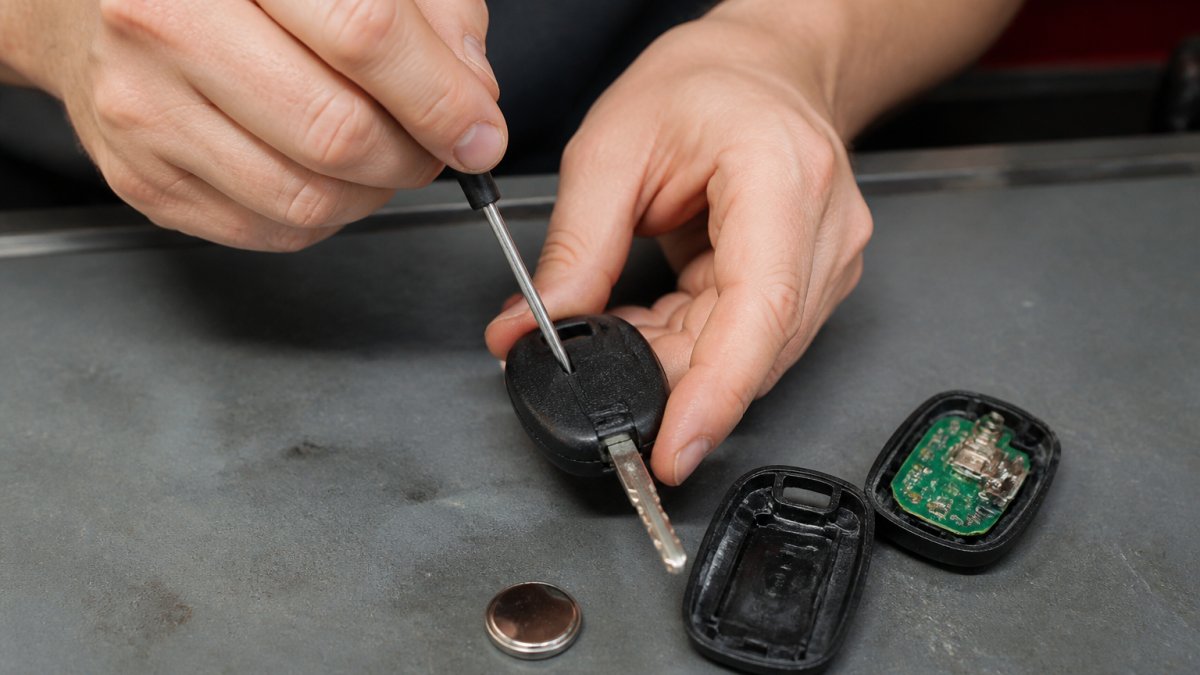
Car Key Fob Battery Replacement: Doing It Without Damage
Replacing the battery takes about five minutes. The risk isn't the battery itself. It's cracking the plastic casing or snapping the internal clips.
Here's how to do it safely:
- Find the seam. Look for a small groove where the two halves of the fob meet.
- Pry gently. Use a plastic trim tool or a flathead screwdriver wrapped in tape. Metal on plastic scratches.
- Work around the seam. Don't force one spot. Move along the edge until it pops.
- Note the battery orientation. The flat side with the plus sign faces up on most fobs.
- Lift the battery with a plastic tool. Never use metal near the contacts.
- Snap the casing back together. Press firmly around the full edge until it clicks.
Key Fob Not Working After Battery Replacement? Check These First
A key fob that fails right after a battery swap usually has one of three fixable problems: the battery is in backward, the contacts are dirty, or the fob lost its sync with the car.
Battery Polarity, Contacts, and the Relearn Step
Check battery polarity first: the plus side must face the correct direction, or the fob is dead even with a fresh battery.
Next, wipe the battery contacts, the small metal tabs that touch the battery, with a cotton swab and rubbing alcohol, since skin oils, dust, and corrosion block the connection.
If the battery and contacts are fine, the fob may need to relearn its code. Many cars lose the fob's memory when the battery dies completely. The relearn process varies by make and model:
- Some cars: hold the lock and unlock buttons together for five seconds near the car
- Some cars: turn the ignition on and off in a set pattern
- Some cars: use a specific sequence with the door lock switch
Check your owner's manual for the exact steps. If the relearn fails twice, the fob may need professional reprogramming.
Physical Damage, Water, and Wear: When the Fob Itself Fails
The fob takes more abuse than any other part of your key setup. Work through these checks in order before assuming it's dead.
Step 1: Inspect the Buttons and Casing
Press each button slowly and listen for a faint click. A healthy rubber dome snaps and springs back. A mushy, sticking, or hard-press button means the conductive pad underneath has worn out, repairable on many fobs with replacement pads and shells, but usually a new fob on sealed, glued models.
Check the seam where the two halves meet. A hairline crack lets in dust and moisture, causing intermittent failures as the internal contacts shift when the fob flexes.
Step 2: Rule Out Water Damage
Water damage is hardest to spot because the fob often works for a day or two after drying, then fails for good as corrosion spreads. Telltale signs: a greenish or white crust on the board, a faint burnt smell, or a battery that drains within days.
If your fob took a swim:
- Do not press the buttons. Pressing them while wet pushes water deeper into the board.
- Open the case and remove the battery immediately.
- Rinse the board with isopropyl alcohol (90 percent or higher) to displace the water and any dissolved minerals.
- Let it air-dry for at least 24 hours, do not use a hair dryer, which can warp the plastic and cook the chip.
- Install a fresh battery and test.
If the fob still fails after drying, the corrosion has already bridged a circuit trace. At that point, replacement is almost always cheaper than board-level repair.
Step 3: Check the Internal Contacts
With the case open, check the small metal tabs that press against the battery. They bend over years of battery changes and lose tension, so gently lift each tab with a plastic tool, then wipe the tabs and battery holder with a cotton swab dipped in rubbing alcohol.
Step 4: Decide Repair vs. Replace
Use this rule of thumb:
- Worn buttons or a cracked shell on a common model: repair is usually worthwhile.
- Water damage, a snapped circuit board, or a fob older than about eight years: replacement is usually the better call, because the internal components are at end of life anyway.
- Fob is also your only key and the car is push-button start: replacement plus programming is the realistic path, since a damaged fob cannot always be re-synced.
We can test your fob and help you determine whether a new battery, a new shell, or a full replacement is the right call.
Signal Interference and Reduced Operating Range
Sometimes the fob is fine and something nearby is blocking it. Key fobs send a weak radio-frequency signal to a receiver in your car, and other devices can drown it out.
Common sources of interference:
- Cell phone chargers and USB cables
- Metal objects in your pocket or bag
- Other key fobs sitting right next to yours
If your fob works in one spot but fails in another, interference is likely.
A healthy fob reaches 30 to 50 feet. If yours only works within a few feet, the battery is weak or the car's antenna has a problem.
Car Not Recognizing Key Fob? Vehicle-Side Causes to Rule Out
If a fresh battery and a clean fob still don't work, the problem is probably in the car, not the fob. The vehicle's electrical system powers the receiver that reads your fob's signal, and when it has issues, the fob gets blamed unfairly.
Blown Fuses, Weak Car Battery, and Receiver Problems
A blown fuse is a common, cheap fix. The receiver module and door locks run on fuses that blow from a power surge or short, check your fuse box against the owner's manual diagram.
A weak car battery causes strange electrical symptoms. If your car cranks slowly or interior lights look dim, test the battery before blaming the fob.
Other vehicle-side causes:
- Faulty receiver module. The part that reads the fob signal can fail.
- Antenna damage. A broken or disconnected antenna kills the fob's range.
- Wiring faults. Rodents chew wires, and corrosion builds up at connections.
How to Reprogram a Key Fob (and When You Need a Locksmith)
Reprogramming a key fob means syncing it back to your car's computer so the vehicle recognizes its signal. But "reprogramming" loosely describes three different jobs with wildly different costs. Knowing which one you need is the difference between a five-minute fix and a dealership appointment.
The Three Jobs People Call "Reprogramming"
1. Re-sync (or relearn). The fob and car are fine, but they lost their pairing, usually after a battery died or was replaced.
2. Reprogram an existing fob. The fob's code needs rewriting, either because it was erased or you're adding a second fob.
3. Replace and program a new fob. The original is lost, stolen, or destroyed.
What DIY Reprogramming Actually Covers
DIY reprogramming works on many older vehicles, roughly mid-2000s and earlier without push-button start or a chip-key immobilizer. Steps usually involve an ignition on/off pattern, pressing fob buttons in order, and waiting for a confirmation beep or light.
What DIY does not cover:
- Vehicles with a passive anti-theft system that requires a programmed transponder chip
- Push-button start vehicles, which typically need a diagnostic tool to authorize a new fob
- Any situation where the vehicle has erased all known fobs (often called "all keys lost")
Attempting a relearn on a vehicle that needs a scan tool won't damage anything, but it won't work, and repeated failures on some models trigger a short lockout.
What Drives the Cost
Costs vary widely by vehicle, but the factors that move the number are consistent:
- Whether the fob is a simple remote or a smart key. Smart keys with proximity entry and push-button start cost more to replace and program than a basic lock/unlock remote.
- Whether a mechanical key must be cut. Fobs with a flip-out or slide-out key require cutting, which adds a step.
- Whether the vehicle needs a security code or PIN. Some manufacturers require a dealer-issued code before a new fob can be programmed, which limits who can do the job.
Lock it All Locksmithing programs key fobs for most makes and models, including push-button start and immobilizer systems, and cuts and programs replacement keys on site.
When to Stop and Call a Professional
Stop and call for help if any of these apply:
- The relearn procedure fails twice in a row
- The vehicle will not enter programming mode at all
- You have lost all working fobs for the vehicle
Emergency Entry and Starting When Your Fob Dies Completely
A dead fob doesn't have to leave you stranded.
To get in: Look for a hidden keyhole under a plastic cap on the door handle.
To start the car: If your car has push-button start, hold the fob against the start button.
Other backup options:
- Use the backup key slot in the ignition
- Check for a fob slot in the center console
- Try the spare fob you keep at home
A fob that stops working is frustrating, but rarely a mystery once you know where to look.
When the fix needs tools you don't have, Lock it All Locksmithing can help.
Call 615-810-7304 to get your key fob working again.
Frequently Asked Questions
Do key fobs just stop working?
They rarely fail without warning. Most key fobs weaken gradually, so you may notice reduced range or the need to press the lock button twice before it quits entirely. A dead key-fob battery is the most common reason, followed by damaged casing, dirty battery contacts, or lost synchronization. If the fob stopped suddenly after a battery change, check polarity and the relearn procedure. If both fobs quit at once, the problem is usually vehicle-side, such as a blown fuse or weak car battery.
Why is my car not recognizing my key fob?
When your car is not recognizing the key fob, the fault usually sits with the vehicle rather than the fob. Common causes include a blown fuse protecting the remote keyless entry receiver, a weak vehicle battery, a disconnected antenna, or a fob that lost its programming. Try the spare fob first. If the spare works, the original fob needs repair or reprogramming. If neither works, have the vehicle's electrical system and receiver checked before replacing any hardware.
Can I still drive my car with a dead key fob?
Yes, in most modern vehicles with push-button start. Hold the fob against the start button or place it in the designated backup slot, often inside the center console or near the cupholder, then press the brake and the start button. If your car uses a mechanical key, use the hidden backup key inside the fob to unlock the door, then insert the fob into the ignition slot. Check your owner's manual for the exact emergency start location, since it varies by model.
Can a key fob lose its programming?
A key fob can lose synchronization with the vehicle's immobilizer, especially after a battery replacement, a jump start, or a dead car battery. The fob itself is rarely broken in these cases. Many vehicles can be resynced with a simple in-car sequence, such as cycling the ignition or pressing a combination of buttons. When that fails, a locksmith with key programming equipment can restore the fob to the vehicle's system without a dealership visit.
Why Nashville drivers choose Lock it All Locksmithing
We are a locally owned, licensed and insured mobile locksmith serving Nashville, Antioch, Brentwood, Franklin, Smyrna, La Vergne, Murfreesboro, Hermitage and Mt. Juliet. You speak directly with the technician who does the work, get an honest price before we dispatch, and we arrive in a fully stocked service vehicle so most jobs finish in a single visit — usually within 20 to 45 minutes of arriving. No towing, no dealership appointment, no surprise fees.
How the visit works
- Tell us the details: call, text or send the quote form with your vehicle's year, make and model, or a description of your lock problem.
- Get an exact price: we quote parts, cutting, programming and travel up front.
- We come to you: our mobile workshop meets you at home, work or roadside.
- Done on the spot: keys are cut, programmed and tested with you before we leave.
Areas we serve
Nashville, Antioch, Brentwood, Franklin, Smyrna, La Vergne, Murfreesboro, Hermitage and Mt. Juliet. If you're outside these areas, call 615-810-7304 to confirm whether we can help.
What our customers say
Best locksmith in town excellent service and great price !!
— Adrian Fiorito, 5 stars.Very wonderful service, strong quality, great prices, and it does not take long.
— George Yacoub, 5 stars.Great customer service - Professional - Fast Highly recommend.
— Jan Daoud, 5 stars.
Rated 5 stars across 100+ verified Google reviews. Call or text 615-810-7304 or email info@lia-locksmith.com.