What Is a Transponder Car Key: Complete 2026 Guide
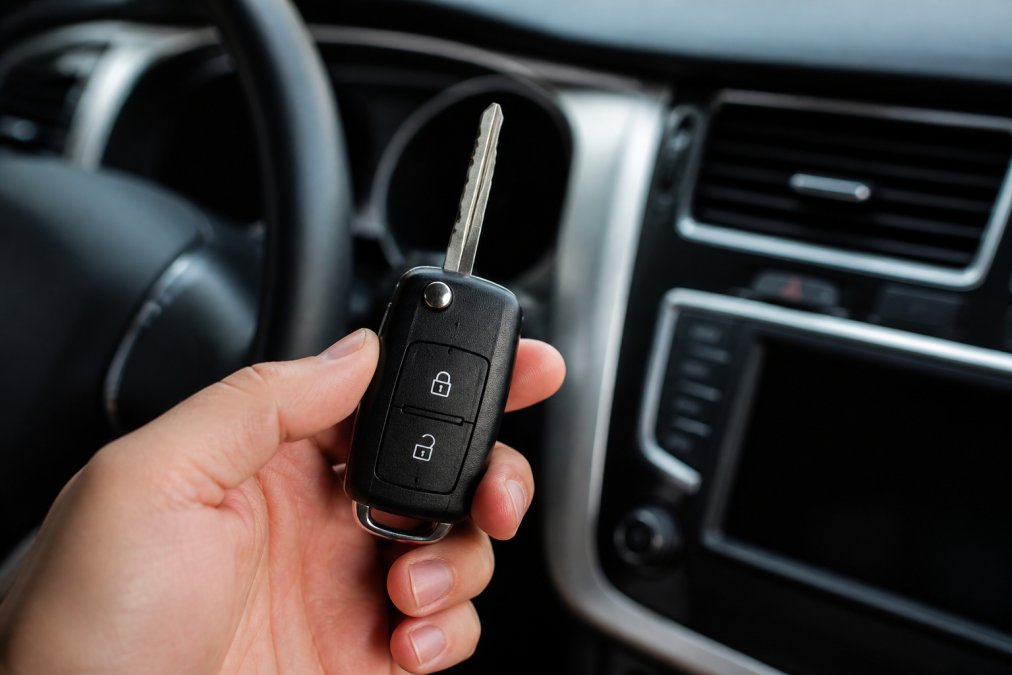
Learn how transponder car keys work, their security benefits, and what to do if yours fails. Expert guide to modern vehicle key technology.
Table of Contents
- What Is a Transponder Car Key?
- How Transponder Keys Work: The Technology Behind the Security
- How to Tell If Your Key Has a Chip
- Transponder Key Programming Cost and Your Options
- Can I Program My Own Transponder Key?
- Security Vulnerabilities and Relay Attack Risks
- When Your Transponder Key Fails: Signs and Solutions
- Conclusion
- Frequently Asked Questions
Last Updated: September 18, 2026
What Is a Transponder Car Key?
A transponder car key is a vehicle key embedded with a microchip that communicates wirelessly with your car's immobilizer system to authorize engine ignition. The chip uses radio frequency identification (RFID) technology to transmit a coded signal that must match your vehicle's receiver before the engine will start.
Unlike traditional metal keys that rely on physical cuts alone, a transponder car key adds electronic security: your vehicle won't start even if someone duplicates the physical blade, because the immobilizer rejects it without the correct chip signal.
Most vehicles manufactured after 1995 use this technology as standard.
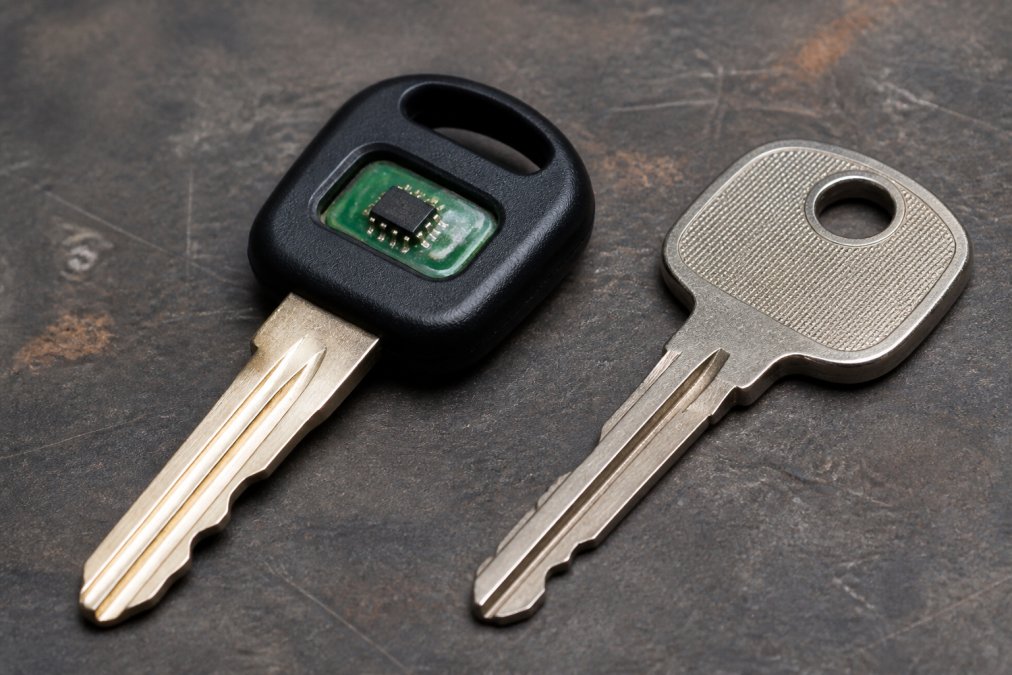
The plastic bow houses the microchip, while the metal blade functions conventionally, providing both physical and electronic security in one tool.
How Transponder Keys Work: The Technology Behind the Security
Your transponder car key operates through a synchronized exchange between the key's chip and your vehicle's Engine Control Unit (ECU). When inserted, the car's receiver coil sends a radio frequency signal that activates the microchip, which responds by transmitting its unique code back to the ECU.
The ECU compares this incoming code against the codes programmed into its memory during the original key programming. If the code matches, the immobilizer deactivates and allows the engine to start. If the code doesn't match, or if no code is received at all, the immobilizer locks the ignition system, preventing the engine from cranking.
This authentication happens invisibly in milliseconds, representing a significant anti-theft improvement over mechanical-only systems.
The range is intentionally short, typically a few inches, to prevent relay attacks, though keyless entry systems use longer ranges with different security implications.
Each vehicle stores multiple transponder codes, allowing backup keys to be programmed by a professional locksmith or dealership.
How to Tell If Your Key Has a Chip
The easiest way to identify a transponder chip is to look at the plastic bow, most have noticeably thicker plastic than traditional keys to accommodate the microchip.
You may see a small circular or rectangular indent on the plastic bow where the chip sits, or feel a slight bulge, both reliable indicators.
If your car was manufactured after 1995, it almost certainly uses a transponder system.
The most definitive test is functional: if your car has an immobilizer light on the dashboard that blinks when you turn the key without starting the engine, you have a transponder system. That blinking light indicates the ECU is waiting for the correct chip signal.
When you need a replacement, a locksmith can verify chip requirements by checking your VIN against manufacturer databases before quoting costs.
Transponder Key Programming Cost and Your Options
Programming a new transponder car key involves three main pathways: dealership programming, independent locksmith services, or DIY methods (for some vehicles). Each carries different costs and timeframes.
Dealership Programming
Independent Locksmith Services Independent locksmiths use manufacturer databases, often offering mobile service options. Verify the locksmith is certified with current manufacturer specs for your vehicle.
DIY Programming (Limited Availability) Some vehicles allow DIY programming via ignition sequences, but this is rare for newer models. Check your owner's manual; attempting DIY on unsupported vehicles triggers lockouts requiring dealership reset.
What's Included in Programming Cost Most quotes include the key blank and programming, though some charge separately. Always confirm what's included and whether additional keys cost less when programmed together.
Getting an Accurate Quote The only way to get a precise cost estimate is to contact a professional with your vehicle's VIN or year, make, and model. Provide the year because immobilizer complexity varies significantly within the same model line. A 2008 Honda Civic and a 2015 Honda Civic use different security systems and will have different programming costs.
Can I Program My Own Transponder Key?
DIY programming is theoretically possible for some vehicles but rarely advisable, the process is manufacturer-specific and easy to get wrong.
Failure to complete the sequence correctly locks you out of programming mode, requiring dealership reset and defeating cost savings.
Modern vehicles use encrypted protocols requiring specialized diagnostic tools restricted to authorized dealers and certified locksmiths. DIY attempts without proper equipment trigger lockouts or immobilizer damage.
Incorrect programming can corrupt immobilizer memory or create key conflicts, requiring costly professional recovery.
The safest approach is professional locksmith programming.
Security Vulnerabilities and Relay Attack Risks
While transponder car keys improve security significantly, relay attacks pose a genuine concern for keyless entry systems, especially on luxury and newer vehicles.
A relay attack intercepts the signal between your key fob and vehicle: one thief holds a receiver near your home while another holds a transmitter near your car, relaying the signal so the vehicle receives what it believes is valid authentication.
The vulnerability exists because keyless systems transmit at longer ranges than traditional immobilizers, making the short-range security of standard transponder keys a liability.
Protect yourself with signal-blocking pouches (Faraday-cage style) to prevent RF signal escape, or park in a garage.
Some newer vehicles include anti-relay firmware. Check your manual; if not, keep keys away from doors and windows for defense.
When Your Transponder Key Fails: Signs and Solutions
A failing transponder car key shows specific signs: if the key turns smoothly but the car won't start, the chip is likely faulty, not the lock.
Common Failure Symptoms
Intermittent starting failure, working one day, failing the next, indicates a weak or failing chip. Environmental factors like temperature or moisture affect signal transmission.
A continuously lit immobilizer light indicates the ECU isn't receiving a valid signal. A blinking light that stops when the engine starts is normal; continuous light means authentication failed.
Water damage is common: moisture exposure causes internal corrosion, degrading and eventually stopping signal transmission.
Physical damage to the plastic bow can also compromise the chip. If the key has been stepped on, bent, or cracked, the internal connections might be damaged even if the external damage looks minor.
Troubleshooting Signal Interference (Before Assuming Chip Failure)
Before replacing your key, rule out environmental interference, RF signals can be blocked or degraded temporarily, and interference is often fixable.
Test your key in different locations. If it works better at a distance, you have signal interference. Common culprits include:
- Aftermarket car alarms or GPS trackers (especially poorly installed units)
- Phone chargers or USB power adapters in the dashboard
- Radar detectors mounted on the windshield
- Magnetic phone holders attached to the dashboard or steering column
- High-powered car audio amplifiers or subwoofers
- Proximity to power lines or electrical substations (test by parking elsewhere)
Temporarily disable the suspected device and test. If the key works, relocating or shielding the device often resolves the issue without replacement.
Transponder chips are temperature-sensitive. If your key fails on cold mornings but works when warm, or if humidity causes intermittent issues, try these diagnostics:
- Warm the key in your hand for 30 seconds before inserting
- Store in a dry location
- If it works better after the car warms up, temperature sensitivity is the issue
These are temporary workarounds; persistent failures require replacement.
Sometimes the problem is a failing ECU or receiver coil, not the key. Test with a backup key: if it also fails, the receiver system is faulty, requiring dealership service, not key replacement.
If you have only one key, ask a locksmith to test signal output. If the chip transmits but the car won't start, the receiver system is faulty.
When Replacement Is Necessary
If you've ruled out interference and the key consistently fails to authenticate, replacement is your only option. A professional locksmith can assess whether the key is actually faulty or whether the problem lies with your vehicle's receiver system. Proper diagnosis prevents unnecessary key replacements and saves you from paying for a new key when the real issue is a failing ECU or receiver coil, which requires different (and often more expensive) repair.
Conclusion
Understanding your transponder car key system helps you make better decisions about maintenance, replacement, and security.
When you need a transponder car key replacement or programming, Lock it All Locksmithing delivers expert service. We handle diagnostic assessment, proper programming, and can address security concerns specific to your vehicle model. Contact Lock it All Locksmithing at 615-810-7304 to discuss your transponder key needs, we're ready to get you back on the road with a secure, properly functioning key system.
Frequently Asked Questions
How do I know if my car key has a transponder chip?
Most cars manufactured after 1995 have transponder keys. Check if your key has a plastic head (called the bow) that's thicker than just a metal blade. You can also look for a small chip window or bulge in the plastic. If your car alarm activates when you try to start it with a non-chipped key, that's a clear sign your vehicle requires a transponder. The only way to be completely certain is to have a professional locksmith scan the key with a diagnostic tool.
What is the typical transponder key programming cost?
Programming costs vary significantly based on your vehicle's year, make, and model, whether you visit a dealership or a professional locksmith, and your location. Dealerships typically charge more than independent locksmiths. Some vehicles allow DIY programming using specific key sequences, which costs nothing but requires precise execution. For accurate pricing tailored to your specific vehicle and situation, contact a qualified locksmith or your vehicle's dealership directly for a quote.
Can I program my own transponder key at home?
Some vehicles allow owner programming using a specific sequence of ignition turns and button presses, but this only works for certain makes and model years. Many modern vehicles require specialized diagnostic equipment and dealer-level access to the Engine Control Unit (ECU). Incorrect programming attempts can lock you out of your vehicle or damage the immobilizer system. Professional programming ensures your key is correctly synchronized with your vehicle's security system without risking damage to your car's computer.
What happens if my transponder chip stops working?
A faulty transponder chip prevents your vehicle from recognizing the key as authentic, and the immobilizer will block engine startup even if the physical key turns the ignition. You'll typically see warning lights on your dashboard or hear the alarm activate. The vehicle may allow you to unlock the doors but won't start. The only solution is replacement or reprogramming of the key. A professional locksmith can diagnose whether the chip itself is damaged or if it's a signal transmission problem caused by interference or a dead battery in the key fob.
Why Nashville drivers choose Lock it All Locksmithing
We are a locally owned, licensed and insured mobile locksmith serving Nashville, Antioch, Brentwood, Franklin, Smyrna, La Vergne, Murfreesboro, Hermitage and Mt. Juliet. You speak directly with the technician who does the work, get an honest price before we dispatch, and we arrive in a fully stocked service vehicle so most jobs finish in a single visit — usually within 20 to 45 minutes of arriving. No towing, no dealership appointment, no surprise fees.
How the visit works
- Tell us the details: call, text or send the quote form with your vehicle's year, make and model, or a description of your lock problem.
- Get an exact price: we quote parts, cutting, programming and travel up front.
- We come to you: our mobile workshop meets you at home, work or roadside.
- Done on the spot: keys are cut, programmed and tested with you before we leave.
Areas we serve
Nashville, Antioch, Brentwood, Franklin, Smyrna, La Vergne, Murfreesboro, Hermitage and Mt. Juliet. If you're outside these areas, call 615-810-7304 to confirm whether we can help.
What our customers say
Best locksmith in town excellent service and great price !!
— Adrian Fiorito, 5 stars.Very wonderful service, strong quality, great prices, and it does not take long.
— George Yacoub, 5 stars.Great customer service - Professional - Fast Highly recommend.
— Jan Daoud, 5 stars.
Rated 5 stars across 100+ verified Google reviews. Call or text 615-810-7304 or email info@lia-locksmith.com.