Transponder Key vs Standard Key Difference Explained
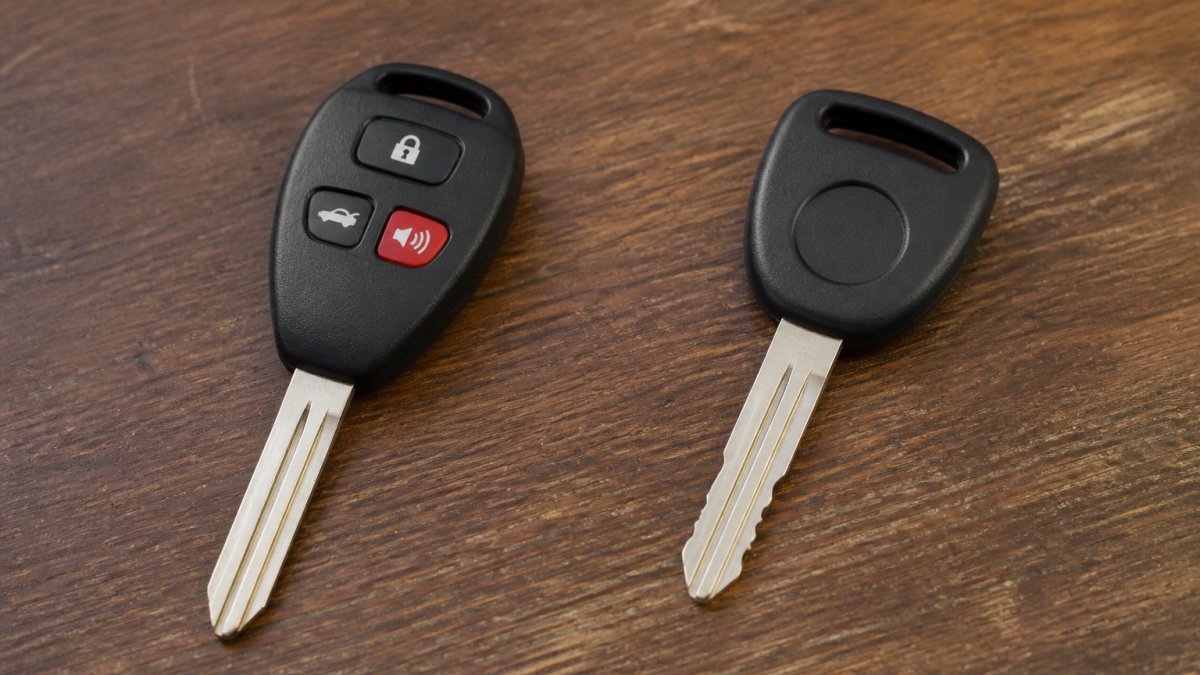
Discover the transponder key vs standard key difference, from chip security to replacement options.
Table of Contents
- Transponder Key vs Standard Key: Key Differences at a Glance
- How to Tell If a Car Key Has a Chip
- Transponder Key Programming: What It Involves
- Transponder Key Replacement Without Original: Your Options
- Transponder Key Replacement Cost: What Affects the Price
- What Happens When a Transponder Key Fails or Loses Its Code
- Frequently Asked Questions
Last Updated: October 12, 2026
Transponder Key vs Standard Key: Key Differences at a Glance
A transponder key is a car key with a small embedded microchip that communicates a unique code to your vehicle's immobilizer before the engine will start. A standard key is a plain metal blade with no chip and no electronic authentication.
At Lock it All Locksmithing, we handle car key replacement and key fob programming across Tennessee every week, and the confusion between these two key types is one of the most common calls we get. The National Highway Traffic Safety Administration guidance on vehicle theft prevention makes the stakes clear: anti-theft technology matters, and a chip key is a meaningful layer of it.
Below, we'll break down how each key type works, how to tell which one you have, and what replacement involves.
Quick Comparison Table
| Feature | Transponder Key | Standard Key |
|---|---|---|
| Embedded chip | Yes (RFID microchip) | No |
| Engine start | Only with valid code | Mechanical only |
| Theft deterrent | Vehicle immobilizer | None |
| Replacement | Requires programming | Simple cutting |
| Cost | Higher | Lower |
| Common on | Most vehicles from late 1990s onward | Older vehicles, some basic models |
The takeaway: a transponder key adds an electronic handshake before your engine turns over, while a standard key relies entirely on the blade's physical shape.
The Mechanism, Side by Side
A standard key is purely mechanical.
A transponder key adds a second, invisible layer. Inside the plastic head sits a passive RFID chip, no battery required.
The key distinction: a standard key authenticates with shape, a transponder key with shape plus a rolling electronic code. Cutting the blade gets you past the cylinder; only the chip gets you past the immobilizer.
Where the Line Blurs
Two clarifications matter, because most comparison articles skip them:
- A transponder key does not need a remote fob. Plenty of chipped keys are plain, buttonless keys with a molded head. The chip is in the head, not the fob. A dead fob battery does not stop a transponder key from starting the car.
- A remote fob does not always mean a transponder key. Some older vehicles had remote lock/unlock fobs paired with a plain, non-chipped ignition key. Remote entry and immobilizer are separate systems that happen to share a key on many modern vehicles.
Compatibility Is Not a Clean Cutoff
It's tempting to say "transponder keys arrived in the late 1990s," but adoption varies widely by manufacturer, model, and model year. Some economy models kept non-chipped keys well into the 2000s, and some vehicles offered a chipped key on higher trims and a standard key on base trims. The only reliable way to know what your vehicle uses is to check the owner's manual, look for an immobilizer or security indicator on the dash, or have a qualified locksmith confirm it against your VIN.
What Each Key Actually Protects Against
A standard key offers essentially no theft deterrent beyond the physical lock, a screwdriver, a shaved key, or a hotwire defeats it in seconds. A transponder key raises the bar considerably: a thief who can turn the cylinder still can't start the car without a valid chip code.
But a transponder key is not theft-proof. Relay attacks, signal capture, and key-cloning tools exist, and a determined thief with the right equipment can defeat some systems.
How to Tell If a Car Key Has a Chip
The fastest way to tell if a car key has a chip is to check the key head. A transponder key almost always has a thicker, molded plastic head housing the chip, while a standard key has a thin, simple head or a plain metal blade with no electronics. A rubber or plastic cover over a bulky head is a strong sign of a chip.
Physical Signs to Look For
- A thick, molded plastic key head rather than flat metal
- A visible seam or casing where a chip could sit
- A small logo or "chip" marking on the head
- A remote fob built into the key (remote key)
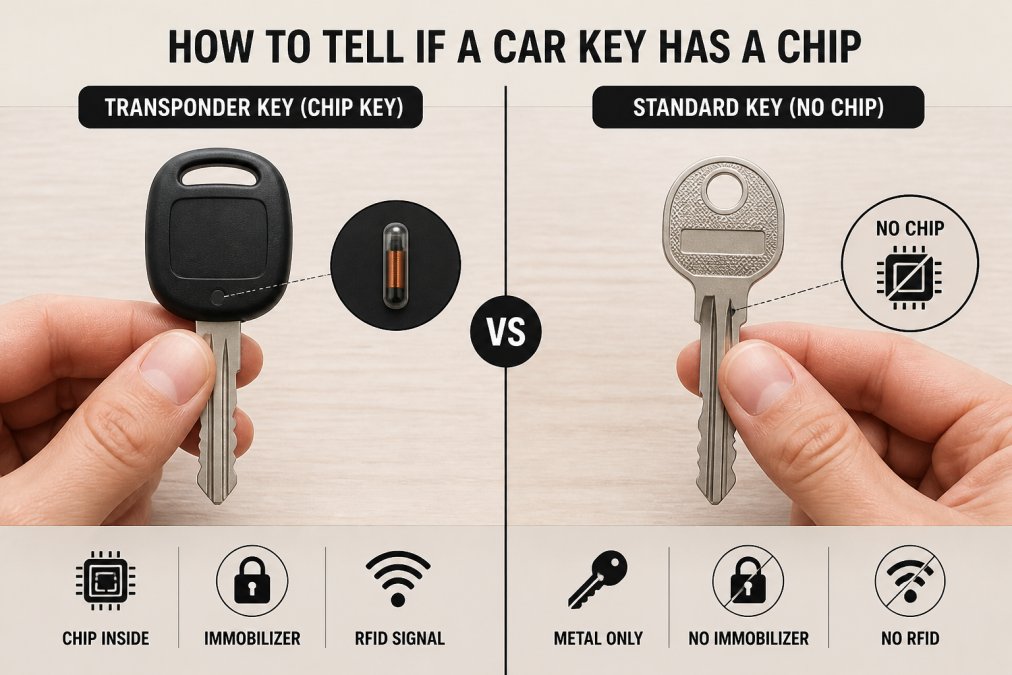
If you're still unsure, try starting the car with a cheap cut copy. A standard key copy will start a non-chip car; if the engine cranks but won't fire, you're almost certainly dealing with a transponder key and an immobilizer.
Transponder Key Programming: What It Involves
Transponder key programming pairs a new key's chip to your vehicle so the immobilizer recognizes its unique code.
The chip broadcasts a short-range radio-frequency signal near the ignition; the immobilizer reads it, checks the code against its stored list, and only then allows the engine to start. Programming writes your vehicle's accepted code onto the new chip.
There are two broad approaches:
- Onboard programming: Some vehicles let you add a key using a sequence of steps with an existing working key present.
- Diagnostic programming: Most modern vehicles require a locksmith or dealer to connect diagnostic equipment and code the key through the vehicle's computer.
This is where experience matters.
Transponder Key Replacement Without Original: Your Options
Losing every key to a transponder-equipped vehicle is stressful, but rarely a dead end.
Your main options when you have no original key:
- Mobile locksmith: Comes to your location, cuts and programs on site. Usually the fastest route.
- Dealership: Reliable, but often requires a tow and a longer wait.
- Aftermarket key blanks: A quality blank paired with professional programming works like the original.
A common mistake is buying a cheap uncut key online and expecting it to work. The blank still needs cutting to your ignition cylinder and its chip programmed to your vehicle; skipping either step leaves you with a key that won't start the car.
For drivers in Tennessee, our team handles car key replacement and key fob programming, so you're not stuck waiting on a dealership appointment.
Transponder Key Replacement Cost: What Affects the Price
Pricing for a transponder key replacement depends on several factors, and we won't quote a number that doesn't fit your vehicle. What drives the price:
- Make and model: Luxury and newer vehicles cost more to program.
- Key type: A basic chipped key costs less than a smart key or keyless entry fob.
- Number of keys: Replacing one key versus all keys differs.
- Programming method: Onboard sequences are cheaper than diagnostic programming.
Because these variables swing so widely, cost depends on your vehicle. Get a quote based on your exact make, model, and model year before committing. Reach out to Lock it All Locksmithing at 615-810-7304 for current pricing.
The Three Routes, Compared
Most drivers have three realistic paths, and they differ sharply in cost, speed, and convenience:
1. Dealership. The dealer has factory tooling and guaranteed OEM key blanks, the safest bet for newer or luxury vehicles. Trade-offs: you often need a tow if you have no working key, appointments can run days out, and the labor rate is the highest of the three. For an all-keys-lost situation on a late-model car, this is frequently the most expensive route.
2. Mobile locksmith. A qualified locksmith can cut and program on site, often the same day, typically at a lower total than a dealer once you factor in towing, usually the fastest option for a lost-key or no-start situation.
3. Aftermarket key and self-programming. For some vehicles, you can buy a quality aftermarket blank and either use an onboard programming sequence (if the vehicle supports it and you have a working key) or have a locksmith program it.
What Actually Moves the Number
Beyond the vehicle itself, a few specifics drive the total more than people expect:
- All keys lost vs. a spare. Adding a spare while you still have one working key is almost always cheaper than an all-keys-lost job, because the working key can authorize the new one on many vehicles.
- Onboard vs. diagnostic programming. If your vehicle supports an onboard sequence, you skip the diagnostic equipment and labor. If it doesn't, a locksmith or dealer must connect to the vehicle's computer.
- Key type. A basic chipped key is the least expensive. A remote-head key or a smart key with push-button start adds cost because there's more hardware and more complex pairing.
- Blade cutting. A new blank still has to be cut to your ignition cylinder, and some high-security or laser-cut blades require specialized equipment.
What to Ask Before You Commit
A short, specific quote request saves money and frustration. Ask any provider:
- Do you carry the blank and programming software for my exact year, make, and model?
- Is this an onboard or diagnostic programming job?
- Does the quote include cutting the blade and programming the chip, or just the key?
- Is there a separate service call or after-hours fee?
- What happens if the key doesn't program, is that covered?
The cheapest transponder key is the spare you program while you still have a working key. Once all keys are lost, every route gets more expensive and slower, so if you only have one chipped key today, that's the moment to add a second.
What Happens When a Transponder Key Fails or Loses Its Code
When a transponder key fails, the most common symptom is an engine that cranks but won't start, because the immobilizer isn't receiving a valid code.
The cause usually falls into one of three buckets:
- Chip failure: The microchip or its antenna is damaged, often from a drop or moisture.
- Battery failure: In keys with a remote or smart key, a dead battery stops the fob function, though the chip itself may still work.
- Lost code: The vehicle's computer no longer recognizes the key, which can happen after certain electrical events or a failed programming attempt.
A damaged key blade is a separate issue: if the blade is bent or worn, it may not turn the ignition cylinder even when the chip is fine, and the key needs re-cutting or replacement.
The good news: most of these problems are fixable. A locksmith can diagnose whether it's the chip, the battery, or the code, and re-program or replace the key accordingly.
Frequently Asked Questions
How can I tell if my key is a transponder key?
Look at the key's head. A transponder key has a thicker, plastic head that contains a microchip and often a small logo or a battery compartment. A standard key has a simple metal blade with a small, thin plastic or rubber cover. Another sign: if your car has a push-button start or a key fob, it almost certainly uses a transponder or smart key system.
Can you replace a transponder key without the original?
Yes, but it requires proof of ownership. A locksmith or dealership can cut a new key by using your vehicle's VIN and registration. They will then program the new transponder chip to match your car's immobilizer. Without the original, the process takes longer and may cost more, but it is doable for most makes and models.
Do transponder keys need to be programmed?
Yes. The transponder chip must be programmed to communicate with your vehicle's immobilizer. Programming can be done by a locksmith with the right equipment or at a dealership. Some cars allow on-board programming if you have two working keys, but many require a professional scan tool to add a new key.
What happens if a standard key is used on a car that requires a transponder key?
The engine will not start. The immobilizer will not receive the correct coded signal from the key, so it disables the ignition or fuel system. You might be able to turn the ignition cylinder, but the engine will not fire. In some cases, the security light will flash, and the car may enter a lockout mode.
A failed or lost transponder key can leave you stranded, and guessing your way through programming risks more than just wasted time. Lock it All Locksmithing specializes in expert car key replacement, key fob programming, and remote start installation for modern vehicles, backed by comprehensive security solutions for homes, businesses, and vehicles. Get started with Lock it All Locksmithing and get back on the road with a key that works the first time.
Why Nashville drivers choose Lock it All Locksmithing
We are a locally owned, licensed and insured mobile locksmith serving Nashville, Antioch, Brentwood, Franklin, Smyrna, La Vergne, Murfreesboro, Hermitage and Mt. Juliet. You speak directly with the technician who does the work, get an honest price before we dispatch, and we arrive in a fully stocked service vehicle so most jobs finish in a single visit — usually within 20 to 45 minutes of arriving. No towing, no dealership appointment, no surprise fees.
How the visit works
- Tell us the details: call, text or send the quote form with your vehicle's year, make and model, or a description of your lock problem.
- Get an exact price: we quote parts, cutting, programming and travel up front.
- We come to you: our mobile workshop meets you at home, work or roadside.
- Done on the spot: keys are cut, programmed and tested with you before we leave.
Areas we serve
Nashville, Antioch, Brentwood, Franklin, Smyrna, La Vergne, Murfreesboro, Hermitage and Mt. Juliet. If you're outside these areas, call 615-810-7304 to confirm whether we can help.
What our customers say
Best locksmith in town excellent service and great price !!
— Adrian Fiorito, 5 stars.Very wonderful service, strong quality, great prices, and it does not take long.
— George Yacoub, 5 stars.Great customer service - Professional - Fast Highly recommend.
— Jan Daoud, 5 stars.
Rated 5 stars across 100+ verified Google reviews. Call or text 615-810-7304 or email info@lia-locksmith.com.