Rekeying Locks After Buying a New House
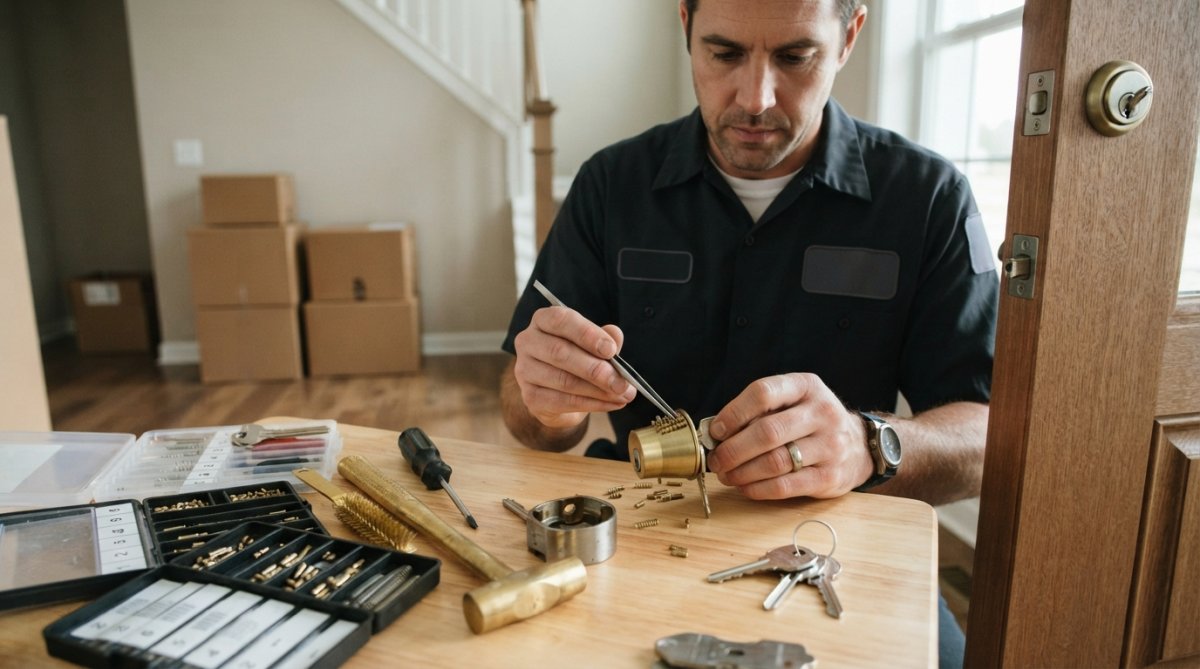
Rekeying locks after buying a new house protects your home from previous owners. Learn when to rekey, costs, timing, and whether to hire a professional.
Table of Contents
- Why You Should Rekey Your Locks After Buying a New House
- Security Risks: What Previous Homeowners Could Access
- Rekeying vs Replacing Locks: Which Option Makes Sense
- Cost to Rekey House Locks: What to Expect
- How Long Does It Take to Rekey a House
- Professional Locksmith Service vs DIY Rekeying
- Smart Locks and Modern Security After Your Home Purchase
- Your Home Security Checklist: Beyond Lock Rekeying
- Frequently Asked Questions
Last Updated: September 19, 2026
Why You Should Rekey Your Locks After Buying a New House
Rekeying locks after buying a new house is one of the most overlooked security decisions new homeowners make. You have no way of knowing how many key copies exist or who might have access, former owners, contractors, real estate agents, or service providers could all possess working keys to your doors.
Rekeying locks after buying a new house establishes practical control over who can enter your property.
Rekeying is straightforward: a locksmith removes the internal pins and springs from your existing lock cylinder and replaces them with a new configuration that matches a fresh key. Your current deadbolts and hardware stay in place. Only the internal mechanism changes, making it impossible for old keys to work.
Without knowing the property's full history, contractor access, showing frequency, spare key distribution, rekeying is the logical first step in securing your new home.
Security Risks: What Previous Homeowners Could Access
The security vulnerability is real and immediate. Every person who held a key, the seller, contractors, cleaners, inspectors, and real estate agents, could theoretically still access your home, with no way to verify if they returned keys or made duplicates.
This is a documented residential security risk. A contractor might have kept a key; a real estate agent could have distributed spares. Those keys remain functional until you change the lock mechanism.
An unauthorized person with a key could enter while you're away, move items, access documents, or steal valuables, damage may not be immediately obvious.
Rekeying eliminates this risk entirely. Once the pins and springs are reconfigured, every old key becomes useless. Only your new keys work.
Rekey locks after buying a new house before moving in belongings. The window between closing and occupancy is when your home is most vulnerable to unauthorized entry.
Rekeying vs Replacing Locks: Which Option Makes Sense
Two main options exist: rekeying your existing locks or replacing them entirely. Both solve the security problem but differ in cost, time, and outcomes.
How Rekeying Works
Rekeying involves disassembling the lock cylinder and replacing the internal pins and springs with a new configuration. Your door hardware, strike plate, and frame remain untouched.
The process is mechanical and precise, typically taking 15-30 minutes per lock. Professional locksmiths have the specialized tools and expertise to ensure the work functions correctly.
Rekeying preserves existing hardware that functions smoothly while changing who can open the locks.
When to Replace Instead of Rekey
Lock replacement makes sense if existing locks are damaged, worn, or low-quality, or if you want smart locks or keypad entry systems.
Replacement also lets you standardize hardware throughout your home, whereas rekeying keeps existing locks that may be different brands or styles.
The trade-off is cost and time, replacement is more expensive and takes longer, but you get new hardware under your control.
| Approach | Time Required | Hardware Changes | Best For |
|---|---|---|---|
| Rekeying | 15-30 minutes per lock | Keeps existing locks | Budget-conscious, functional hardware |
| Replacing | 30-60 minutes per lock | New hardware installed | Upgrading to smart locks, damaged locks |
Cost to Rekey House Locks: What to Expect
The cost to rekey house locks varies based on several factors: the number of locks, the complexity of each lock, your location, and whether you hire a professional or attempt DIY rekeying.
Professional rekeying service costs depend on how many entry points you want secured. Most new homeowners rekey the front door, back door, and garage entry at minimum. Some also rekey bedroom locks or office doors. The more locks you rekey, the better the per-lock rate typically becomes, as a locksmith can work more efficiently.
For specific pricing on rekeying locks after buying a new house, Lock it All Locksmithing provides quotes based on your exact situation. Contact the team at 615-810-7304 to discuss your home's security needs and get pricing.
Service call fees may apply if the locksmith travels to your home, though many locksmiths include this in their overall quote. Emergency or after-hours rekeying costs more than standard appointments. If you need rekeying done immediately after closing, expect to pay a premium for rapid scheduling.
DIY rekeying is possible if you have the right tools and patience. You'll need a rekeying kit specific to your lock brand, which costs less than professional service. However, DIY rekeying requires precision and care. A mistake means the lock won't function, and you'll need professional help anyway, potentially costing more in the end.
Most homeowners find professional rekeying more reliable and faster than attempting it themselves. The locksmith brings proper tools, knows how to handle different lock types, and guarantees the work functions correctly.
How Long Does It Take to Rekey a House
The time required to rekey a house depends on how many locks you're rekeying and their complexity. A single lock typically takes 15-30 minutes when a professional handles it. This includes removing the lock cylinder, replacing the pins, reassembling, and testing.
For a typical three-entry-point rekey (front door, back door, garage), you're looking at 45 minutes to 90 minutes total. The locksmith works sequentially, so if you have five locks to rekey, expect two to three hours.
The timeline also depends on lock condition. If a lock hasn't been serviced in years, it might be stiff or corroded, requiring extra time to open and service properly. If locks are well-maintained, the process moves faster.
Scheduling matters too. If you book a locksmith immediately after closing, you might wait days for an appointment during busy seasons. Planning ahead and scheduling rekeying before you move in eliminates the rush and often provides better availability.
Most homeowners can have rekeying locks after buying a new house completed in a single visit. You don't need multiple appointments or days of work. One professional visit handles all your entry points.
Professional Locksmith Service vs DIY Rekeying
The choice between hiring a professional locksmith and attempting DIY rekeying hinges on skill level, tool availability, and risk tolerance.
Professional locksmiths bring specialized training and equipment. They understand different lock mechanisms, know how to handle security vulnerabilities, and can rekey most residential locks quickly. They also provide accountability. If something goes wrong, they fix it. If a lock doesn't work after rekeying, they troubleshoot and correct the problem at no additional cost.
Lock it All Locksmithing offers professional rekeying service with the expertise to handle modern residential locks. Professional service means your locks function correctly, and you have recourse if issues arise.
DIY rekeying appeals to homeowners wanting to save money. Rekeying kits are available online and in hardware stores. The process is straightforward in theory: remove the cylinder, swap the pins, reassemble. In practice, precision matters enormously. Pins must be exactly the right size and placed in exact sequence. One error and the lock won't turn.
The risk with DIY rekeying is damaging the lock or getting pins stuck. If you force reassembly incorrectly, you might crack the cylinder or bend pins. You could end up with a lock that doesn't work and no way to open it without professional help.
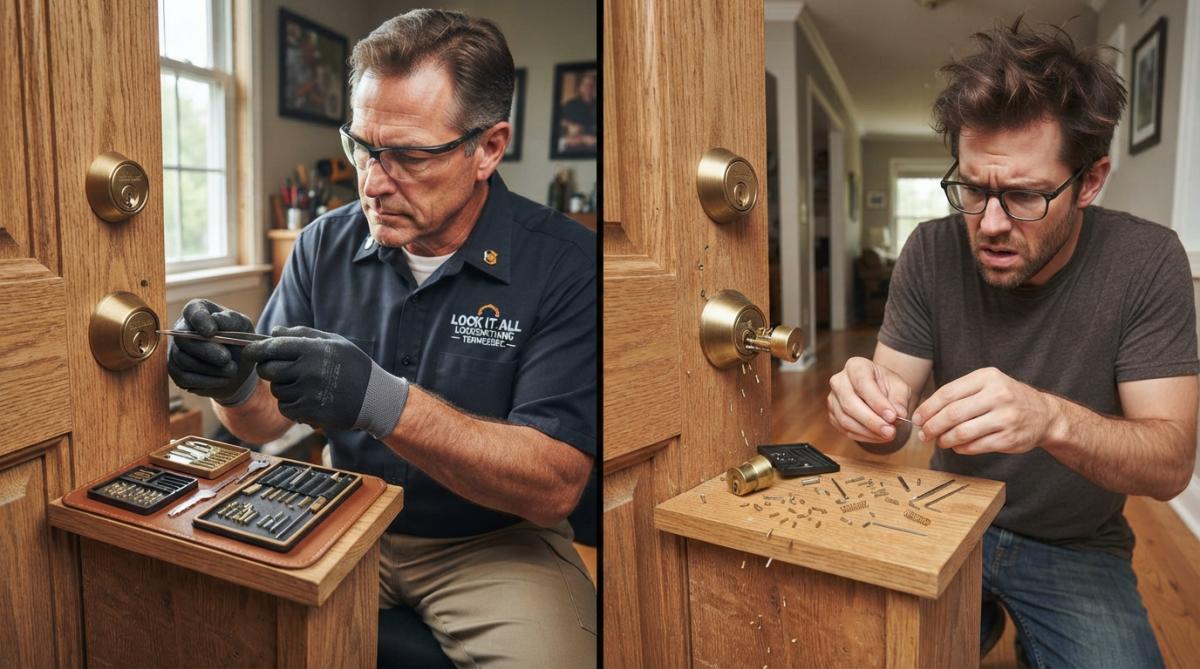
Most homeowners who attempt DIY rekeying either succeed quickly or discover they need professional help partway through. The time you save on labor costs can evaporate if you need a locksmith to fix a mistake or extract a stuck lock.
For peace of mind and reliability, professional rekeying is the standard choice. You're paying for expertise and accountability, not just labor.
Smart Locks and Modern Security After Your Home Purchase
Modern homes increasingly feature smart locks alongside traditional deadbolts. If your new house has a smart lock or you're considering installing one, rekeying the existing traditional locks still matters.
Smart locks offer convenience: keyless entry, remote access, activity logs, and integration with home automation systems. But they don't replace traditional locks. Most smart locks work by replacing the interior lock mechanism on an existing deadbolt, or they sit alongside a standard lock. Either way, the traditional lock mechanism underneath still needs to be secured.
Rekeying locks after buying a new house remains important even if you plan to install smart locks. You still need to address the security risk from old keys in circulation. Rekeying your existing deadbolts protects you while you plan smart lock upgrades.
Smart locks add a layer of modern security, but they're an enhancement, not a replacement for basic lock rekeying. A smart lock on a door with an old key still circulating doesn't fully solve your security problem. Someone with a traditional key could still bypass the smart mechanism.
If your new home has smart locks already installed, verify that the previous owner has provided all codes and access credentials.
Your Home Security Checklist: Beyond Lock Rekeying
Rekeying locks after buying a new house is the foundation of home security, but it's not the complete picture. A comprehensive security approach includes several additional steps.
Frequently Asked Questions
Are you supposed to change the locks when you buy a new house?
Yes, rekeying or replacing locks after buying a home is strongly recommended. Previous owners, real estate agents, contractors, and service workers may have copies of your keys. Rekeying the locks ensures only you and people you authorize have access to your home, eliminating the security vulnerability of unknown key holders.
Is it cheaper to rekey or buy new locks?
Rekeying is typically the more cost-effective option. Rekeying involves changing the internal pins and springs of your existing lock hardware so old keys no longer work, while lock replacement means purchasing and installing entirely new locksets. For most homeowners, rekeying existing deadbolts and entry locks costs significantly less than replacing all hardware, especially when handled by a professional locksmith.
How long does it take for a locksmith to rekey a whole house?
The time required depends on the number of locks and their complexity. A professional locksmith typically spends 30 minutes to 2 hours rekeying an average residential property. Homes with multiple entry points, master key systems, or smart locks may take longer. Scheduling a professional service ensures the work is completed correctly and your locks function properly with your new keys.
Can I rekey my own locks or should I hire a professional?
DIY rekeying is possible if you're mechanically inclined and have the right tools, but hiring a professional locksmith is recommended for most homeowners. Professional locksmiths have specialized equipment, expertise in different lock mechanisms, and can rekey multiple locks consistently. They also provide warranty on their work and ensure your locks remain secure and function properly after rekeying.
Why Nashville drivers choose Lock it All Locksmithing
We are a locally owned, licensed and insured mobile locksmith serving Nashville, Antioch, Brentwood, Franklin, Smyrna, La Vergne, Murfreesboro, Hermitage and Mt. Juliet. You speak directly with the technician who does the work, get an honest price before we dispatch, and we arrive in a fully stocked service vehicle so most jobs finish in a single visit — usually within 20 to 45 minutes of arriving. No towing, no dealership appointment, no surprise fees.
How the visit works
- Tell us the details: call, text or send the quote form with your vehicle's year, make and model, or a description of your lock problem.
- Get an exact price: we quote parts, cutting, programming and travel up front.
- We come to you: our mobile workshop meets you at home, work or roadside.
- Done on the spot: keys are cut, programmed and tested with you before we leave.
Areas we serve
Nashville, Antioch, Brentwood, Franklin, Smyrna, La Vergne, Murfreesboro, Hermitage and Mt. Juliet. If you're outside these areas, call 615-810-7304 to confirm whether we can help.
What our customers say
Best locksmith in town excellent service and great price !!
— Adrian Fiorito, 5 stars.Very wonderful service, strong quality, great prices, and it does not take long.
— George Yacoub, 5 stars.Great customer service - Professional - Fast Highly recommend.
— Jan Daoud, 5 stars.
Rated 5 stars across 100+ verified Google reviews. Call or text 615-810-7304 or email info@lia-locksmith.com.