Is Aftermarket Key Fob Reliable? 2026 Buyer's Guide
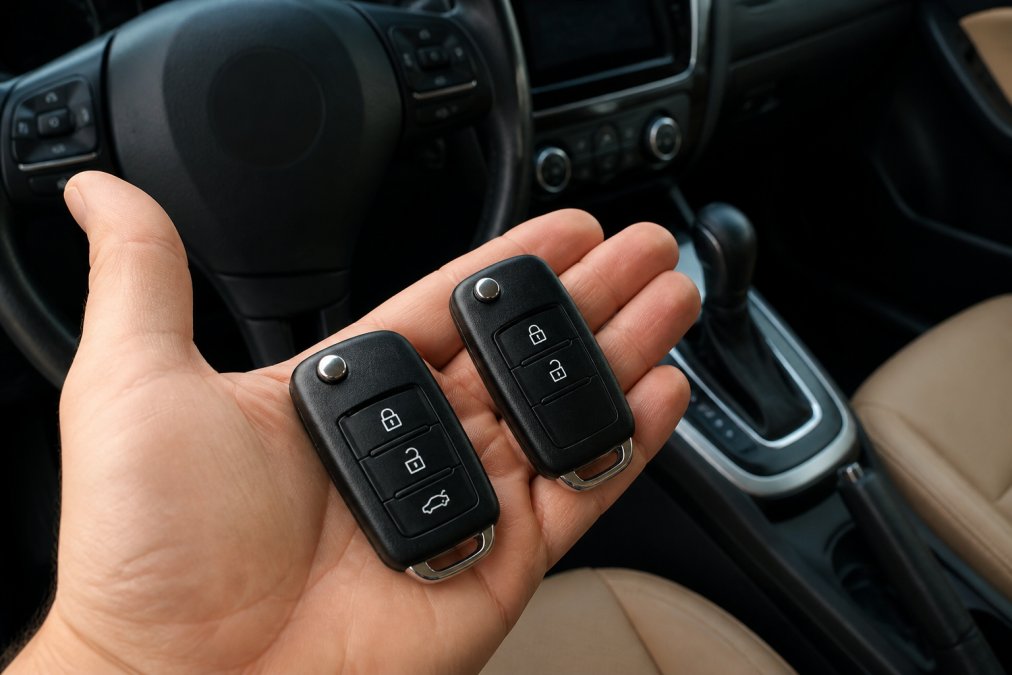
Is an aftermarket key fob reliable? Compare OEM vs aftermarket fobs, programming safety, and dealership costs. Learn how to choose a fob that lasts.
Table of Contents
- OEM vs Aftermarket Key Fob: What Actually Differs
- Is an Aftermarket Key Fob Reliable? The Honest Answer
- How to Program a Car Key Fob Safely
- The Real Cost of Dealership Key Fob Replacement
- Counterfeit Fobs, Security Vulnerabilities, and Warranty Risks
- How to Identify a High-Quality Replacement Fob
- Return Policies, Warranties, and When to Choose OEM
- Frequently Asked Questions
Last Updated: September 25, 2026
OEM vs Aftermarket Key Fob: What Actually Differs
An aftermarket key fob is a third-party replacement remote built to match your vehicle's original equipment manufacturer (OEM) specifications, often at a lower price than a dealership part. The core components inside both versions are surprisingly similar: a transponder chip, a circuit board, and a radio transmitter tuned to your car's frequency.
The gap between OEM and aftermarket usually comes down to build tolerances and quality control, not fundamental design. OEM fobs are manufactured under the automaker's contract with strict material and testing standards. Aftermarket fobs vary widely, from near-OEM-spec units to cheap counterfeits that fail within months.
That variability is exactly why "is aftermarket key fob reliable" has become such a common question. The answer depends entirely on which aftermarket fob you buy and who programs it.
Transponder Chips, Circuit Boards, and Signal Frequency
The transponder chip is the security heart of your key fob. It communicates with your vehicle's immobilizer, and if the chip isn't programmed correctly, the car simply won't start.
Circuit board quality separates good aftermarket fobs from bad ones. A well-made board uses durable solder joints and quality button contacts. Cheap boards use thin traces that crack under repeated use.
Signal frequency must match your vehicle exactly. Most modern vehicles operate on specific frequencies, and a mismatched fob won't communicate with your keyless entry system at all. Rolling codes add another layer: your fob and car generate a new code with every press, which prevents signal interception.
Is an Aftermarket Key Fob Reliable? The Honest Answer
A quality aftermarket key fob from a reputable supplier is reliable for most drivers. The key word is "quality." A well-made aftermarket unit can last years and perform nearly identically to OEM. A cheap counterfeit often fails within weeks.
Here's where most buyers get burned: they shop on price alone. A fob that costs a fraction of the OEM part almost always cuts corners on the circuit board, the transponder chip, or both. The result is a fob that works intermittently, drains batteries fast, or loses its pairing with the vehicle.
Durability, Button Responsiveness, and Battery Life
Durability is where aftermarket fobs show the widest range. OEM housings typically use ABS plastic with reinforced button membranes. Budget aftermarket housings often use softer plastic that wears through at the button edges within a year.
Button responsiveness follows the same pattern. Quality aftermarket fobs use tactile dome switches similar to OEM. Cheap units use flat membrane contacts that require a harder press and eventually stop registering.
Battery life expectations are worth setting correctly. Both OEM and aftermarket fobs run on standard coin-cell batteries, and most last one to three years depending on use.
How to Program a Car Key Fob Safely
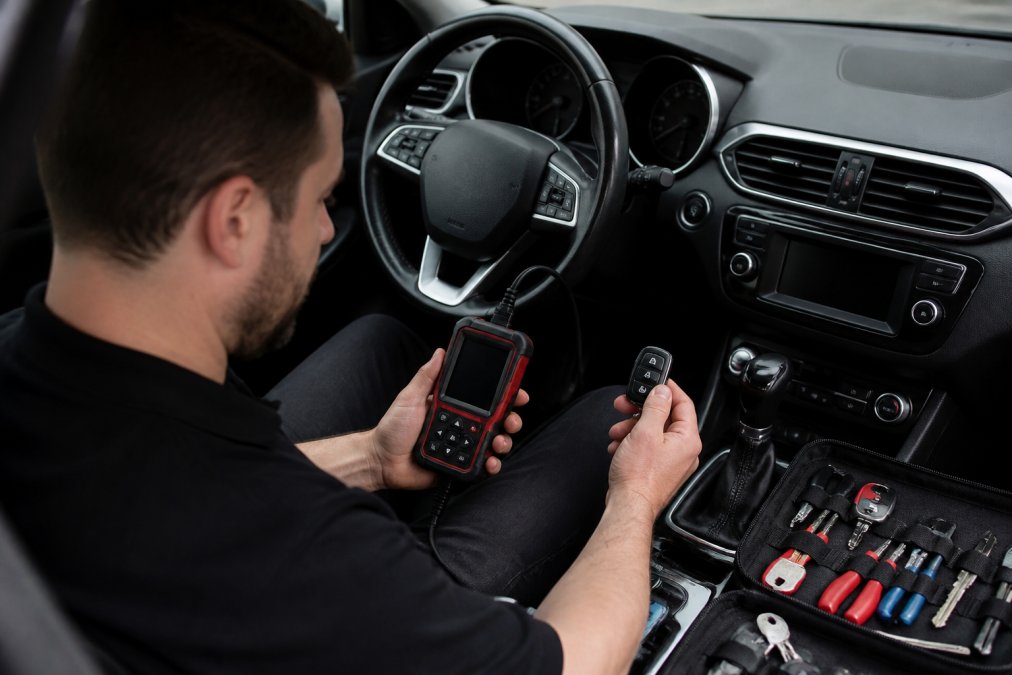
Programming a car key fob safely means matching the fob to your vehicle's immobilizer without disrupting the ECU or other paired keys. The method that works depends on which of three broad system classes your vehicle uses, and knowing that class before you buy is the single biggest predictor of whether a cheap fob ever works.
DIY Programming vs Professional Locksmith Service
The Real Cost of Dealership Key Fob Replacement
Dealership key fob replacement is the most expensive route, and it's the reason aftermarket options exist. Dealers charge for the part, the programming labor, and often a diagnostic fee on top. The total can run several times the price of a quality aftermarket fob plus professional programming.
Counterfeit Fobs, Security Vulnerabilities, and Warranty Risks
Counterfeit fobs are the biggest reliability risk in the aftermarket category. These units often use cloned transponder chips and low-grade circuit boards. They may work at first, then fail unpredictably, and the failure mode matters as much as the failure itself.
How Rolling Codes Actually Work, and Where Cheap Fobs Break Down
Modern remote entry relies on a rolling code, sometimes called a hopping code. Each press of the button generates a new code derived from a shared secret between the fob and the vehicle, and the vehicle accepts only codes that fall within a forward window of the last one it saw. This is what prevents a recorded signal from being replayed later.
- Code desynchronization. The fob and vehicle drift out of sync because the fob generates codes the vehicle rejects. The fob appears dead even with a fresh battery, and re-pairing is the only fix.
- Weak or absent rolling code. Some counterfeit chips transmit a fixed or narrowly varying code. That defeats the replay protection the system was designed around, which is the mechanism behind reports of easier signal interception on cheap units.
Warranty and Coverage Risks
Warranty voiding is another angle most buyers don't consider. If an aftermarket fob or a botched DIY installation damages the immobilizer or ECU, the repair may not be covered under your vehicle warranty. Dealerships can attribute electrical damage to non-OEM parts, and that dispute rarely ends in the driver's favor. The Magnuson-Moss Warranty Act limits how a manufacturer can void coverage, it generally cannot void your whole warranty just because you used a non-OEM part, but the manufacturer can deny coverage for a specific repair if it can show the aftermarket part caused the failure.
Return and Refund Policies: The Overlooked Safety Net
Because pairing failures are the most common aftermarket fob problem, the seller's return policy is effectively part of the product. Look for:
- A return window long enough to cover programming, 30 days is common, shorter windows are a red flag.
- Explicit coverage of 'failed to pair' or 'incompatible' returns, not just shipping damage.
- A restocking fee disclosed up front; a large fee on a fob that never worked is a warning sign.
- A warranty that covers defects beyond the return window, ideally 12 months or more.
How to Identify a High-Quality Replacement Fob
Identifying a high-quality replacement fob comes down to verification, not marketing claims. Check the FCC ID, confirm the part number matches your vehicle, and buy from a supplier that publishes compatibility guides.
Use this checklist before you buy:
- FCC ID present and verifiable
- Part number matches your vehicle's year, make, and model
- Supplier offers a compatibility guide or verification tool
- Reviews mention long-term durability, not just fast shipping
- Warranty covers defects and pairing failures
- Return policy allows returns on incompatible units
Return Policies, Warranties, and When to Choose OEM
Return policies and warranties separate serious aftermarket suppliers from fly-by-night sellers. A supplier confident in its product offers a clear return window and a warranty that covers pairing failures, not just shipping damage.
| Factor | OEM Fob | Quality Aftermarket Fob | Cheap Counterfeit |
|---|---|---|---|
| Durability | High | Good to high | Poor |
| Compatibility | Guaranteed | Verified by supplier | Often mismatched |
| Warranty risk | None | Low with warranty | High |
| Best for | Warranty-covered vehicles | Cost-conscious drivers | No one |
Frequently Asked Questions
What is the difference between an OEM and an aftermarket key fob?
An OEM fob is manufactured by the same company that built your vehicle's keyless entry system and carries the automaker's branding on the casing, circuit board, and FCC ID label. An aftermarket fob is produced by a third-party manufacturer that reverse-engineers the same frequency, transponder chip, and rolling code protocol. The functional difference comes down to build tolerances: OEM fobs typically use higher-grade plastics and more consistent circuit board soldering, while quality aftermarket fobs can match that performance at a lower price point. Cheap counterfeits often skip quality control entirely.
Can you program an aftermarket key fob?
Yes, most aftermarket fobs can be programmed, but the method depends on your vehicle's immobilizer system. Older cars with basic keyless entry often accept a simple ignition cycling sequence you can do yourself. Vehicles with push-button start and rolling code immobilizers usually require a diagnostic tool or a locksmith with professional programming equipment. The pairing process writes the fob's transponder chip ID to your car's computer, so an incorrect procedure can leave the fob non-functional or, in rare cases, trigger a temporary lockout.
Why do some aftermarket key fobs fail to program?
Failures usually trace back to three causes: incompatible frequency (your car expects 315 MHz but the fob transmits 433 MHz), a missing or incorrect transponder chip, or a fob that has already been paired to another vehicle and cannot be re-paired. Counterfeit fobs often ship with blank or cloned chips that the immobilizer rejects. Before buying, verify the FCC ID and part number match your original fob, and confirm the seller's return policy covers programming failures.
Do locksmiths recommend aftermarket key fobs?
A professional locksmith can verify compatibility, program the fob on-site, and test button responsiveness, signal range, and remote start function before leaving.
Replacing a key fob shouldn't mean gambling on a part that might fail or a price that feels like a penalty. At Lock it All Locksmithing, we program and replace key fobs for modern vehicles, verify compatibility before we start, and confirm everything works before we leave. Our team handles car key replacement, key fob programming, and remote start installation so you get dealership-level results without the dealership wait. Call 615-810-7304 to get started.
Why Nashville drivers choose Lock it All Locksmithing
We are a locally owned, licensed and insured mobile locksmith serving Nashville, Antioch, Brentwood, Franklin, Smyrna, La Vergne, Murfreesboro, Hermitage and Mt. Juliet. You speak directly with the technician who does the work, get an honest price before we dispatch, and we arrive in a fully stocked service vehicle so most jobs finish in a single visit — usually within 20 to 45 minutes of arriving. No towing, no dealership appointment, no surprise fees.
How the visit works
- Tell us the details: call, text or send the quote form with your vehicle's year, make and model, or a description of your lock problem.
- Get an exact price: we quote parts, cutting, programming and travel up front.
- We come to you: our mobile workshop meets you at home, work or roadside.
- Done on the spot: keys are cut, programmed and tested with you before we leave.
Areas we serve
Nashville, Antioch, Brentwood, Franklin, Smyrna, La Vergne, Murfreesboro, Hermitage and Mt. Juliet. If you're outside these areas, call 615-810-7304 to confirm whether we can help.
What our customers say
Best locksmith in town excellent service and great price !!
— Adrian Fiorito, 5 stars.Very wonderful service, strong quality, great prices, and it does not take long.
— George Yacoub, 5 stars.Great customer service - Professional - Fast Highly recommend.
— Jan Daoud, 5 stars.
Rated 5 stars across 100+ verified Google reviews. Call or text 615-810-7304 or email info@lia-locksmith.com.