How to Rekey House Locks Safely: A 2026 DIY Guide
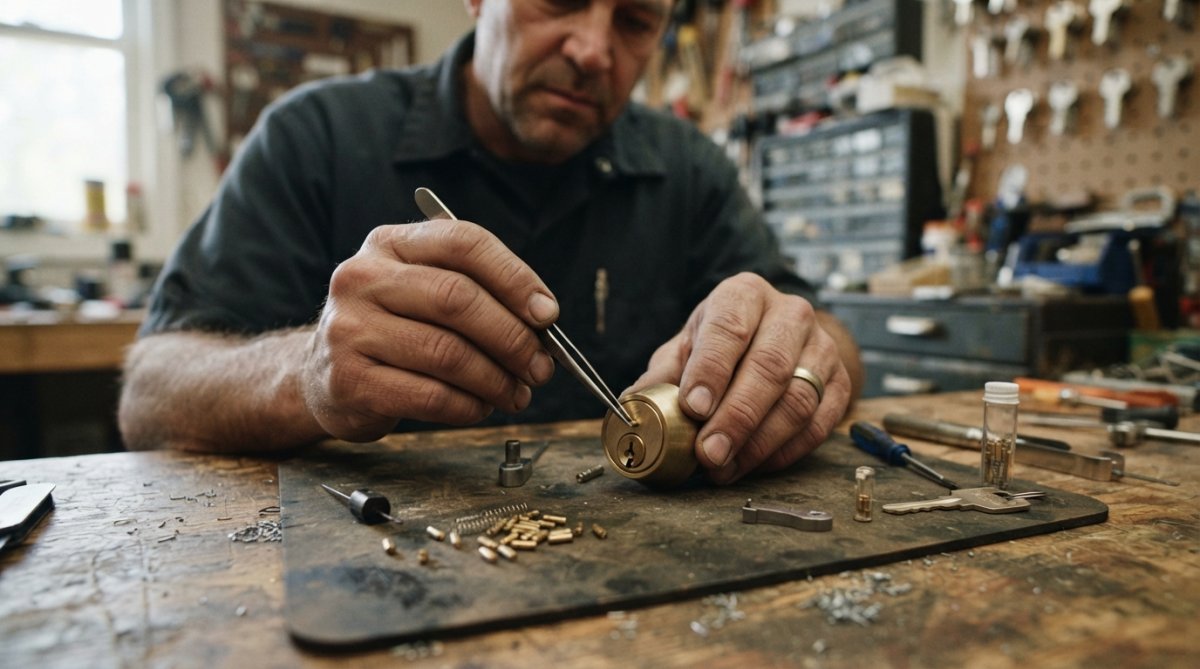
Learn how to rekey house locks safely with our step-by-step guide. Discover the tools, costs, and when to call a pro. Start your lock security upgrade.
Table of Contents
- Tools and Rekeying Kit for Home Locks
- How to Rekey House Locks: A Step-by-Step Guide
- Cost to Rekey Locks vs Replace: What to Expect
- How Long Does It Take to Rekey a Lock?
- When to Rekey House Locks Instead of Replacing Them
- Smart Lock Compatibility and Master Key Systems
- Safety Precautions and Common Mistakes
- Conclusion
- Frequently Asked Questions
Last Updated: September 11, 2026
Tools and Rekeying Kit for Home Locks
A standard rekey kit contains bottom pins, top pins, springs, a plug follower, a c-clip remover, and a pinning tool, and most kits run under $40 at any hardware store or online retailer (homedepot.com). The pins are color-coded by length so you can match a new key cut without guesswork.
What's Inside a Standard Rekey Kit
A complete rekeying kit for home locks includes:
- Bottom pins in a range of lengths, sorted by color
- Top pins and springs, usually sold as a matched set
- A plug follower tool, which pushes the key plug out without scattering springs
- A c-clip or retaining ring tool to release the cylinder housing
- A pinning tweezers or follower, for seating pins cleanly
Skip the follower tool and you will lose springs across the floor.
Identifying Your Lock Brand and Keyway
Before buying pins, identify the lock brand stamped on the cylinder face. Schlage, Kwikset, and Weiser each use a different keyway, and pins are not interchangeable between them. A Kwikset keyway will not accept Schlage bottom pins, even if the pin looks the same length.
How to Rekey House Locks: A Step-by-Step Guide
Rekeying a pin tumbler lock means replacing the bottom pins inside the key plug so only your new key turns the cylinder. The job takes 20-40 minutes per lock for a first-timer (familyhandyman.com). Work on a clean surface with a towel underneath.
How a Pin Tumbler Lock Actually Works
Picture the cylinder cut in half lengthwise. Inside the plug (the part that turns) and the housing (the part that does not), there are five or six vertical chambers. Each chamber holds, from bottom to top:
- A bottom pin (also called a key pin), which rests directly on the key
- Optionally a master wafer, if the lock is master-keyed
- A top pin (driver pin)
- A spring
- A cap at the top of the housing
When no key is inserted, the springs push the stack down, and the bottom pins sit partly in the plug and partly in the housing, which stops the plug from turning.
When the correct key slides in, its bitting (the cut heights along the blade) lifts each bottom pin so the gap between the bottom pin and the top pin lines up with the shear line, the boundary between the plug and the housing. With all pins split at the shear line, the plug rotates freely.
Rekeying works by changing the bottom pins so that a different key produces that same shear-line alignment. The top pins, springs, and housing do not change. Only the bottom pins do.
Pin Sizes and Key Cuts: The Math That Prevents Bricking
Each key cut has a depth that corresponds to a specific bottom pin length. In a standard 5-pin residential cylinder, pin lengths run in increments of about 0.015 to 0.025 inches, numbered 0 through 9 in most kits. A shallower cut needs a longer pin; a deeper cut needs a shorter pin. The two must sum to the same constant so the top of the bottom pin lands on the shear line.
This is why mixing pins from different brands fails. A Schlage #3 and a Kwikset #3 are not the same length, even though the number matches. Always use pins from the kit that matches the cylinder.
A practical workflow to avoid bricking a lock:
- Lay the new key on a flat surface and read the bitting from bow to tip. Most residential keys have 5 cuts; some have 6.
- For each cut, select the bottom pin that matches the cut depth per the kit's chart.
- Line the pins up in order next to the key before you touch the plug. This is your reference row.
- Insert the key into the plug, then drop each pin into its chamber in order.
- If a pin does not sit flush with the plug's surface when the key is inserted, it is the wrong length. Stop and swap it.
Step 1: Remove the Cylinder from the Doorknob Assembly
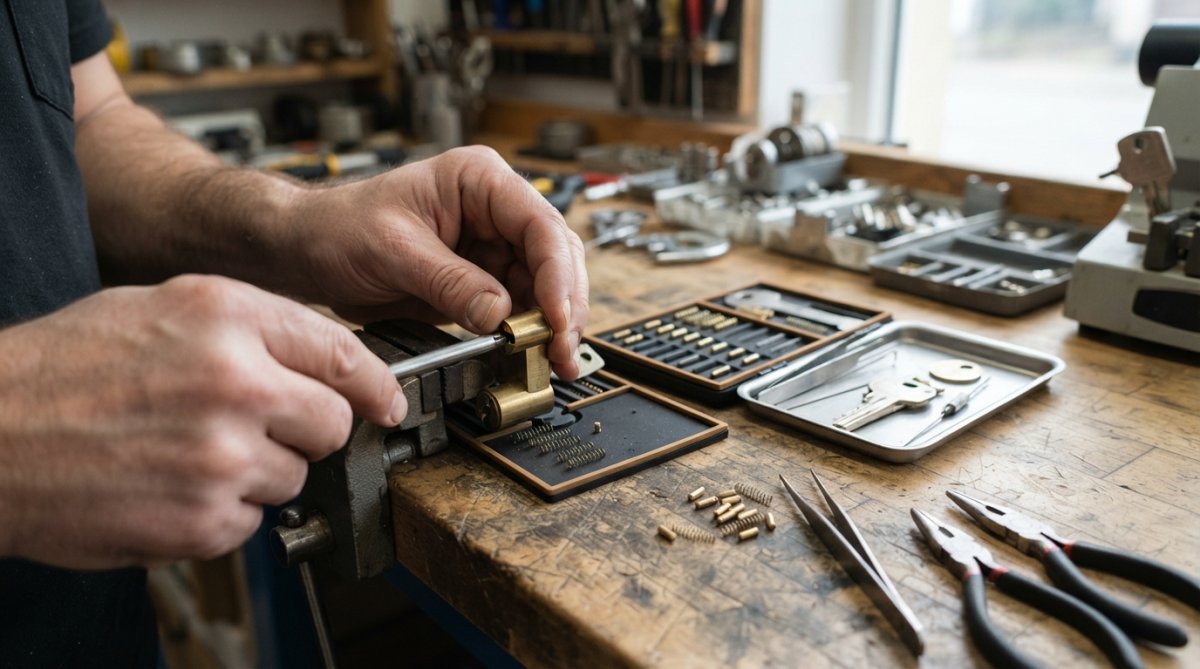
- Remove the doorknob or deadbolt from the door with a Phillips screwdriver.
- Locate the cylinder housing and depress the retaining clip or remove the c-clip.
- Slide the key plug out of the cylinder housing using the follower tool.
- Keep the follower pressed against the plug so the top pins and springs stay seated.
The follower is not optional. It fills the space the plug occupied, so the top pins and springs stay in their chambers as the plug slides out. Without it, every spring in the housing launches across the room.
Step 2: Replace the Bottom Pins and Springs
- Insert your new key into the plug.
- Compare the key bitting to the pin stack and swap bottom pins to match.
- Seat each new bottom pin in its chamber, then reinsert the plug into the housing.
- Push the plug back with the follower so top pins stay aligned.
If the old springs are compressed or bent, replace them now. A weak spring is the most common cause of a key that turns but feels mushy (familyhandyman.com).
Step 3: Reassemble and Test the New Key
Reinstall the cylinder, tighten the retaining ring, and test the new key five to ten times. The key should turn smoothly with no catch. If it sticks, a bottom pin is the wrong length. Pull the plug and recheck the pin stack against your reference row.
Test the old key too. It should no longer turn the cylinder. If it still does, one chamber has the wrong pin, and the old key is still hitting the shear line in that position.
Cost to Rekey Locks vs Replace: What to Expect
Rekeying costs less than replacing hardware in almost every case, because you keep the existing deadbolt and only change the pins. A DIY rekey kit runs a modest one-time cost; a professional rekey is priced per lock and depends on lock type, quantity, and travel. Replacing locks means buying new hardware for every door.
| Factor | Rekey | Replace |
|---|---|---|
| Hardware cost | Pin kit only | New locks per door |
| Time per lock | 20-40 minutes | 15-30 minutes |
| Best for | Keeping existing hardware | Worn or damaged locks |
| Security upgrade | Limited | Full |
How Long Does It Take to Rekey a Lock?
A single lock takes 20-40 minutes for a first-timer and 10-15 minutes once you have done a few. Across a whole house, budget about an hour for three to four locks, plus another 15 minutes if you are removing doorknobs for the first time.
The variable is not the pin work but disassembly and reassembly. Doorknob assemblies with concealed screws add time; deadbolts are faster because the cylinder is easier to access.
When to Rekey House Locks Instead of Replacing Them
Rekey when you move into a new home, after a roommate or contractor has had a key, or any time a key goes missing. Preventative security favors rekeying over replacement when the lock still functions smoothly and the finish is intact.
Replace instead when the cylinder is sticky, the keyway is worn, or you want a higher security grade. A locksmith can assess whether rekeying is enough, and professional rekeying removes the risk of a botched reassembly.
Smart Lock Compatibility and Master Key Systems
Two lock categories break the standard rekey playbook: smart locks and master-keyed systems.
Rekeying Smart Locks and Hybrid Keyways
A smart deadbolt is still a mechanical lock with a radio and a motor bolted on. The keyway is the backup path when the battery dies or the app fails, and it is usually a standard cylinder you can rekey. The catch is which cylinder.
- Standard mechanical override. Brands like Schlage Encode and Kwikset Halo use a conventional pin tumbler cylinder behind the keypad housing. You can rekey these with the same kit you use on a standard deadbolt, provided you match the keyway (Schlage C, Kwikset KW1, etc.).
- Proprietary or restricted keyways. Some higher-end smart locks use restricted keyways or dealer-only cylinders. Standard pin kits will not fit, and forcing pins in can damage the plug. Check the manufacturer's documentation or the cylinder face before you buy pins.
- Fully electronic, no keyway. A handful of smart locks have no mechanical key at all. There is nothing to rekey. Your only option is to reset the lock and re-enroll credentials in the app.
- August, Yale Assure, and similar retrofit units. These often sit over an existing deadbolt rather than replacing the cylinder. Rekey the underlying deadbolt normally; the smart module is unaffected.
A practical rule: if the lock has a keyway, it can almost always be rekeyed. If the keyway is restricted or absent, plan on replacing the cylinder or the lock.
Master Key Systems: Benefits and Hidden Risks
A master key system lets one key (the master) open every lock in the house while each individual key opens only its own lock. Landlords use them, and homeowners with a rental unit, detached garage, or home office often want them too.
The mechanism is a second set of pins: each chamber holds a bottom pin, a master wafer, and a top pin. The master key lifts the stack to one shear line; the change key lifts it to a different one. Both keys turn the same plug.
Benefits:
- One key for the front door, back door, garage, and any outbuilding
- Individual keys still restrict access to specific doors
- Easier key management for family members, cleaners, or short-term renters
Risks most guides skip:
- Loss of the master key compromises every lock in the system. You cannot rekey just one door; you rekey all of them.
- Rekeying a master-keyed lock is not a beginner job. You need the original pinning chart or the master wafer sizes. Without them, you will either lock out the master key or lock out the change keys.
- Cheap master systems weaken security. A poorly pinned master system can create unintended shear lines, meaning a random key or a jiggler can open the lock.
- Resale and rental complications. If you sell the home or end a lease, you need to document the system or reset it entirely.
If you want a master key system, have it built and documented by a locksmith. If you already have one and need to rekey, do not guess at the pin stack. Get the chart or hand the job off.
What This Means for Your Rekey Decision
- Standard mechanical deadbolt, no master system: DIY rekey is realistic.
- Smart lock with a standard keyway: DIY rekey is realistic, but check the warranty.
- Smart lock with a restricted or proprietary keyway: professional or replace the cylinder.
- Any master-keyed lock: professional, unless you have the original pinning chart and prior experience.
Safety Precautions and Common Mistakes
The most common mistakes are working over a carpeted floor, mixing pins between brands, and forcing the plug when it catches. Work over a tray or towel. Keep pins sorted by color. If the plug resists, stop and check the pin alignment rather than pushing harder.
On the legal side, rekeying your own home is fine, but rekeying a rental without landlord permission can breach a lease. Some insurers expect rekeying after a break-in; check your policy before assuming it is covered.
For homeowners who want the work done correctly the first time, Lock it All Locksmithing handles residential rekeying, along with commercial access control and high-security lock installation.
Conclusion
Rekeying is a manageable DIY job when the hardware is sound and you have the right kit, but springs, pin stacks, and master wafers punish impatience. If a lock is worn, master-keyed, or tied to a smart system, professional help saves the cost of a failed attempt. Lock it All Locksmithing offers residential and commercial lock services, including rekeying, high-security lock installation, and access control for small businesses. Call 615-810-7304.
Frequently Asked Questions
Can I rekey my locks myself?
Yes, you can rekey your locks yourself if you have the right tools and some patience. A standard rekeying kit for home locks includes a plug follower, c-clip remover, and a pinning kit. The process involves removing the cylinder, replacing the bottom pins to match a new key, and reassembling the lock. However, if you have high-security locks or a master key system, it is safer to call a professional locksmith to avoid damaging the cylinder.
Is it easier to rekey a lock or replace it?
Rekeying is generally easier and less expensive than replacing a lock, especially if your existing hardware is in good condition. Rekeying involves changing the internal pins so old keys no longer work, while replacement means removing the entire deadbolt or doorknob assembly. For a standard pin tumbler lock, rekeying takes about 15-30 minutes per lock. Replacement is better if the lock is damaged, rusted, or you want to upgrade to a smart lock.
What locks cannot be rekeyed?
Most standard pin tumbler and cylinder locks can be rekeyed. However, some locks cannot be rekeyed, including certain high-security models with patented keyways, smart locks with electronic components, and some older mortise locks that use unusual mechanisms. If your lock is a smart lock or has a non-standard cylinder, you may need to replace it or contact a locksmith for advice. Always check your lock brand compatibility before buying a kit.
How much does it cost to have a locksmith rekey a house?
Professional locksmith pricing varies based on the number of cylinders, lock type, and whether it is an emergency call. For current rates, contact a local locksmith directly for a quote.

Why Nashville drivers choose Lock it All Locksmithing
We are a locally owned, licensed and insured mobile locksmith serving Nashville, Antioch, Brentwood, Franklin, Smyrna, La Vergne, Murfreesboro, Hermitage and Mt. Juliet. You speak directly with the technician who does the work, get an honest price before we dispatch, and we arrive in a fully stocked service vehicle so most jobs finish in a single visit — usually within 20 to 45 minutes of arriving. No towing, no dealership appointment, no surprise fees.
How the visit works
- Tell us the details: call, text or send the quote form with your vehicle's year, make and model, or a description of your lock problem.
- Get an exact price: we quote parts, cutting, programming and travel up front.
- We come to you: our mobile workshop meets you at home, work or roadside.
- Done on the spot: keys are cut, programmed and tested with you before we leave.
Areas we serve
Nashville, Antioch, Brentwood, Franklin, Smyrna, La Vergne, Murfreesboro, Hermitage and Mt. Juliet. If you're outside these areas, call 615-810-7304 to confirm whether we can help.
What our customers say
Best locksmith in town excellent service and great price !!
— Adrian Fiorito, 5 stars.Very wonderful service, strong quality, great prices, and it does not take long.
— George Yacoub, 5 stars.Great customer service - Professional - Fast Highly recommend.
— Jan Daoud, 5 stars.
Rated 5 stars across 100+ verified Google reviews. Call or text 615-810-7304 or email info@lia-locksmith.com.