How to Rekey a Deadbolt Lock Yourself
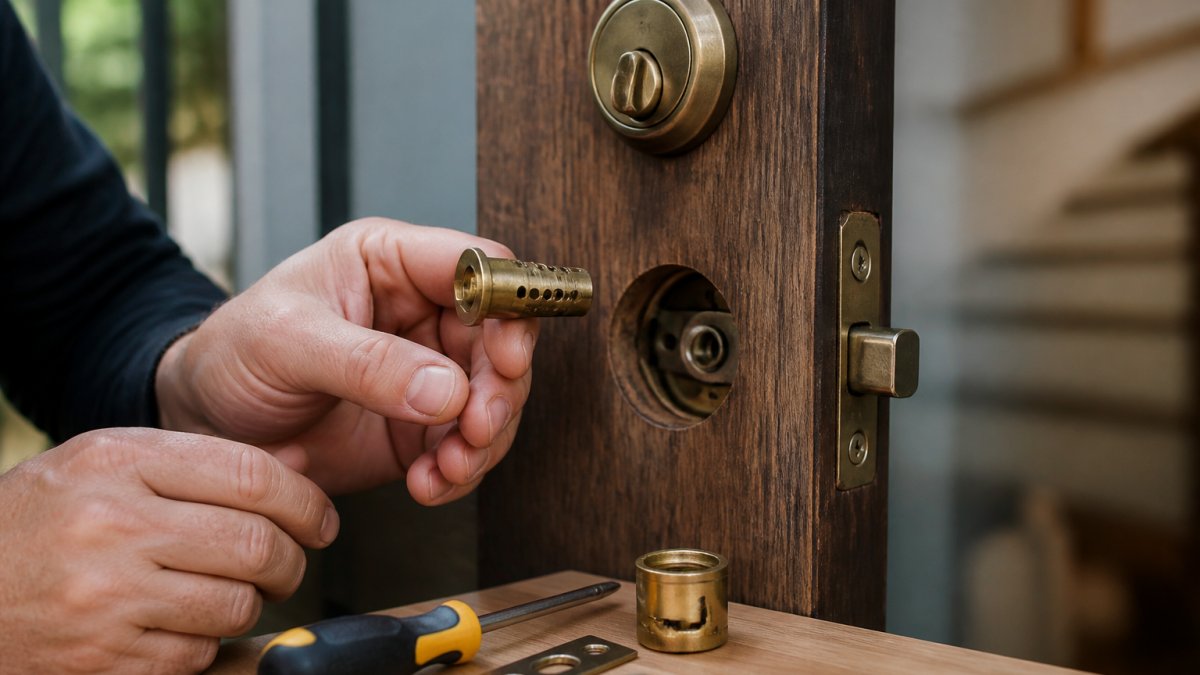
Learn how to rekey a deadbolt lock yourself with step-by-step instructions, tools needed, and compatibility checks. DIY rekeying guide for homeowners.
Last Updated: October 22, 2026
Quick Summary
To rekey a deadbolt, remove the lock from your door, extract the cylinder using a plug follower tool, and replace the internal pins to match your new key's cuts. You'll need a rekeying kit with a plug follower, pinning tray, tweezers, and key gauge for success.
- A quality rekeying kit with a plug follower is essential; without it springs will launch out during disassembly.
- Most standard pin tumbler deadbolts from manufacturers like Kwikset, Weiser, and Schlage can be rekeyed, but smart locks and electronic deadbolts cannot.
- Insert your working key, turn it 90 degrees to lift pins to the shear line, then use the plug follower to prevent springs from ejecting.
- Test your rekeyed lock at least five times from both directions before reinstalling it in the door to ensure proper pin alignment.
- If you don't have the original key, you can use the pick and pull method with a tension wrench, though many find professional rekeying easier.
Table of Contents
- What You'll Need to Rekey a Deadbolt
- How to Tell If a Deadbolt Can Be Rekeyed
- Removing the Deadbolt from Your Door
- Extracting and Rekeying the Lock Cylinder
- How to Rekey a Deadbolt Without the Original Key
- Choosing and Using a Deadbolt Rekeying Kit
- How to Test a Rekeyed Deadbolt
- Common Mistakes to Avoid
- Frequently Asked Questions
What You'll Need to Rekey a Deadbolt
Rekeying a deadbolt yourself requires specific tools and materials. You cannot improvise with household items and expect reliable results.
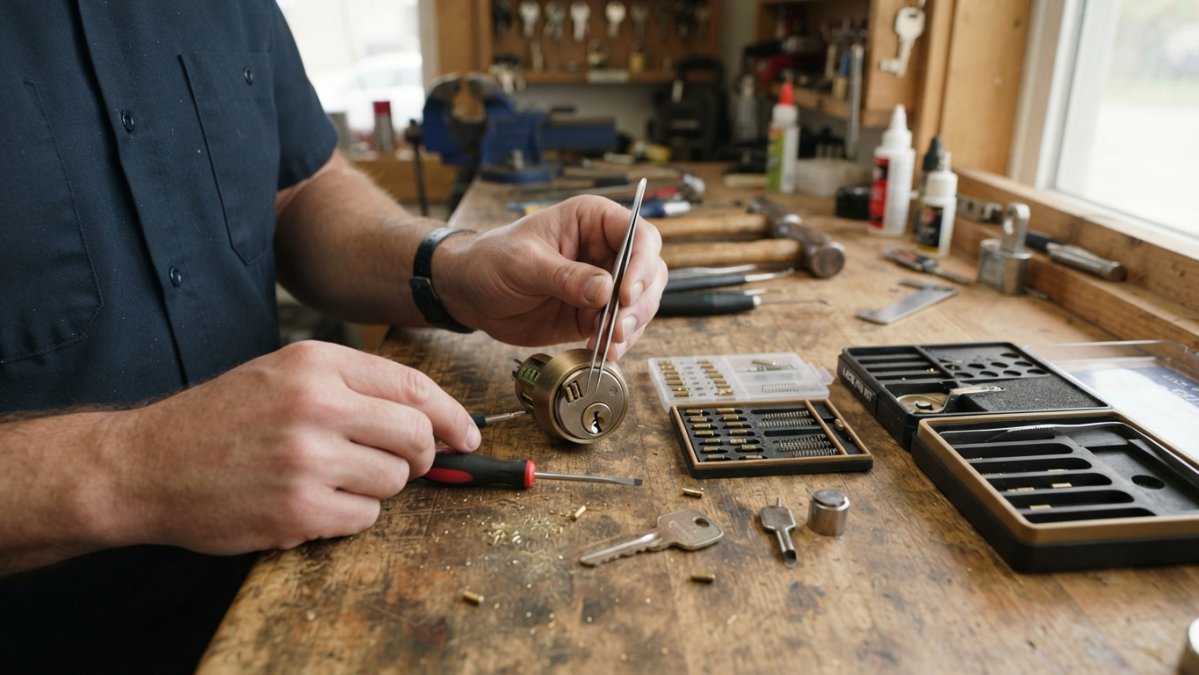
Start with a rekeying kit. This is the centerpiece of any DIY rekeying project. A quality kit includes a plug follower (a tool that prevents springs from launching out), a pinning tray to organize your pins, tweezers for precise handling, and small screwdrivers for removing the cylinder.
Beyond the kit, gather these essentials:
- Small flathead screwdriver (for removing the deadbolt from the door)
- Your existing working key (if you have one)
- The new key you want to use for rekeying
- A clean work surface with good lighting
- A small container to hold springs and pins while disassembled
We recommend investing in a complete rekeying kit rather than buying individual tools. The plug follower alone is worth the cost; without it, you'll spend more time chasing springs across your floor than actually rekeying the lock.
How to Tell If a Deadbolt Can Be Rekeyed
Not every deadbolt is designed for rekeying. Understanding this upfront saves you time and frustration.
Most standard pin tumbler deadbolts can be rekeyed. These locks use spring-loaded pins of different heights inside a cylinder. When you insert the correct key, it lifts the pins to exact heights, allowing the cylinder to turn. If your lock uses this mechanism, rekeying is possible.
Check your lock's compatibility before purchasing a rekeying kit:
- Look at the deadbolt's exterior. Standard residential deadbolts are typically round cylinders protruding slightly from the door.
- Try inserting your current key. It should slide smoothly without resistance. If the key catches or binds, the lock may have security features that prevent rekeying.
- Examine the cylinder for manufacturer markings. Locks from major manufacturers like Kwikset, Weiser, and Schlage are generally rekeykable. High-security locks or specialty deadbolts often are not.
- Check if the lock has a removable cylinder. Some modern locks have fixed cylinders that cannot be extracted, making rekeying impossible.
Avoid attempting to rekey integrated locks where the cylinder is permanently welded or sealed into the lock body. These locks require replacement, not rekeying.
Removing the Deadbolt from Your Door
You must remove the entire deadbolt from the door before you can access and rekey the lock cylinder.
Start by closing your door and examining the interior side of the deadbolt. You'll see two screws holding the lock assembly to the door. These are typically located on the interior faceplate (the metal plate flush with the door).
Once the screws are out, gently pull the interior assembly away from the door. The deadbolt will partially slide out, but it may still be connected by the exterior portion. From the outside of the door, push the cylinder forward gently while pulling from inside.
Place the deadbolt on your work surface with the cylinder facing up. Do not force any parts. If the lock resists, you may have missed a screw or the lock may have a retaining clip. Check thoroughly before applying more pressure.
Extracting and Rekeying the Lock Cylinder
This section is where the actual rekeying happens. The lock cylinder is the rotating part that holds the pins and springs.
Once your deadbolt is removed and on your work surface, locate the small retaining pin on the side of the lock body. This pin holds the cylinder in place.
Insert your existing working key into the cylinder. Turn it 90 degrees (a quarter turn).
With the plug follower in place, carefully remove your working key. The pins and springs are now held inside by the follower.
Now insert your new key into the cylinder. Turn it 90 degrees.
Once all pins are in place, carefully remove the plug follower. The springs will push the pins back to their resting position. Insert your new key and test the cylinder rotation.
| Step | Action | Key Point |
|---|---|---|
| 1 | Remove retaining pin | Allows cylinder to slide out |
| 2 | Insert working key, turn 90° | Lifts pins to shear line |
| 3 | Insert plug follower | Prevents springs from ejecting pins |
| 4 | Remove working key, tap out pins | Organize by size in tray |
| 5 | Insert new key, turn 90° | Positions cylinder for new pinning |
| 6 | Replace pins to match new key | Use tweezers and key gauge |
| 7 | Remove plug follower | Springs reset to resting position |
| 8 | Test new key rotation | Should turn smoothly without binding |
How to Rekey a Deadbolt Without the Original Key
If you don't have a working key, rekeying becomes more complex but is still possible.
Without an existing key, you cannot easily lift the pins to the shear line. Instead, you'll need to use a different approach: the pick and pull method.
Insert a tension wrench (a thin metal tool that applies slight rotational pressure) into the cylinder keyway. Apply gentle pressure as if you're trying to turn the key.
Once all pins are at the shear line under tension, insert your plug follower. Remove the tension wrench carefully.
From this point, follow the standard rekeying process: organize the pins, insert your new key, replace the pins to match the new key's cuts, and test the rotation.
This method requires practice and patience. Many people find it easier to call a professional locksmith if they've lost their original keys.
Choosing and Using a Deadbolt Rekeying Kit
A quality rekeying kit is essential for success. Not all kits are equal, and choosing the wrong one wastes money and time.
Look for kits that include a plug follower, pinning tray, tweezers, and key gauge. The plug follower is non-negotiable, this single tool prevents the most common failure point (springs flying everywhere).
Check that the kit is compatible with your lock's keyway size. Most residential deadbolts use standard keyways, but some specialty locks require specific tools. Verify compatibility before purchasing.
When using your kit, follow the manufacturer's instructions exactly. Different kits may have slight variations in how components work together. Read through the entire process before starting your rekey.
Many kits include instructional videos or guides. Watch these before you begin.
How to Test a Rekeyed Deadbolt
Testing your work is critical. A rekeyed lock that doesn't function properly leaves your home vulnerable.
Insert your new key into the cylinder. It should slide in smoothly without catching or binding. Turn the key 90 degrees.
Remove the key and insert it again in the opposite direction. Repeat the 90-degree turn. The cylinder should operate identically from both directions.
Now reinstall the deadbolt into your door using the original screws. Close the door and test the lock from both inside and outside. The key should work smoothly from both sides.
If the key sticks, binds, or the cylinder won't turn, stop immediately. Do not force it. Return to the work surface and recheck your pin arrangement.
Test the lock multiple times before considering the job complete. A lock that works once but fails on the second try indicates a pin is not seated correctly.
| Test | Expected Result | If It Fails |
|---|---|---|
| Key insertion | Smooth, no catching | Check keyway for debris |
| 90-degree turn | Free rotation, no grinding | Recheck pin heights |
| Reverse direction test | Identical smooth operation | Verify pin alignment |
| Full door installation | Works from inside and outside | Return to work surface |
| Repeated cycles | Consistent operation | Pin may be loose or misaligned |
Common Mistakes to Avoid
Most rekeying failures come from a handful of preventable errors.
The first mistake is losing springs during disassembly. Springs are small and move fast. One missing spring ruins the entire rekey.
The second mistake is mismatching pins to the new key. Take time to carefully measure each pin's height using your key gauge. Compare the cuts on your new key to the pin heights.
A third common error is not turning the key exactly 90 degrees when lifting pins to the shear line.
Many people also fail to test the lock thoroughly before reinstalling it in the door. Test it at least five times from both directions.
Finally, avoid forcing any components. If something resists, stop and reconsider your approach. Forcing the plug follower, the cylinder, or the springs causes damage that makes the lock unusable.
Frequently Asked Questions
Can I rekey a deadbolt myself without professional help?
Yes, you can rekey a deadbolt yourself if you have the right tools and follow careful steps. Most homeowners can handle basic rekeying with a rekeying kit, a small screwdriver, tweezers, and the working key. The process involves removing the deadbolt, extracting the cylinder, removing the old pins, and installing new ones to match a different key. However, if your lock is damaged, you lack the original working key, or you're unsure about compatibility, professional help is safer and faster.
What tools do I need to rekey a deadbolt lock?
You'll need a deadbolt rekeying kit (includes a plug follower and key pins), a small screwdriver, tweezers or a pinning tool, the working key, a wire tool or pick, and a flashlight. The rekeying kit is the most important item. A plug follower prevents pins and springs from falling out when you remove the cylinder plug. Many kits include detailed instructions specific to your lock model, so check compatibility before purchasing.
Can I rekey a deadbolt if I don't have the original key?
Rekeying without the original key is more difficult but possible. You'll need to measure the keyway (the shape inside the lock) or use a blank key to determine the key cut pattern. Some locksmiths use key gauges to measure pin sizes directly. Alternatively, you can use a plug follower to remove the cylinder and manually extract all pins, then install new ones for a key you choose. This method requires more precision and patience, so consider professional rekeying if you're uncomfortable with the process.
How do I know if my deadbolt can be rekeyed?
Most pin tumbler deadbolts can be rekeyed, but some modern or high-security locks cannot. Check if your lock has a removable cylinder plug by looking for a small hole or slot near the keyway. If you can insert a small tool or the rekeying kit's pin into that hole, the lock is likely rekeyable. Also verify that the cylinder is not welded or sealed. If your deadbolt is damaged, corroded, or a specialized security lock, rekeying may not be possible, and replacement is a better option.
Rekeying your own deadbolt saves money and gives you control over your home's security. However, if you encounter problems during the process or prefer professional assistance, Lock it All Locksmithing offers expert rekeying services. Our team can rekey your deadbolt quickly and verify that everything works perfectly. Call us at 615-810-7304 for fast, reliable service.


Why Nashville drivers choose Lock it All Locksmithing
We are a locally owned, licensed and insured mobile locksmith serving Nashville, Antioch, Brentwood, Franklin, Smyrna, La Vergne, Murfreesboro, Hermitage and Mt. Juliet. You speak directly with the technician who does the work, get an honest price before we dispatch, and we arrive in a fully stocked service vehicle so most jobs finish in a single visit — usually within 20 to 45 minutes of arriving. No towing, no dealership appointment, no surprise fees.
How the visit works
- Tell us the details: call, text or send the quote form with your vehicle's year, make and model, or a description of your lock problem.
- Get an exact price: we quote parts, cutting, programming and travel up front.
- We come to you: our mobile workshop meets you at home, work or roadside.
- Done on the spot: keys are cut, programmed and tested with you before we leave.
Areas we serve
Nashville, Antioch, Brentwood, Franklin, Smyrna, La Vergne, Murfreesboro, Hermitage and Mt. Juliet. If you're outside these areas, call 615-810-7304 to confirm whether we can help.
What our customers say
Best locksmith in town excellent service and great price !!
— Adrian Fiorito, 5 stars.Very wonderful service, strong quality, great prices, and it does not take long.
— George Yacoub, 5 stars.Great customer service - Professional - Fast Highly recommend.
— Jan Daoud, 5 stars.
Rated 5 stars across 100+ verified Google reviews. Call or text 615-810-7304 or email info@lia-locksmith.com.