How to Choose the Right Deadbolt for Your Door
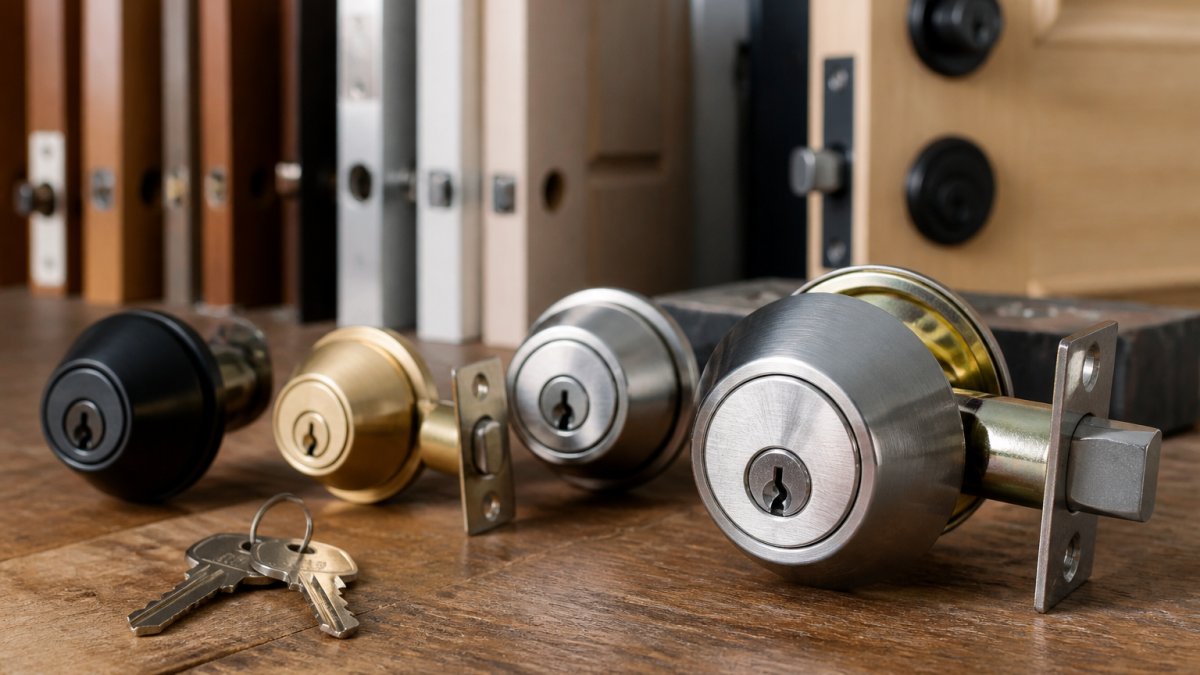
Learn how to choose the right deadbolt for your door. Measure backset, compare lock types, and pick the best deadbolt for front door security.
Table of Contents
- How to Choose the Right Deadbolt for Your Door: What You'll Need
- Types of Deadbolts: Single-Cylinder, Double-Cylinder, and More
- How to Measure a Deadbolt Lock: A Step-by-Step Checklist
- Deadbolt Backset Measurement and Lock Spacing Explained
- Security Ratings, Strike Plates, and Forced Entry Resistance
- Best Deadbolt for Front Door: Matching Features to Your Household
- Installation Difficulty and When to Call a Locksmith
- Frequently Asked Questions
Last Updated: October 12, 2026
How to Choose the Right Deadbolt for Your Door: What You'll Need
Choosing the right deadbolt for your door comes down to four things: cylinder type, door measurements, security rating, and household use. Get those right and almost any deadbolt will fit and hold up; get them wrong and you'll be drilling holes a door didn't need.
At Lock it All Locksmithing, we install and replace deadbolts across Tennessee, and the same mistake shows up again and again: people buy a lock before measuring the door, then discover the holes don't line up.
This guide covers the measurements, lock types, and trade-offs. Have these tools on hand:
- Tape measure
- Screwdriver (Phillips and flathead)
- Pencil and paper
Types of Deadbolts: Single-Cylinder, Double-Cylinder, and More
A deadbolt extends a solid metal bolt into the door frame. With no spring, it can't be pushed back with a credit card or shim. It's the strongest lock on most residential doors.
There are three main types:
- Single-cylinder deadbolt: Keyed on the outside, thumbturn on the inside. The most common choice for homes.
- Double-cylinder deadbolt: Keyed on both sides. No thumbturn.
- Keyless and smart deadbolts: Opened with a keypad, code, app, or fingerprint.
Single-Cylinder vs Double-Cylinder Deadbolts
The single-cylinder deadbolt is the standard for a reason. You can get out fast in an emergency. No key hunt in the dark.
That's a real safety trade-off, and it matters most in a fire. Many safety experts advise against double-cylinder deadbolts on bedroom and main exit doors, and fire codes vary by jurisdiction.
Our take: use a single-cylinder deadbolt on any door people sleep behind or use as a main exit.
Keyless and Smart Deadbolt Options
Keyless entry solves the lost-key problem with an access code, keypad, or app instead of a brass key.
A few things to weigh:
- Battery life: Most electronic locks run on AA batteries and last months, not years. Dead batteries lock you out.
- Power backup: Look for a lock with a physical key override or a 9-volt jump terminal.
- Privacy: Some smart locks log every entry. Decide who sees that data.
Smart locks are convenient but add a failure point a mechanical deadbolt doesn't have. For a rental or rarely used door, a plain keyed deadbolt is often smarter.
How to Measure a Deadbolt Lock: A Step-by-Step Checklist
Measuring for a deadbolt takes about five minutes. You need three numbers: door thickness, bore hole diameter, and backset. Write them down before you shop.
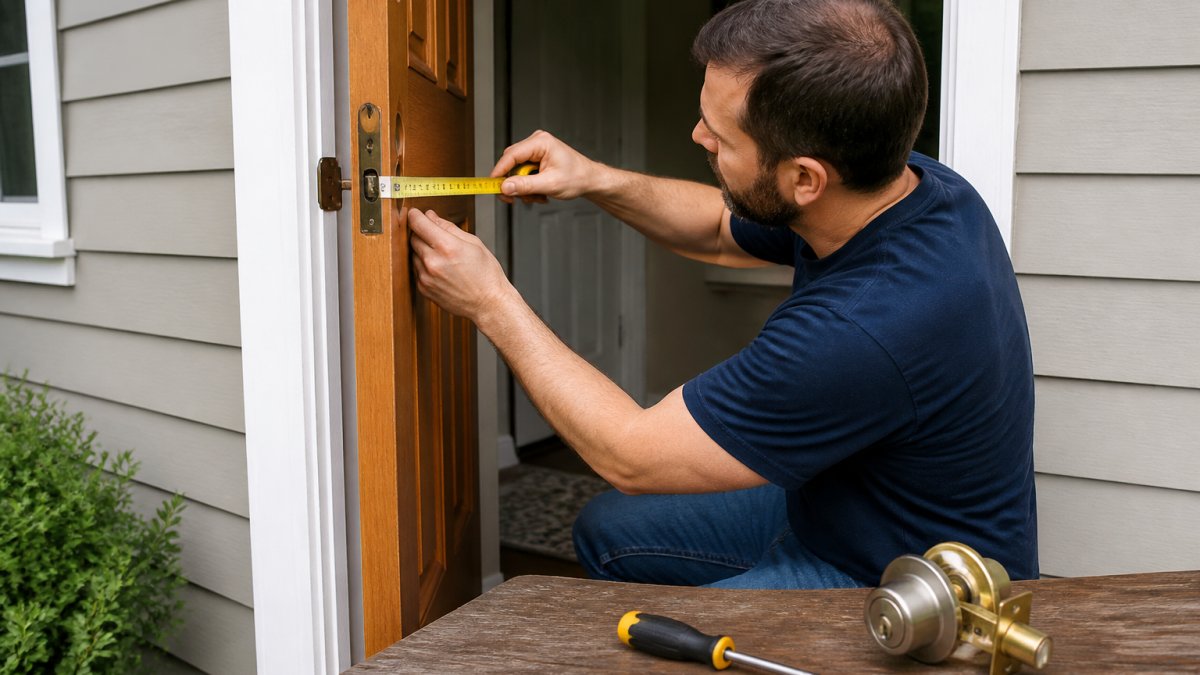
Here's the checklist we use on every job:
- Measure door thickness at the edge, near the lock. Most exterior doors are 1-3/4 inches thick.
- Measure the bore hole diameter. Standard is 2-1/8 inches.
- Measure the backset: from the door's edge to the center of the bore hole. Standard is either 2-3/8 or 2-3/4 inches.
Door Thickness and Bore Hole Size
Door thickness decides which screws and bolt length you need: a 1-3/8-inch interior door uses different hardware than a 1-3/4-inch exterior door. The bore hole is the big round hole through the face of the door; at 2-1/8 inches a standard deadbolt drops right in, but a smaller hole needs a different lock or a hole saw.
Deadbolt Backset Measurement and Lock Spacing Explained
Backset is the distance from the door's edge to the center of the deadbolt hole, the most important measurement you'll take, because it decides whether a new lock lines up with the old holes.
There are two standard backsets:
- 2-3/8 inches: Common on older and builder-grade doors.
- 2-3/4 inches: Common on newer doors and most modern hardware.
Many deadbolts are adjustable and fit either one. Some are fixed. Check the box.
Lock spacing is the distance between the center of your deadbolt and the center of the lower lock (the handle or knob), also called center-to-center. A common spacing is 5-1/2 inches, but it varies.
A quick reference:
| Measurement | Standard Size | Why It Matters |
|---|---|---|
| Door thickness | 1-3/4 in | Screw and bolt length |
| Bore hole | 2-1/8 in | Lock body fit |
| Cross bore | 1 in | Bolt housing fit |
| Backset | 2-3/8 or 2-3/4 in | Lines up with old holes |
| Lock spacing | Varies (often 5-1/2 in) | Deadbolt and handle alignment |
Security Ratings, Strike Plates, and Forced Entry Resistance
A deadbolt's real strength comes from three parts working together: the bolt, the strike plate, and the door frame. A great lock on a weak frame fails as fast as a cheap lock.
What the Grade on the Box Actually Means
Residential door hardware in the U.S. is graded under a voluntary standard published by the Builders Hardware Manufacturers Association (BHMA) and certified under the American National Standards Institute (ANSI) process. You'll see it printed as ANSI/BHMA A156.36 for deadbolts, with three grades:
- Grade 3: Builder-grade. Minimum residential. Roughly 100,000 operating cycles and modest torque and impact resistance.
- Grade 2: Mid-tier. Roughly 250,000 cycles and stronger resistance to kick-in and picking forces.
- Grade 1: Highest residential/commercial-light grade. Roughly 800,000 cycles and the toughest tested resistance to forced entry.
A Grade 1 or Grade 2 listing means the lock was independently tested for cycle life, bolt strength, and resistance to impact, wrenching, and picking. A lock that only says "heavy duty" or "high security" was tested by nobody but its own marketing department.
ANSI/BHMA A156.36 deadbolt grade listings
The Bolt
Look for a solid brass, hardened steel, or stainless steel bolt rather than a hollow one, which can be crushed or sawed. The bolt should extend at least 1 inch into the strike side of the frame when thrown; anything shorter gives a burglar less metal to defeat.
The Strike Plate and the Frame
The strike plate is where most forced entries succeed. A short-screwed strike plate rips out of soft wood with one good kick. Two upgrades fix this:
- Long screws. Replace the 3/4-inch screws that come with most strike plates with 3-inch screws that reach through the frame and into the wall stud behind it. This is the single cheapest security upgrade you can make.
- A reinforced or box strike. A heavy-duty strike plate, or a box strike that wraps the bolt, spreads the load across more of the frame instead of concentrating it at two screw holes.
You can also reinforce the frame itself with a metal door-frame wrap plate or a longer strike that ties into the stud.
Door Material Matters
A solid wood or solid-core door holds screws far better than a hollow-core one, which is a weak point no deadbolt can fix: the lock holds but the door skin fails. Metal and fiberglass doors are strong but need the right hardware and a steady hand to drill.
How to Tell Tested Claims From Marketing
A verifiable claim names a standard and a grade; a marketing claim uses words like "maximum security," "military grade," or "unpickable." When comparing two locks, ask one question: does the packaging cite an ANSI/BHMA grade? If it does, you can compare it to another graded lock on equal footing; if not, you're comparing adjectives.
Best Deadbolt for Front Door: Matching Features to Your Household
There's no single best deadbolt for every front door, the right pick depends on who lives there, how the door is used, and your budget. Here's a decision framework.
Start With Three Questions
- Who needs to get in and out? Kids, older adults, renters, cleaners, and guests all change the answer.
- Is this a main exit or a secondary door? Main exits favor fast egress; secondary doors can trade convenience for security.
- What's your budget and how much maintenance will you tolerate? Mechanical locks are set-and-forget. Electronic locks need batteries and occasional firmware.
The Decision Framework
| Your situation | Best pick | Why |
|---|---|---|
| Renting, moving soon | Single-cylinder keyed deadbolt, rekeyable | Cheap, easy to rekey at move-out, no permanent changes |
| Family with young kids | Single-cylinder with thumbturn | Anyone can exit fast; no key hunt in an emergency |
| Frequent guests, cleaners, dog walkers | Keypad deadbolt with changeable codes | No key handoff, revoke a code when someone leaves |
| Older adults or limited hand strength | Single-cylinder with a lever-style thumbturn or keypad | Easier to operate than a small key or stiff turn |
| Tech-forward household | Smart deadbolt with app control and key override | Remote access, entry logs, schedules |
| Door with glass within arm's reach | Double-cylinder (only if it's not a main exit) | Stops reach-through unlocking |
| Tight budget | Grade 2 or Grade 3 single-cylinder keyed deadbolt + 3-inch screws | Security comes from the frame, not the price tag |
Budget Tiers, Roughly
- Entry level: A basic keyed single-cylinder deadbolt with a Grade 3 listing. Fine for a secondary door or a rental.
- Mid-range: A Grade 2 keyed or keypad deadbolt with a reinforced strike plate. The sweet spot for most homes.
- Premium: A Grade 1 mechanical deadbolt or a smart lock with app control, key override, and a reinforced strike. You're paying for tested durability and features, not magic.
Prices move around, so check current listings rather than trusting a number in an article.
Rental and Accessibility Notes
Renters should check the lease before swapping hardware and keep the original lock to reinstall at move-out; a rekeyable cylinder lets you change the key without replacing the lock. For limited hand strength or vision, a keypad or large-throw thumbturn beats a small key in the dark.
Smart Lock Compatibility, Power, and Privacy
If you're going electronic, three things decide whether it works:
- Fit: The lock must match your backset (2-3/8 or 2-3/4 inches) and bore hole (2-1/8 inches). Many smart locks are retrofit models that reuse existing holes; others need a full replacement.
- Power: Most run on AA batteries and last months, not years. Look for a physical key override or 9-volt jump terminal so a dead battery doesn't lock you out.
- Privacy and data: Some smart locks log every entry to a cloud account. Decide who sees that log, whether the app requires an account, and whether the lock works offline.
If you'd rather not guess, a professional can measure the door and match the lock to your frame in one visit. Lock it All Locksmithing handles residential lock replacement and rekeying for homeowners who want it done right the first time.
Installation Difficulty and When to Call a Locksmith
Replacing a deadbolt with a matching one is a beginner job: a screwdriver and about 15 minutes, since the new lock drops into the existing holes and screws into place.
Call a locksmith when:
- The new lock doesn't match your backset or bore hole.
- You need to drill a new hole in a solid or metal door.
- The door frame is damaged or the strike plate won't hold screws.
Drilling a metal or fire-rated door is where DIY goes wrong fast, one slipped hole saw and you're buying a new door.
If you're unsure, one service call beats a ruined door. We can measure, supply the right lock, and install it so it lines up and holds.
Frequently Asked Questions
What should I look for when buying a deadbolt?
Focus on four things: cylinder type (single or double), backset measurement, ANSI security grade, and material durability. A Grade 1 or Grade 2 deadbolt with a reinforced strike plate offers the best forced-entry resistance. For the best deadbolt for front door use, consider a single-cylinder model with a thumbturn inside for quick exit during emergencies. Always measure your door's backset and thickness before buying to confirm compatibility.
How do I know if a deadbolt will fit my door?
Check three measurements: backset (2-3/8 or 2-3/4 inches from the door edge to the bore hole center), bore hole diameter (typically 2-1/8 inches), and door thickness (usually 1-3/8 to 1-3/4 inches). Most residential deadbolts are designed for standard dimensions, but older or custom doors may vary. If your door has no existing bore hole, you will need to drill one or hire a locksmith for door preparation.
Should I choose a keyed or keyless deadbolt?
Keyless deadbolts, including keypad and smart locks, offer convenience through access codes and eliminate the risk of lost keys. Keyed models are simpler and do not rely on batteries. For rental properties or homes with frequent guests, keyless entry simplifies access management. For a straightforward, low-maintenance setup, a keyed single-cylinder deadbolt remains a reliable choice. Your decision should weigh convenience against battery life and potential electronic failures.
Are all door deadbolts the same size?
No. Deadbolts vary in backset, faceplate size, and throw length. The two common backsets are 2-3/8 inches and 2-3/4 inches. Some deadbolts have adjustable backsets that fit either measurement. Door thickness also matters: most standard residential doors are 1-3/8 to 1-3/4 inches thick, but thicker doors need extended bolts or adapters. Always measure before purchasing a replacement lock to avoid fit issues.
Choosing the right deadbolt means matching three measurements and one household need, and most people get tripped up on the backset or skip the strike plate. If you'd rather hand it off, Lock it All Locksmithing can measure your door, recommend a lock that fits, and install it properly. We handle residential deadbolt replacement, rekeying, and high-security lock upgrades, backed by professional service and the right hardware for your door. Call 615-810-7304 to get started.
Why Nashville drivers choose Lock it All Locksmithing
We are a locally owned, licensed and insured mobile locksmith serving Nashville, Antioch, Brentwood, Franklin, Smyrna, La Vergne, Murfreesboro, Hermitage and Mt. Juliet. You speak directly with the technician who does the work, get an honest price before we dispatch, and we arrive in a fully stocked service vehicle so most jobs finish in a single visit — usually within 20 to 45 minutes of arriving. No towing, no dealership appointment, no surprise fees.
How the visit works
- Tell us the details: call, text or send the quote form with your vehicle's year, make and model, or a description of your lock problem.
- Get an exact price: we quote parts, cutting, programming and travel up front.
- We come to you: our mobile workshop meets you at home, work or roadside.
- Done on the spot: keys are cut, programmed and tested with you before we leave.
Areas we serve
Nashville, Antioch, Brentwood, Franklin, Smyrna, La Vergne, Murfreesboro, Hermitage and Mt. Juliet. If you're outside these areas, call 615-810-7304 to confirm whether we can help.
What our customers say
Best locksmith in town excellent service and great price !!
— Adrian Fiorito, 5 stars.Very wonderful service, strong quality, great prices, and it does not take long.
— George Yacoub, 5 stars.Great customer service - Professional - Fast Highly recommend.
— Jan Daoud, 5 stars.
Rated 5 stars across 100+ verified Google reviews. Call or text 615-810-7304 or email info@lia-locksmith.com.