How to Choose a High Security Deadbolt
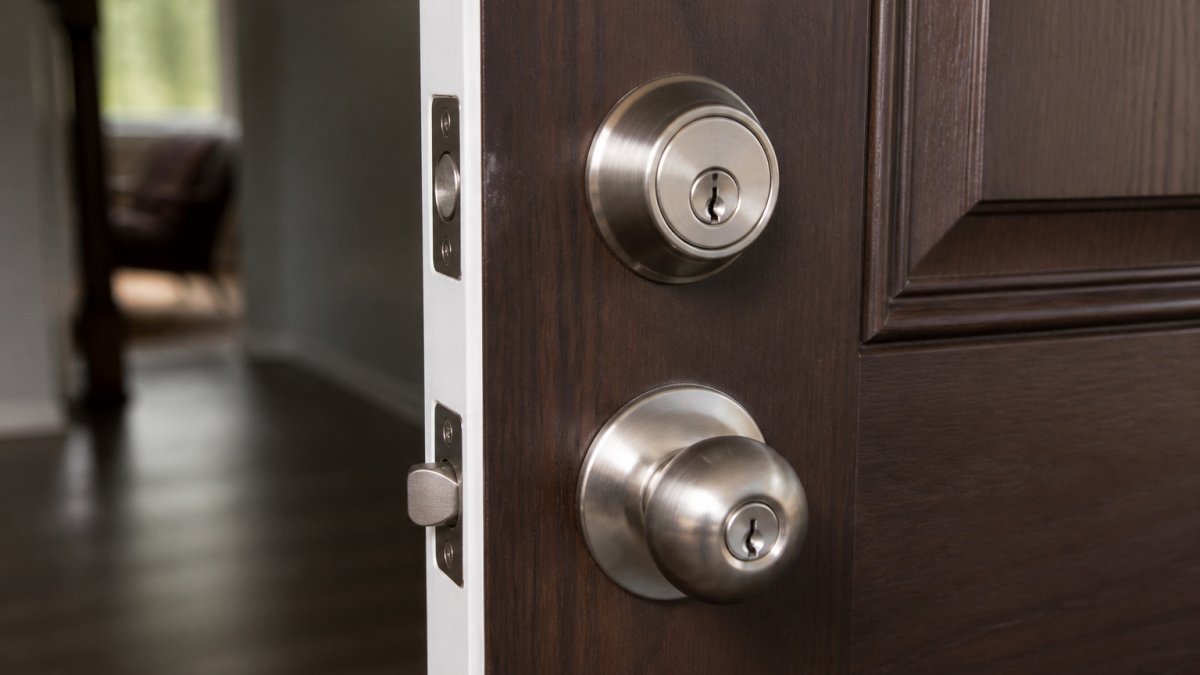
Learn how to choose a high security deadbolt for your front door. Compare grades, materials, and installation requirements to protect your home.
Table of Contents
- Understanding High Security Deadbolts and Why They Matter
- ANSI/BHMA Deadbolt Grades and Security Ratings
- Single-Cylinder vs. Double-Cylinder Deadbolt: Which Is Right for You
- Deadbolt Backset and Door Thickness: Measuring for Proper Fit
- Materials, Durability, and Resistance to Attack
- Deadbolt Strike Plate Reinforcement and Whole-Door Security
- Installation and When to Call a Professional Locksmith
- Frequently Asked Questions
Last Updated: October 18, 2026
Understanding High Security Deadbolts and Why They Matter
A high security deadbolt resists picking, drilling, bumping, and forced entry through advanced materials and internal mechanisms. We recommend them for exterior doors because they far outperform standard deadbolts.
Your front door lock is often your weakest security point: a standard deadbolt can be compromised in seconds with basic tools. A high security deadbolt changes that.
Here's what sets them apart:
- Hardened steel cylinders that resist drilling
- Complex keyways that prevent picking
- Anti-bump pins that stop bump key attacks
- Reinforced strike plates that anchor deep into the door frame
ANSI/BHMA Deadbolt Grades and Security Ratings
Deadbolts are rated by the American National Standards Institute (ANSI) and the Builders Hardware Manufacturers Association (BHMA). These grades tell you exactly how much protection you're getting.
There are three grades:
Grade 1, The highest security rating. These locks meet the most rigorous standards for pick, drill, and forced-entry resistance. They're overkill for most homes but ideal in high-crime areas or where valuables are protected.
Grade 2, The middle ground. These locks pass demanding tests for everyday threats and handle picking, drilling, and bumping well. Most homeowners choose Grade 2 because it balances protection with cost.
Grade 3, The basic option. Grade 3 locks meet minimum standards but offer less protection than higher grades. They work for interior doors or low-risk applications but shouldn't be your front door lock.
The testing behind these grades is serious. ANSI/BHMA standards for lock testing include thousands of cycles of stress testing, drilling attempts, and pick resistance evaluation. When you buy a Grade 1 or Grade 2 lock, you know it's been tested by independent labs.
For your front door, Grade 2 is the practical sweet spot; Grade 1 is stronger but often unnecessary.
Single-Cylinder vs. Double-Cylinder Deadbolt: Which Is Right for You
The difference between these two comes down to how they unlock from inside your home.
A single-cylinder deadbolt unlocks from the inside with a thumb turn and is the standard setup in most homes, convenient, accessible, and safe.
A double-cylinder deadbolt requires a key on both sides, with no interior thumb turn.
Single-cylinder locks are better for most people:
- Faster emergency exit
- Accessible to children and elderly relatives
- No risk of being locked inside
- Easier for daily use
Double-cylinder locks have one advantage, they stop someone from breaking a nearby window and reaching in to unlock the door, but with a serious safety trade-off.
Safety Considerations for Double-Cylinder Locks
Double-cylinder deadbolts are a genuine hazard in emergencies: during a fire or medical crisis, fumbling for a key wastes critical seconds. Firefighters and responders strongly discourage them.
Many jurisdictions restrict or ban them on exterior doors, so check local building codes first.
If you're worried about window break-ins, better solutions include:
- Window locks or security bars
- A single-cylinder lock with reinforced strike plates
- A security system with window sensors
- A high security deadbolt with anti-bypass features
A single-cylinder high security deadbolt with proper door reinforcement is safer and more effective than a double-cylinder lock.
Deadbolt Backset and Door Thickness: Measuring for Proper Fit
A high security deadbolt only protects you if it fits correctly, and most buying mistakes happen before installation. Before you shop, measure door thickness, backset, borehole diameter, and cross-bore height, and confirm the door edge is prepared for a deadbolt.
Door thickness. Standard exterior doors are 1.375 inches thick; solid-core, metal, and insulated doors are often 1.75 inches. Kits usually cover 1.375 to 1.75 inches, outside that range, you need a thick-door kit or different model.
Backset. Backset is the distance from the door edge to the center of the lock hole; standards are 2.375 and 2.75 inches. Measure to the center of the existing cylinder hole.
Borehole diameter. The cross-bore through the door face is typically 2.125 inches; the edge bore is typically 1 inch. If the door was prepared for a different lock style, you may need a conversion kit or a locksmith to re-bore.
Cross-bore height. The cross-bore center is usually 36 inches from the floor, but measure to confirm. For a new deadbolt above an existing knob, standard spacing is 5.5 inches center-to-center; verify against the manufacturer's template.
Door edge preparation. If the edge already has a bolt mortise, measure the faceplate height, width, and mortise depth. A replacement with a different faceplate size may need chiseling or an adapter plate.
Step-by-Step Measurement Checklist
Use this checklist before you buy:
- Door thickness: Measure the door edge in two places. Record in inches (standard 1.375, thick 1.75).
- Backset: Measure from the door edge to the center of the cylinder hole (standard 2.375 or 2.75 inches).
- Cross-bore diameter: Measure the hole through the door face (typically 2.125 inches).
- Edge-bore diameter: Measure the hole through the door edge (typically 1 inch).
- Cross-bore height: Measure from the floor to the center of the hole (commonly 36 inches).
- Strike plate location: Measure the height of the strike plate on the frame and the distance from the door stop.
- Door handing: Stand outside facing the door. If the hinges are on the left, it is a left-hand door; if on the right, right-hand.
- Door material: Solid wood, hollow core, metal, or composite, this affects screw holding and reinforcement options.
- Photo: Take a photo of the door edge and face with a tape measure in frame for reference.
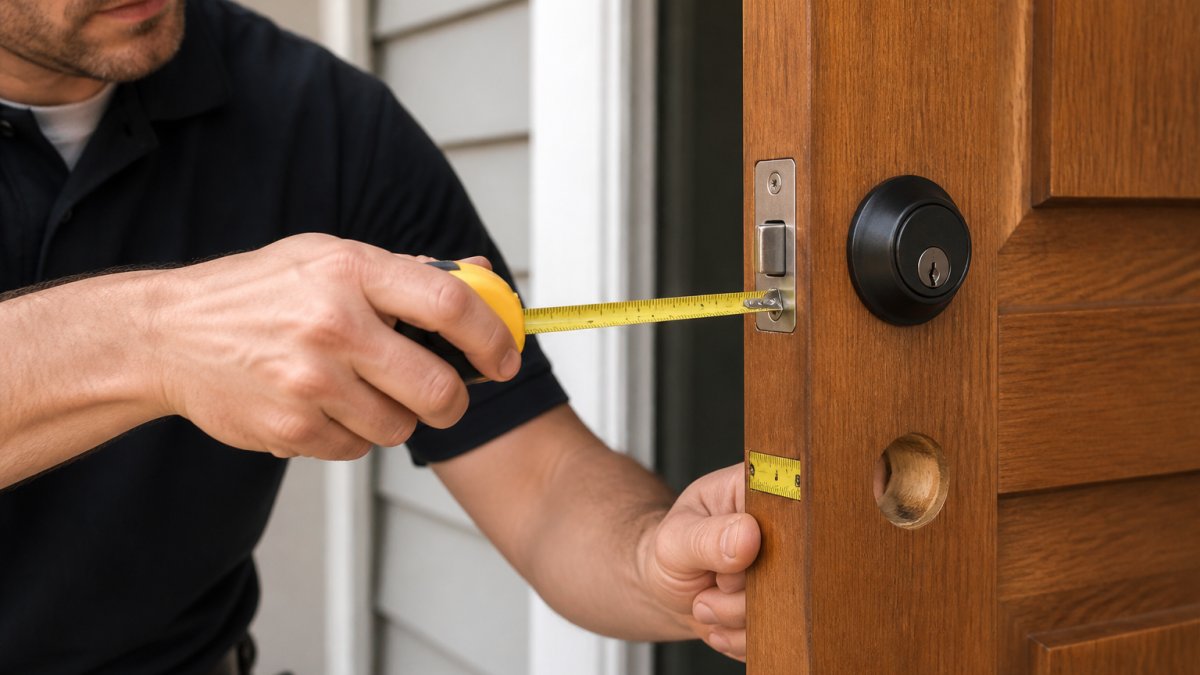
Compare your numbers to the lock's specs: a 2.375-inch-backset lock won't fit a 2.75-inch door without an adapter, and a lock rated for 1.375-inch doors may not cinch on a 1.75-inch door. Getting this right avoids returns, re-boring, and a deadbolt that binds or misses the strike plate.
Materials, Durability, and Resistance to Attack
A deadbolt's materials and internal design determine how it performs under attack, but the box label isn't enough. The ANSI/BHMA grade is the most useful buying tool because it's based on published tests, not marketing.
What ANSI/BHMA grades actually test. ANSI and BHMA publish deadbolt standards, including ANSI/BHMA A156.5 for auxiliary locks.
What the grade does not tell you. The grade is a baseline, not a ranking of every attack method.
Hardened steel cylinders and anti-drill features. A hardened steel cylinder insert or pin resists drilling better than brass alone, drill bits skate or break on it.
Anti-pick and anti-bump pins. Security pins, spool, serrated, and mushroom, catch the pick at the shear line. Anti-bump pins or a bump-resistant keyway blunt bump keys. These aren't covered by the ANSI/BHMA grade, so check manufacturer specs and independent test results.
Bolt and strike materials. A solid steel bolt with a hardened steel core resists cutting and sawing better than zinc or pot metal.
Body and finish. Solid brass or steel bodies outlast aluminum or zinc alloys, especially in humid climates. Powder-coated or plated finishes resist corrosion; a lifetime finish warranty signals confidence.
Certified versus claimed. A lock labeled "high security" without an ANSI/BHMA grade is making a marketing claim. Look for the grade on the packaging or listing and verify the model on the manufacturer's site. If a Grade 1 claim isn't backed by the standard on the spec sheet, be cautious, independent certification matters more than the word "security" on the box.
ANSI/BHMA A156.5 standard for auxiliary locks
Materials and ratings work together.
Deadbolt Strike Plate Reinforcement and Whole-Door Security
Your deadbolt is only as strong as the weakest point in your door assembly. Most break-ins defeat the strike plate and door frame, not the lock.
A standard strike plate is held by short screws that barely penetrate the frame. A kick or shoulder splinters the frame and the door swings open, the lock never gets tested.
Here's how to reinforce your door:
Upgrade your strike plate:
- Replace the standard strike plate with a heavy-duty reinforced plate
- Use 3-inch screws that go through the door frame into the structural framing behind it
- Choose a plate with a curved lip that wraps around the bolt
- Install a strike plate designed for your lock's bolt projection
Reinforce the door frame:
- Shim the strike plate so it sits flush
- Install a reinforcement kit spanning multiple studs
- Add construction adhesive alongside screws
- Consider an interior security bar or brace
Strengthen the door itself:
- Solid wood or metal resists kicks better than hollow core
- Metal door edges are harder to split
- Thicker doors (1.75 inches) resist more than standard doors
The strike plate and frame matter more than the lock. A Grade 1 deadbolt on a flimsy frame with a cheap strike plate is nearly useless; a solid Grade 2 lock on a reinforced door with a heavy-duty strike plate is genuinely hard to breach.
At Lock it All Locksmithing, we always recommend addressing the whole door assembly, not just the lock.
Installation and When to Call a Professional Locksmith
You can install a deadbolt yourself with basic tools and mechanical skill, but mistakes are common and costly.
Wrong installation means:
- The bolt misses the strike plate
- The lock binds and is hard to operate
- The lock fails prematurely
- Your security suffers
When to install it yourself:
- Replacing an existing lock with the same backset and thickness
- You have a drill, hole saw, and screwdrivers
- You're comfortable following detailed instructions
- You have time to get it right
When to call a professional:
- Installing a new lock where no hole exists
- Unusual door dimensions or materials
- You want the strike plate and frame reinforced properly
- You need smart-system integration
- You want professional-grade installation with a warranty
A professional locksmith handles the job and guarantees it works; DIY might take hours and still have problems.
Lock it All Locksmithing handles residential, commercial, and automotive security. If you're in the area and need professional installation of a high security deadbolt, we can ensure it's done right the first time.
Frequently Asked Questions
What makes a high security deadbolt different from a standard lock?
A high security deadbolt resists picking, drilling, and forced entry through hardened cylinders, reinforced strike plates, and solid materials like hardened steel. Grade 1 deadbolts meet ANSI/BHMA standards requiring 1 million cycle durability and resistance to lock manipulation. Standard locks lack these certifications and fail under attack. The cylinder design, keyway security, and bolt throw length all contribute to overall security.
Should I choose a single-cylinder or double-cylinder deadbolt?
Single-cylinder deadbolts (keyed on outside, thumb-turn inside) are standard for residential exterior doors and safer for emergency egress. Double-cylinder locks (keyed on both sides) offer more security but create fire hazards by requiring a key to exit. Most building codes restrict double-cylinder use to interior doors. Single-cylinder is the better choice for front doors unless you have specific security concerns that warrant professional consultation.
How do I measure my door to ensure the deadbolt will fit?
Measure the backset (distance from the door edge to the center of the lock hole) and door thickness. Standard backsets are 2⅜ inches or 2¾ inches; doors are typically 1⅜ inches thick. Use a measuring tape or ruler to verify both measurements before purchasing. If measurements don't match common standards, consult a locksmith, custom installation may be required.
Why is the strike plate important for deadbolt security?
The strike plate is the metal frame that receives the bolt when the door closes. A reinforced strike plate with long screws (at least 3 inches) anchored into the door frame prevents forced entry. Many high security breaches occur through weak strike plates rather than lock failure. Upgrading to a heavy-duty strike plate with hardened steel construction significantly increases whole-door security.
Choosing the right high security deadbolt protects your home and gives you peace of mind. The combination of a high-grade lock, reinforced strike plate, and proper installation creates security that actually works. Lock it All Locksmithing can guide you through selecting the right lock for your door and install it professionally. Contact us at 615-810-7304 to discuss your security needs and get a consultation on the best deadbolt solution for your home.
Why Nashville drivers choose Lock it All Locksmithing
We are a locally owned, licensed and insured mobile locksmith serving Nashville, Antioch, Brentwood, Franklin, Smyrna, La Vergne, Murfreesboro, Hermitage and Mt. Juliet. You speak directly with the technician who does the work, get an honest price before we dispatch, and we arrive in a fully stocked service vehicle so most jobs finish in a single visit — usually within 20 to 45 minutes of arriving. No towing, no dealership appointment, no surprise fees.
How the visit works
- Tell us the details: call, text or send the quote form with your vehicle's year, make and model, or a description of your lock problem.
- Get an exact price: we quote parts, cutting, programming and travel up front.
- We come to you: our mobile workshop meets you at home, work or roadside.
- Done on the spot: keys are cut, programmed and tested with you before we leave.
Areas we serve
Nashville, Antioch, Brentwood, Franklin, Smyrna, La Vergne, Murfreesboro, Hermitage and Mt. Juliet. If you're outside these areas, call 615-810-7304 to confirm whether we can help.
What our customers say
Best locksmith in town excellent service and great price !!
— Adrian Fiorito, 5 stars.Very wonderful service, strong quality, great prices, and it does not take long.
— George Yacoub, 5 stars.Great customer service - Professional - Fast Highly recommend.
— Jan Daoud, 5 stars.
Rated 5 stars across 100+ verified Google reviews. Call or text 615-810-7304 or email info@lia-locksmith.com.