Emergency Locksmith vs Roadside Assistance Cost
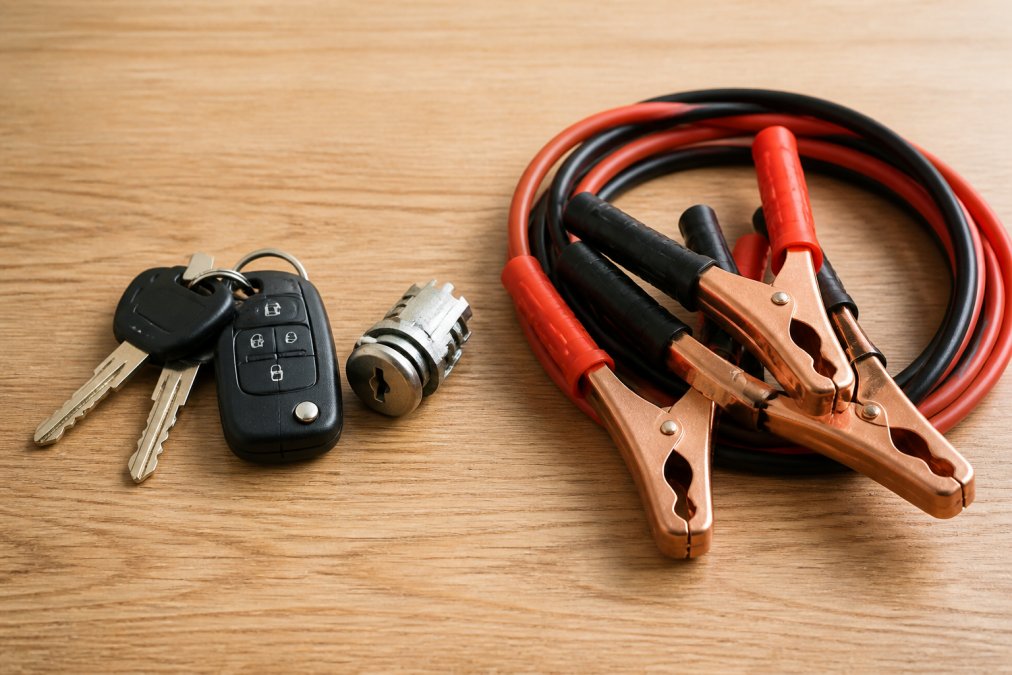
Emergency locksmith vs roadside assistance cost: compare pricing, coverage, and hidden fees to see which saves you money. Get the full cost breakdown.
Table of Contents
- Emergency Locksmith vs Roadside Assistance: Cost Comparison at a Glance
- What Is Included in Roadside Assistance Lockout Coverage?
- Car Lockout Service Cost: What Drives the Price Up or Down
- When to Call a Professional Locksmith Instead
- How to Program Car Key Fob Safely (and What It Costs)
- Insurance Coverage for Vehicle Lockouts: What You Need to Know
- Membership vs. Per-Service Pricing: Pros and Cons
- Frequently Asked Questions
Last Updated: September 13, 2026
Emergency Locksmith vs Roadside Assistance: Cost Comparison at a Glance
The core difference between emergency locksmith vs roadside assistance cost comes down to what you're paying for: roadside assistance sells predictable annual membership pricing, while a locksmith charges per service, so the roadside assistance cost stays flat while locksmith pricing varies by job. That distinction matters the moment you're standing outside a locked car, because the cheaper option upfront isn't always the cheaper option overall. This guide from Lock it All Locksmithing breaks down both models.
Roadside assistance programs bundle lockout coverage with towing, battery jump-starts, and tire changes under one annual fee. A professional locksmith, by contrast, dispatches a technician who can often do what a roadside provider cannot: cut and program a replacement key on the spot.
Here's the part most comparison guides skip. Roadside assistance is built for vehicle entry when your keys are visible inside the car, not for a lost transponder key, a broken key fob, or an ignition cylinder failure. Those jobs require automotive locksmith tools and programming equipment a standard tow truck operator doesn't carry.
| Factor | Roadside Assistance | Emergency Locksmith |
|---|---|---|
| Pricing model | Annual membership or per-use | Per-service fee |
| Best for | Keys locked inside the car | Lost, broken, or damaged keys |
| Key replacement | Rarely included | On-site cutting and programming |
| Fob programming | Typically not covered | Standard capability |
| Response model | Dispatch through a network | Direct dispatch, on-site assistance |
What Is Included in Roadside Assistance Lockout Coverage?
Roadside assistance lockout coverage is a membership benefit that dispatches a provider to open your vehicle when keys are locked inside, usually capped at a set number of calls per year. The coverage almost always stops at entry.
What most memberships include:
- Lockout service using lockout tools for vehicle entry
- Towing services to a repair facility
- Battery jump-start
- Tire change
- Fuel delivery
What they usually exclude: key replacement, transponder key programming, and key fob programming. If your key is lost rather than locked in, you've moved from a roadside problem to an automotive security problem.
Membership tiers vary in annual service calls, and some plans apply a deductible or charge extra beyond a service radius. Check the terms before you need them.
Car Lockout Service Cost: What Drives the Price Up or Down
Car lockout service cost is driven by four factors: time of day, vehicle type, key technology, and location. Understanding these helps you predict the bill.
Emergency vs. Standard Service Hours
Standard business hours pricing is the baseline. An after-hours surcharge applies to nights, weekends, and holidays, and emergency dispatch during those windows is where the gap widens fastest. A lockout at 2 p.m. Tuesday and the same lockout at 2 a.m. Sunday are not the same job from a pricing standpoint.
Geographic Price Variance
Geographic price variance is real and often overlooked. Urban areas with dense technician coverage see more competitive rates, while rural routes add travel time built into the service call fee.
When to Call a Professional Locksmith Instead
Call a professional locksmith when the key is lost, broken, or the vehicle won't recognize it. Roadside assistance handles entry; a locksmith handles the key itself. If the key is inside the vehicle, roadside can usually help. If it's gone, damaged, or the immobilizer won't accept it, you need an automotive locksmith.
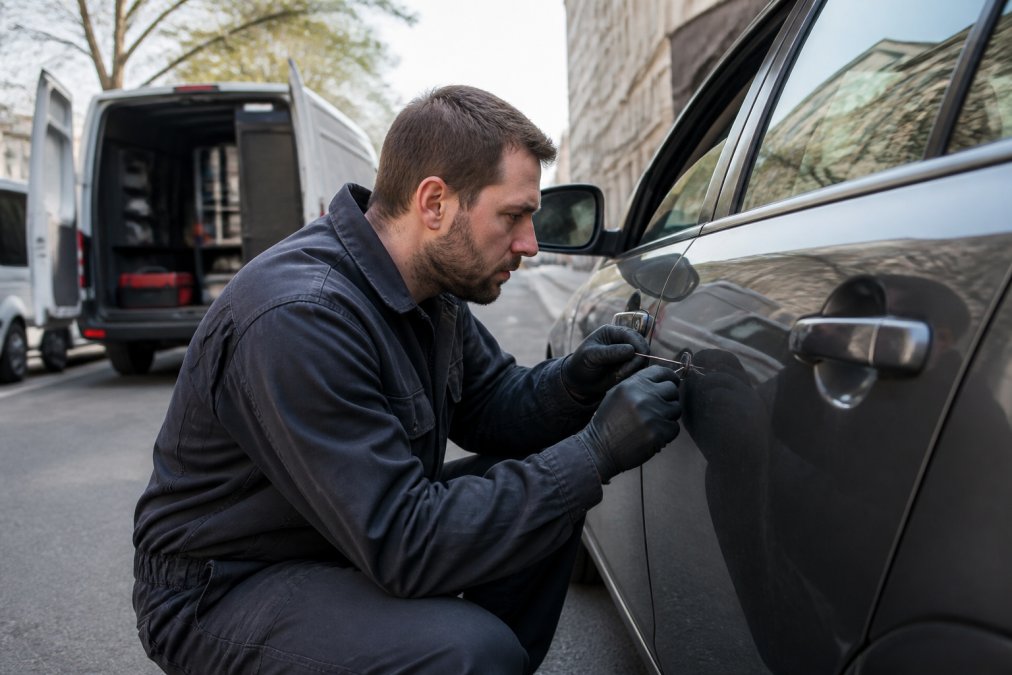
Scenarios that require a locksmith rather than roadside dispatch:
- Lost keys with no spare available
- A snapped key lodged in the ignition cylinder
- A key fob that no longer communicates with the vehicle
- A transponder key that needs cutting and programming on site
- A key broken off inside the door lock or trunk lock
- A vehicle whose anti-theft system has locked out after too many failed start attempts
Damage Risk Assessment: Why Cheap Tools Cost More
Damage risk assessment is the factor nobody prices in until it's too late. The tools a provider uses determine whether your vehicle leaves with a working door or a repair appointment.
What happens when the wrong method meets a modern door:
- Linkage and rod bending. Older vehicles and many trucks use mechanical linkage rods inside the door. A poorly placed wedge or over-forced tool bends the rod, and the interior handle stops working even after the door opens.
- Actuator damage. Power lock actuators are plastic-geared in many models. Forcing the lock cylinder or linkage can strip the gear, and the door will no longer lock or unlock electrically.
- Trim and weatherstrip damage. Wedges and air bags pressed between door and frame can crack plastic trim, tear the rubber weatherstrip, and leave a permanent gap that leaks water and wind noise.
- Paint and clear-coat scratches. Metal tools dragged across a door edge leave scratches that cost more to repaint than the lockout itself.
- Window regulator strain. Prying on glass or the window frame can crack the glass or bend the regulator track, turning a $0 lockout into a several-hundred-dollar window repair.
A trained technician uses vehicle-specific lockout tools, long-reach tools, proper wedges, and often a lockout kit keyed to the make and model, that reach the internal mechanism without forcing it. That's why the professional route is usually cheaper once you account for what can go wrong.
The Real Cost Comparison: Lockout Fee vs. Repair Bill
When you compare the two paths, compare the right numbers. A roadside lockout call is cheap on paper, but if the provider damages the actuator or trim, you pay for the lockout plus a body shop or dealership repair. A locksmith's higher upfront fee includes the training and tooling that prevents that second bill.
A common pattern reported by drivers: the roadside call saved money on the invoice and cost more at the body shop. The reverse, a locksmith charging more and still leaving damage, is rare among automotive specialists, whose business depends on repeat and referral customers.
How to Vet a Provider Before You Authorize Work
- Ask whether the provider carries make-specific lockout tools or only universal tools.
- Ask whether they are insured for damage caused during service.
- Ask for the total price before dispatch, itemized.
- Ask whether they can also cut and program a replacement key if the lockout turns into a lost-key job.
- Confirm they will not drill the lock cylinder unless no non-destructive method exists for your vehicle.
If the answer to any of those is vague, you are better off calling a dedicated automotive locksmith.
How to Program Car Key Fob Safely (and What It Costs)
Programming a car key fob safely means using the correct equipment for your vehicle's immobilizer system, not a generic aftermarket workaround. Modern vehicles pair the fob to the ECU through a coded sequence, and getting it wrong can leave the vehicle immobilized (nhtsa.gov).
The safe process:
- Confirm your vehicle's key type (transponder key, smart key, or proximity fob)
- Verify the replacement fob matches your vehicle's frequency and chip
- Use manufacturer-level programming equipment to pair the fob to the ECU
- Test all functions: lock, unlock, trunk, and remote start if equipped
- Confirm the immobilizer recognizes the new key before driving away
What it costs depends on the vehicle. Dealer programming for a smart key or fob often runs higher than an independent automotive locksmith because dealers charge diagnostic and labor at shop rates. A locksmith specializing in key fob programming typically does the same job on site for less, without the dealership wait.
If you're coming from an older vehicle with a basic cut key, expect the jump to a transponder or smart key system to cost more, because the technology is genuinely more complex.
Insurance Coverage for Vehicle Lockouts: What You Need to Know
Insurance policy coverage for vehicle lockouts depends entirely on whether you carry roadside assistance as an add-on. Standard auto liability policies do not cover lockouts (iii.org).
Your options typically break down this way:
- Roadside assistance add-on: Covers entry, towing, jump-starts, and tire changes, usually with a per-call limit
- Standalone membership: Same core benefits, purchased separately from your insurer
- Reimbursement policy: You pay the locksmith, then submit the receipt for partial reimbursement up to a cap
Insurance Claim Impact: When to Pay Out-of-Pocket
Insurance claim impact is the angle most drivers never consider. Filing a small lockout claim can count against your policy, and on some policies a claim affects your premium at renewal. For a modest lockout bill, paying out-of-pocket often preserves your claims history and costs less over the year.
Reserve claims for the expensive events: a lost smart key requiring full replacement and programming, or damage that requires bodywork.
Membership vs. Per-Service Pricing: Pros and Cons
Membership pricing wins if you want predictable costs and multiple service types under one fee. Per-service pricing wins if you rarely need help and would rather not pay annually for coverage you don't use. The decision comes down to your vehicle, driving patterns, and tolerance for surprise bills.
The Break-Even Question
A membership only pays for itself if you use it. Run the math on your habits:
- If you use one covered service per year, a membership roughly breaks even against paying out-of-pocket for that single call.
- If you use two or more covered services in a year, say a jump-start in winter and a lockout in summer, the membership is usually the better deal.
- If you go two or more years without a single call, you have paid for coverage you did not use.
Most drivers overestimate how often they'll need roadside help. A membership is insurance against inconvenience, not a guaranteed savings plan.
Hidden Fees and Limits That Change the Math
Membership pricing looks simple until you read the terms. Watch for:
- Per-call caps. Many plans cover up to a set dollar amount per service call and bill you the difference.
- Service call limits. A plan may allow a fixed number of calls per year, then charge per call after that.
- Service radius. Towing and lockout coverage often applies only within a set mileage radius of the dispatch point; beyond that, you pay per mile.
- Deductibles. Some plans apply a deductible per call, which can wipe out the savings on a cheap lockout.
- Exclusions. Key replacement, fob programming, and transponder work are almost always excluded, even on premium tiers.
- Reimbursement model. Some plans make you pay the provider upfront and reimburse you later, up to a cap, which means you still need cash on hand at the scene.
Scenario-Based Decision Guide
Match the choice to your situation:
- You drive an older vehicle with a basic cut key and rarely lock yourself out. Per-service is usually cheaper. A single lockout call is inexpensive, and you are unlikely to need towing or battery service often enough to justify an annual fee.
- You drive a modern vehicle with a smart key or push-button start. Per-service locksmith coverage matters more, because a lost or failed fob is a programming job that most memberships exclude. A membership still helps for towing and jump-starts, but do not buy it expecting it to cover your key.
- You take long road trips or drive an older high-mileage vehicle. A membership earns its keep through towing and battery coverage, with lockout as a bonus.
- You have a teen driver or a household with multiple vehicles. A family or multi-vehicle membership can cover several drivers under one fee, which changes the break-even math in your favor.
- You have lost a key before or carry only one key. Per-service locksmith pricing is the safer bet, because the scenario you are most likely to face is the one memberships exclude.
The Verdict
If your only concern is keys locked inside the car, a membership is the efficient choice. If you own a modern vehicle with a smart key or fob, or you've ever lost a key entirely, per-service locksmith pricing covers the scenario a membership can't. The strongest position for many drivers is both: a membership for towing and battery events, and a trusted automotive locksmith on standby for anything involving the key itself.
Frequently Asked Questions
Is roadside assistance cheaper than a locksmith for car lockouts?
Roadside assistance is often cheaper upfront if you already have a membership or insurance add-on. Annual plans start around $25 to $66 per year, and lockout service may be included or available for a small copay. A standalone locksmith call typically costs more per use but covers situations roadside assistance cannot, like lost keys or broken fobs. If you lock yourself out once a year, a membership can save money. If you need a new key made or programmed, a locksmith is the better value.
Does my car insurance cover emergency locksmith services?
Most standard auto insurance policies do not cover emergency locksmith services unless you have added roadside assistance coverage. Some insurers offer it as a standalone add-on or bundle it with comprehensive coverage. Check your policy documents for terms like 'emergency road service' or 'lockout reimbursement.' If covered, you may need to pay upfront and file for reimbursement, so keep your receipt. Deductibles may apply, which can make filing a claim pointless for a small lockout bill.
How much does an emergency locksmith charge for a car lockout?
Emergency locksmith pricing depends on your location, the time of day, and your vehicle type. Expect higher rates for after-hours calls, weekends, and holidays due to an after-hours surcharge. Modern vehicles with transponder keys or smart fobs cost more to service than older cars with standard locks. A service call fee may apply even if the locksmith cannot resolve the issue on-site. Always ask for a flat-rate quote before dispatch to avoid surprises.
What are the limitations of roadside assistance lockout services?
Roadside assistance lockout coverage typically handles vehicle entry only. It usually does not cover key replacement, key fob programming, or ignition repairs. If your key is lost, broken, or your fob needs reprogramming, the technician may not have the equipment or authorization to help. Service limits also apply, such as a maximum number of calls per year. Wait times can be longer during peak hours, and some rural areas have limited provider networks.
Should I call a locksmith or roadside assistance for a lost key fob?
Call a locksmith for a lost key fob. Roadside assistance can unlock your door but cannot create or program a replacement fob. A professional locksmith with automotive expertise can cut a new key, program the fob on-site, and verify it works with your vehicle's computer. This saves you a trip to the dealership and often costs less. If you only need entry and have a spare fob at home, roadside assistance is the cheaper option.
Why Nashville drivers choose Lock it All Locksmithing
We are a locally owned, licensed and insured mobile locksmith serving Nashville, Antioch, Brentwood, Franklin, Smyrna, La Vergne, Murfreesboro, Hermitage and Mt. Juliet. You speak directly with the technician who does the work, get an honest price before we dispatch, and we arrive in a fully stocked service vehicle so most jobs finish in a single visit — usually within 20 to 45 minutes of arriving. No towing, no dealership appointment, no surprise fees.
How the visit works
- Tell us the details: call, text or send the quote form with your vehicle's year, make and model, or a description of your lock problem.
- Get an exact price: we quote parts, cutting, programming and travel up front.
- We come to you: our mobile workshop meets you at home, work or roadside.
- Done on the spot: keys are cut, programmed and tested with you before we leave.
Areas we serve
Nashville, Antioch, Brentwood, Franklin, Smyrna, La Vergne, Murfreesboro, Hermitage and Mt. Juliet. If you're outside these areas, call 615-810-7304 to confirm whether we can help.
What our customers say
Best locksmith in town excellent service and great price !!
— Adrian Fiorito, 5 stars.Very wonderful service, strong quality, great prices, and it does not take long.
— George Yacoub, 5 stars.Great customer service - Professional - Fast Highly recommend.
— Jan Daoud, 5 stars.
Rated 5 stars across 100+ verified Google reviews. Call or text 615-810-7304 or email info@lia-locksmith.com.