7 Steps to Choose a Residential Master Key System
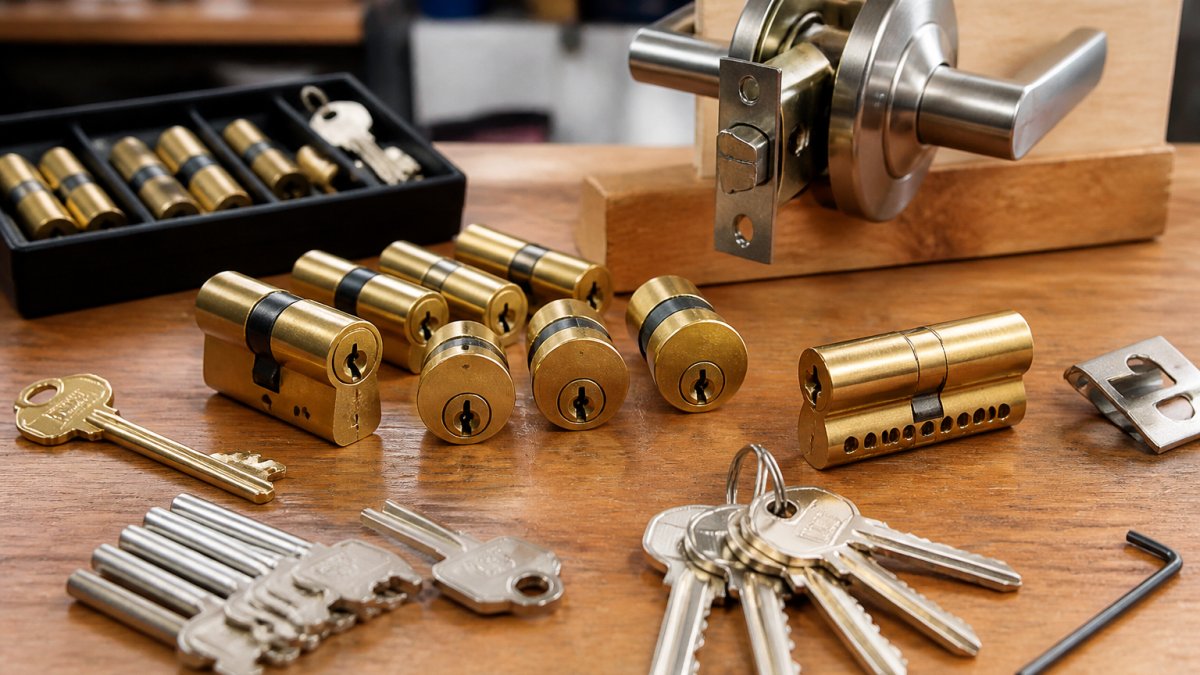
A master key system lets one key open several doors while each lock keeps its own. See the 7 steps to choose the right setup for your home.
Last Updated: October 29, 2026
Quick Summary
To choose a residential master key system, start with a door-by-door security audit that ranks each door high, medium, or low, then confirm your cylinders can be pinned for multiple access levels. Keep the key hierarchy as shallow as your household needs, and control who holds every key.
- The door audit takes about an hour and groups doors by sensitivity.
- Standard pin tumbler cylinders are master-keyable; some smart locks and integrated units are not.
- Three levels cover most homes: change key, sub-master, and master key.
- Choose keyed alike for full access; choose master keying when access must differ.
- Stamp keys Do Not Duplicate and use restricted keyways where stakes are high.
Table of Contents
- Start With a Door-by-Door Security Audit
- How Master Key Systems Work: Hierarchies Explained
- Master Key vs. Keyed Alike Locks: Which Fits Your Home
- Master Key System Security: Risks and Key Control
- Master Key System Installation: What the Job Involves
- Book a Residential Master Key Consultation
- Frequently Asked Questions
Start With a Door-by-Door Security Audit
A residential master key system only works when it matches your doors, your hardware, and how your household actually moves through the building. Start every master key plan with a walkthrough, not a catalog. Before you pick a system, know exactly what it has to open.
The audit takes about an hour. Grab a notebook and walk the property.
List Every Door and What It Protects
Write down every door that needs a key, and note what sits behind it. Group them by sensitivity.
- Entry doors: front, back, side, garage service door
- Interior security doors: home office, gun safe room, wine cellar
- Shared or rental doors: unit entries, storage cages, mailbox banks
- Low-stakes doors: shed, pool equipment, garden gate
Mark each door as high, medium, or low security. That ranking drives the whole hierarchy later. A door protecting prescription medication or business inventory deserves a different level than a garden shed.
Check Hardware Compatibility Before Anything Else
Master keying lives inside the lock cylinder. If your cylinders can't be pinned for two levels of access, no amount of planning fixes it.
Check three things on each door:
- Cylinder type: standard pin tumbler cylinders are master-keyable; some smart locks and integrated deadbolt-handle units are not
- Brand and model: cylinders from the same manufacturer family share keyways and pin kits
- Condition: a worn cylinder may need replacement before it can be pinned reliably
Older mortise locks and imported hardware often limit your options. Snap a photo of each cylinder face and the latch edge so a locksmith can confirm compatibility before quoting. Learn why hiring a professional residential locksmith protects your home security, prevents damage, and saves money.
How Master Key Systems Work: Hierarchies Explained
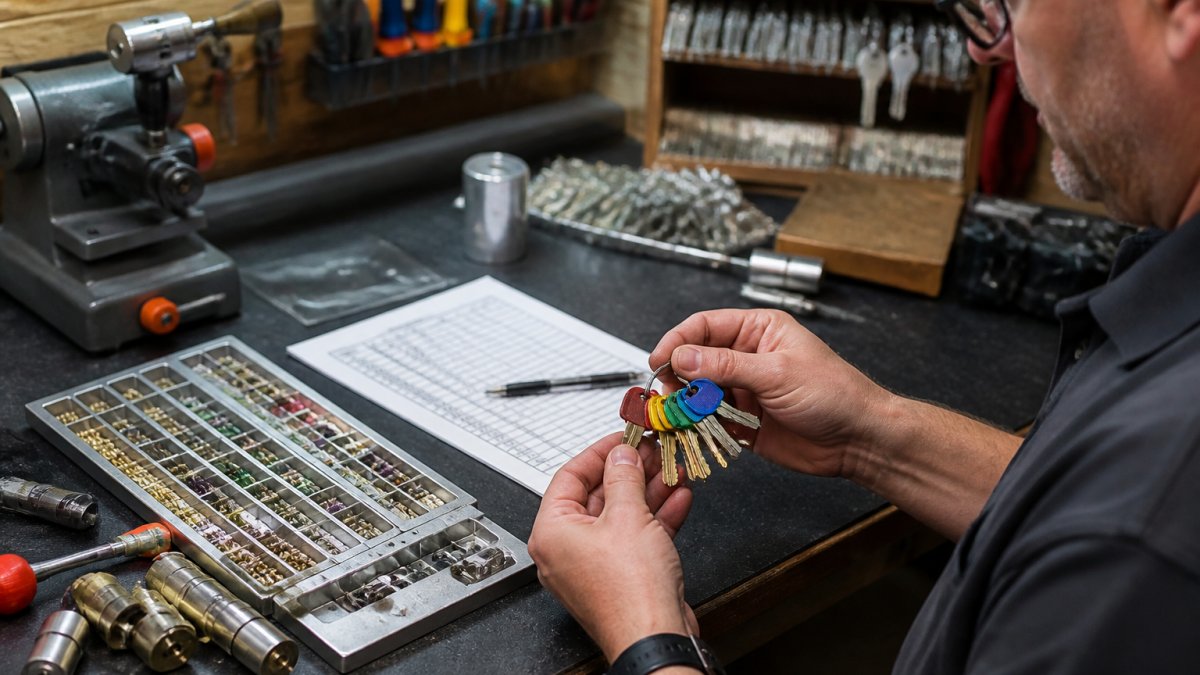
A master key system is a set of locks arranged in levels, where one key opens everything and other keys open only their assigned doors. The lock cylinder itself holds the secret: extra pin stacks let a single cylinder accept more than one key.
Change Keys, Master Keys, and Sub-Masters
Three levels cover most homes. Larger properties add more.
- Change key: opens one door only. This is what each family member or tenant carries.
- Sub-master: opens a group of doors, like one floor or one wing.
- Master key: opens every door in the system.
A typical plan: the homeowner holds the master, each resident holds a change key for the entries they use, and a cleaning service holds a sub-master for common areas only. When someone moves out, you rekey their level, not the whole house.
The trade-off is real. Every level you add makes the cylinder more complex and slightly easier to pick. Keep the hierarchy as shallow as your household needs.
Master Key vs. Keyed Alike Locks: Which Fits Your Home
Keyed alike means every lock takes the same key, with no levels at all. Master keying means one key opens everything while other keys open only some doors. The difference decides who can go where.
| Feature | Keyed Alike | Master Key System |
|---|---|---|
| Keys needed | One key for all doors | Several key levels |
| Access control | Everyone gets full access | Access limited by level |
| Best for | Couples, small homes, single-tenant rentals | Families with teens, rentals, home businesses |
| Rekeying after turnover | All locks at once | Only the affected level |
| Complexity | Low | Moderate |
Keyed alike is cheaper and simpler. Pick it when everyone in the building should have full access anyway.
Choose master keying when access needs to differ. A nanny who shouldn't enter the home office. A tenant who shouldn't open the landlord's storage room. A teenager with a curfew who doesn't need the gun safe.
Master Key System Security: Risks and Key Control
Master key system security depends less on the locks and more on who holds each key. The master key is the single point of failure. Lose it, and every door in the system is compromised at once.
Key control policies that actually work:
- Keep a written key register: who holds which level, and when it was issued
- Stamp keys "Do Not Duplicate" and use restricted keyways where the stakes are high
- Never label keys with the address
- Rekey a level immediately when a key goes missing
- Store the master key in a safe, not a kitchen drawer
Restricted keyways stop casual copying at hardware stores. They cost more and require the locksmith to cut replacements, which is the point.
A common mistake is handing the master to a contractor and never getting it back. Treat every loaned key as compromised until it's returned.
Master Key System Installation: What the Job Involves
Installation is mostly cylinder work. Installation is mostly cylinder work, which a locksmith handles by removing each cylinder, repinning it to the new hierarchy, testing every key level, and reinstalling it.
The job generally runs in stages:
- Confirm the door list and hierarchy in writing
- Pin and test cylinders at the bench
- Install and verify each key level on site
- Label and deliver keys against the register
Ongoing maintenance is light. Test each key level every few months, watch for sticky cylinders, and rekey a level when a key changes hands. For guidance on the standards behind cylinder testing, the ANSI/BHMA lock standards outline how builders grade residential hardware.
Book a Residential Master Key Consultation
The right system comes down to your doors, your people, and how much control you need.
If you'd rather not sort through cylinder types and pin kits, a professional locksmith can help you work through them. Lock it All Locksmithing provides residential locksmith services across Tennessee. Call 615-810-7304 to schedule a consultation.
Frequently Asked Questions
Can one key open multiple locks while each lock still has its own key?
Yes. That is the core function of a master key system. Each lock is pinned so two keys work: the individual change key, which opens only that door, and the master key, which opens every door in the group. A sub-master can sit between them for wings or outbuildings. The locksmith sets this up during pinning, so the cylinders look ordinary from the outside. The trade-off is that anyone holding the master key reaches every door it covers, so key control matters as much as the hardware.
How do I choose a master key system for a home?
Start with a door-by-door audit: count exterior doors, note which ones are used daily, and check that each has a compatible cylinder. Decide how many levels you need, usually a master plus change keys, with a sub-master only if the property has a detached garage, shop, or rental unit. Then plan key control: who holds the master, where spare keys live, and how you will rekey after a loss. A locksmith can confirm hardware compatibility and pin the cylinders to your hierarchy.
Is a master key system less secure than separate keys?
It can be, if the master key is poorly controlled. A single lost master opens every door in the system, while a lost change key exposes one door. Reduce the risk by limiting master keys to one or two people, keeping a written record of who holds each key, and choosing restricted keyways that prevent unauthorized duplication. Many homeowners also keep high-value areas such as a gun safe room on a separate cylinder outside the master hierarchy.
What should I consider before installing a residential master key system?
Confirm that your existing locks accept the cylinders the system needs, since older or mismatched hardware may require replacement. Decide the hierarchy before any pinning begins, because changing it later means rekeying. Ask the locksmith for a written key schedule showing which key opens which door, and keep it in a safe place. Finally, plan for growth: if you may add a garage or outbuilding later, tell the locksmith so the original pinning leaves room for it.
Most homeowners start this project after a move, a breakup, or a lost key, and that urgency is exactly when mistakes happen. A short consultation removes the guesswork. Get started with Lock it All Locksmithing and get a key plan built around your doors, not a generic kit.

Why Nashville drivers choose Lock it All Locksmithing
We are a locally owned, licensed and insured mobile locksmith serving Nashville, Antioch, Brentwood, Franklin, Smyrna, La Vergne, Murfreesboro, Hermitage and Mt. Juliet. You speak directly with the technician who does the work, get an honest price before we dispatch, and we arrive in a fully stocked service vehicle so most jobs finish in a single visit — usually within 20 to 45 minutes of arriving. No towing, no dealership appointment, no surprise fees.
How the visit works
- Tell us the details: call, text or send the quote form with your vehicle's year, make and model, or a description of your lock problem.
- Get an exact price: we quote parts, cutting, programming and travel up front.
- We come to you: our mobile workshop meets you at home, work or roadside.
- Done on the spot: keys are cut, programmed and tested with you before we leave.
Areas we serve
Nashville, Antioch, Brentwood, Franklin, Smyrna, La Vergne, Murfreesboro, Hermitage and Mt. Juliet. If you're outside these areas, call 615-810-7304 to confirm whether we can help.
What our customers say
Best locksmith in town excellent service and great price !!
— Adrian Fiorito, 5 stars.Very wonderful service, strong quality, great prices, and it does not take long.
— George Yacoub, 5 stars.Great customer service - Professional - Fast Highly recommend.
— Jan Daoud, 5 stars.
Rated 5 stars across 100+ verified Google reviews. Call or text 615-810-7304 or email info@lia-locksmith.com.