Best Master Key Systems for Large Homes
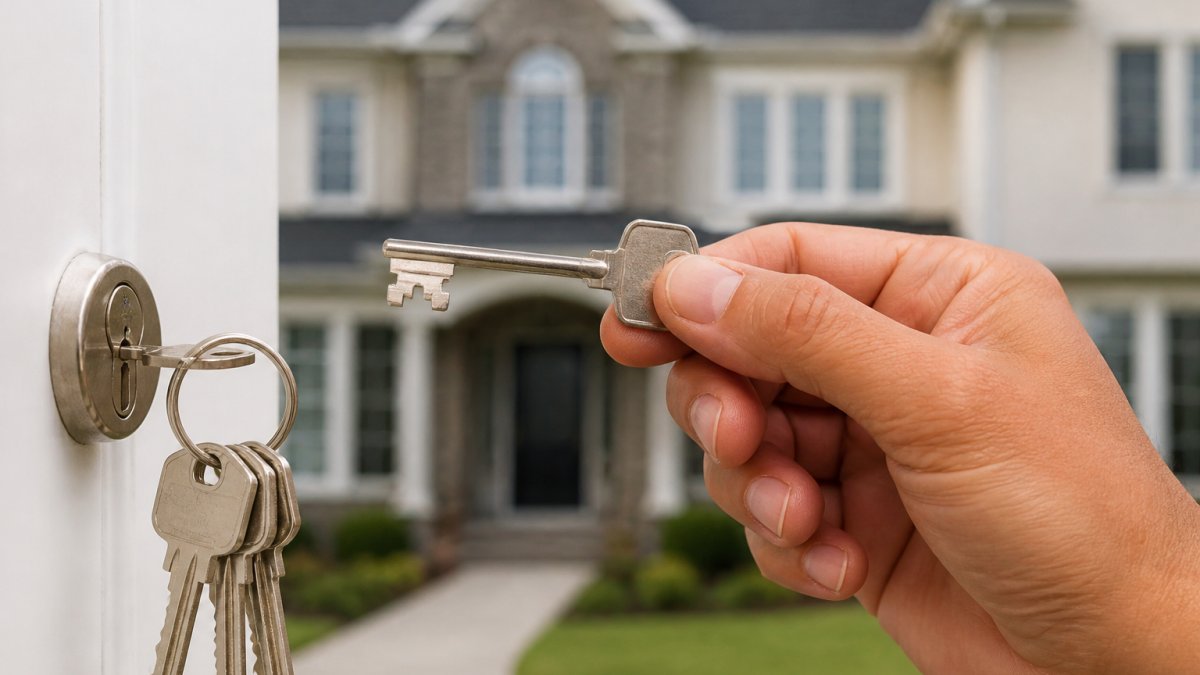
Master key systems let one key open every door on a large property. Compare mechanical and electronic options, costs, and hierarchy planning.
Last Updated: November 1, 2026
Quick Summary
The best master key systems for large homes use a documented key hierarchy: a grand master key opens every lock, submaster keys open zones like the guest wing or outbuildings, and change keys open a single door. Plan the hierarchy first, then choose mechanical or electronic hardware per door.
- A grand master key opens every lock in the home, including outbuildings and gates.
- Submaster keys control one change-key group, such as the guest wing or outbuildings.
- A key chart records which key opens which door so the system stays manageable.
- Mechanical master keying suits perimeter doors; electronic access suits rental units and contractor entrances.
- Rekeying repins existing cylinders so one key operates every door in a group.
Table of Contents
- What a Master Key System Does for a Large Home
- Master Key System Hierarchy: Grand Master, Submaster, and Change Keys
- Master Key System Pros and Cons for Residential Properties
- Mechanical vs Electronic Systems: Which Fits a Large Home
- How to Rekey Locks to One Key and Plan Whole-Home Access
- Schedule a Whole-Home Keying Plan with Lock it All Locksmithing
- Frequently Asked Questions
What a Master Key System Does for a Large Home
Master key systems are keyed access setups where one key opens every lock in a group while individual keys open only their own door. For a large home, it means one key for the front door, the garage entry, the pool house, and the guest wing, with separate keys for the people who should not reach everything. Lock it All Locksmithing designs these systems for residential properties.
The appeal is simple: fewer keys, clearer control. The risk is equally simple. A badly planned system collapses the moment one key goes missing, because whoever holds it can open more than you intended.
Master Key System Hierarchy: Grand Master, Submaster, and Change Keys
Every master key system rests on a key hierarchy, a ranked structure of keys where each level opens a defined set of locks. The grand master key opens every lock in the home. Submaster keys open a group, such as the guest wing or the outbuildings. Change keys open a single lock and nothing else.
A change-key group is the set of locks that one submaster controls. A key chart records which key opens which door so the system stays manageable years later.
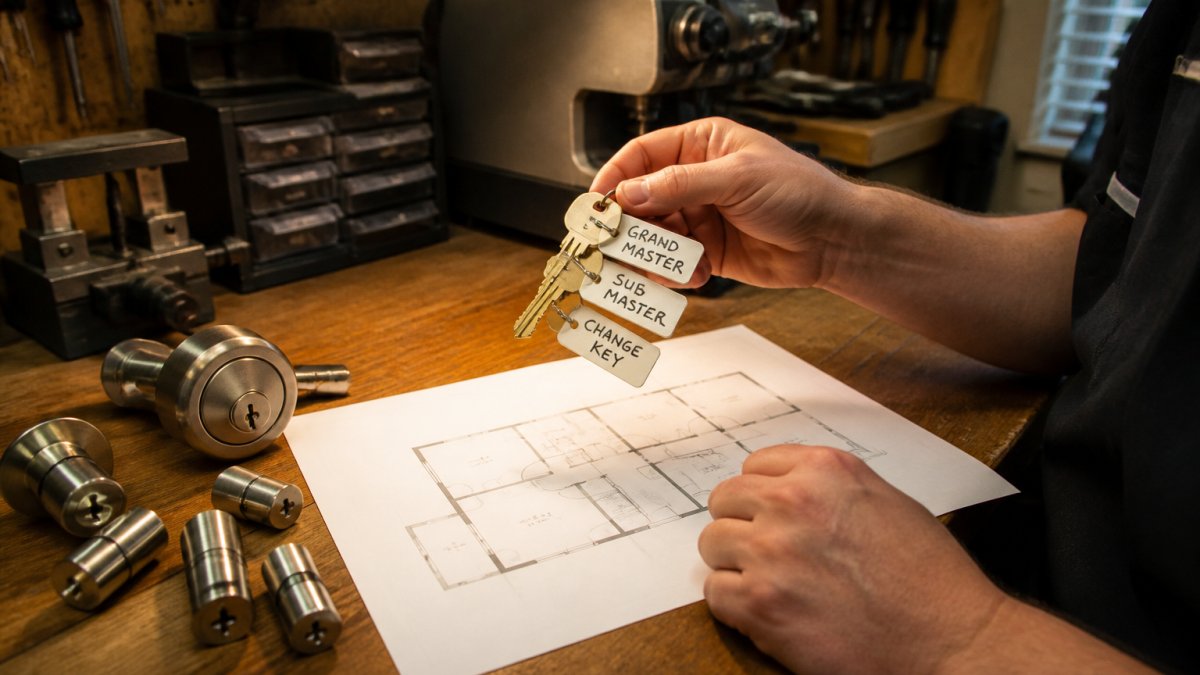
Here is how each level of the key hierarchy is defined.
| Key level | What it opens | Note |
|---|---|---|
| Grand master key | Every lock in the home | A lost grand master is a property-wide event |
| Submaster keys | A group, such as guest wing or outbuildings | Controls one change-key group |
| Change keys | A single lock and nothing else | Issued where access must stay limited |
| Key chart | Records which key opens which door | Keeps the system manageable years later |
Master Key System Pros and Cons for Residential Properties
The master key system pros and cons for a large home come down to convenience versus exposure, but the trade-off plays out differently in a 5,000-square-foot house with outbuildings than in a two-bedroom apartment. Here is the honest, property-specific breakdown.
Pros that matter in a large home:
- One key covers the daily circuit, front door, garage entry, kitchen door, pool house, so family members stop carrying a janitor's ring.
- You can isolate zones cleanly: a submaster for the guest wing, a change key for the wine room, a staff key that opens the service entrance and laundry but nothing else.
- Lost-key response is faster and cheaper because the key chart tells you exactly which doors that key reached, so you rekey only the affected group instead of the whole house.
- A documented hierarchy scales with the household, new nanny, new tenant in the carriage house, new college student home for the summer, without re-cutting every key in the house.
Cons that hit large homes hardest:
- A compromised grand master exposes every door on the property, including outbuildings and gates that may be far from the house and rarely checked.
- Poor keying design can produce cross-keying or 'ghost' keys that open doors they were never meant to reach, a security failure disguised as convenience. This is more likely when a system is expanded piecemeal over years rather than planned as a whole.
- Retrofitting mismatched or older locks costs more than starting fresh, because each cylinder must be repinned to a common keyway family and tested at every hierarchy level.
- Key control depends on people. A restricted keyway and authorization rules only work if the household actually follows them; one trip to a hardware store with an unrestricted key undoes the plan.
Cost is the sticking point for most homeowners. Rekeying and keying-plan work depend on lock type, cylinder count, door count, and service fees, so pricing varies by property. For current prices or a quote, contact Lock it All Locksmithing at 615-810-7304.
The large-home takeaway: the pros scale with the property, but so do the cons. A system that is planned once, documented, and tested at every level captures the convenience without inheriting the exposure.
Mechanical vs Electronic Systems: Which Fits a Large Home
Most comparisons of mechanical and electronic access stop at 'batteries versus no batteries.' For a large home, the real decision turns on power dependence, audit trails, emergency entry, retrofit constraints, and how far the doors are from the house. Here is the trade-off that actually matters on a multi-building property.
Mechanical master keying, a traditional pin tumbler lock with a restricted keyway, patented keys, and key authorization rules, is a common option for large homes. There are no batteries, no app, no network, and no firmware to update.
Electronic smart locks and access control offer flexibility. You can revoke a code in seconds, issue temporary access to a contractor for a two-hour window, and log every entry. For a large property with outbuildings, a rental unit, a pool house, or frequent visitors, that audit trail and remote revocation are worth real money.
Retrofit and compatibility constraints decide more projects than brand preference. Before choosing, check the existing lock brands, cylinder formats (standard, rim, mortise, euro profile), door thickness, and whether the door is prepped for a deadbolt or a mortise lock.
Emergency entry and life-safety deserve a line of their own. Every electronic lock needs a documented mechanical override or keyed bypass, and every mechanical system needs a plan for what happens when the grand master is lost. Large homes with staff, guests, or rental occupants should write both plans down.
Our recommendation for a large home: mechanical master keying on perimeter and structural doors, front entry, garage, outbuildings, gates, and electronic access on the doors you need to manage remotely or audit, such as a rental unit, a contractor entrance, or a pool house. Hybrid setups cover most large homes without overbuilding either side.
How to Rekey Locks to One Key and Plan Whole-Home Access
How to rekey locks to one key: a locksmith repins each lock cylinder so the same cut key operates every door in the group, then issues separate change keys where access must stay limited. Rekeying reuses your existing hardware; lock replacement is only needed when the hardware itself is worn or incompatible.
Whole-home access planning starts with a walkthrough. Map every exterior door, outbuilding, gate, and safe room. Decide who needs which level: the family master, a submaster for the guest wing, change keys for storage. Then choose cylinders that share a keyway family so the keying plan holds together.
This is where a professional changes the outcome. Learn why hiring a professional residential locksmith protects your home security and prevents damage. A residential locksmith can verify each cylinder, test every key level, and document the key schedule so future changes do not unravel the system.
Schedule a Whole-Home Keying Plan with Lock it All Locksmithing
A large home deserves a locking plan built around how your household actually moves, not a drawer full of mismatched keys. Lock it All Locksmithing provides residential locksmith services across Tennessee to help keep your home secure and accessible.
Call 615-810-7304 to schedule a whole-home keying assessment.
Frequently Asked Questions
What is the best master key system for a large home?
There is no single best system, because the right choice depends on door count, who needs access, and whether you want mechanical or electronic control. For most large homes, a mechanical master key system built on restricted, patented keyways gives strong key control at a lower cost. Homes with many outbuildings or short-term rental space often benefit from electronic locks with time-based permissions. A locksmith should map your doors and access levels before recommending hardware.
How does a residential master key system hierarchy work?
A master key system hierarchy has three typical levels. The grand master key opens every lock on the property. A submaster key opens one change-key group, such as the main house or the pool house. A change key opens only its own lock. This structure lets family members, staff, and contractors hold different access levels without carrying a ring of separate keys. The key chart that documents the hierarchy is as important as the locks themselves.
Can existing locks be rekeyed to work with a master key?
Many existing locks can be rekeyed to accept a master key, but only if the cylinders support the pin configurations the hierarchy requires. Standard builder-grade cylinders often cannot handle a multi-level system, so they get replaced with cylinders designed for master keying. A locksmith will inspect your current hardware first. Rekeying usually costs less than full lock replacement and keeps your existing door hardware.
Are master key systems secure for residential use?
They are secure when the system is designed well and keys are controlled. The main risk is a lost or copied master key, which opens everything. Restricted keyways and patented keys limit unauthorized duplication because blanks are available only through the locksmith who owns the keyway. Pair that with a documented key schedule, and a master key system is as secure as the key control behind it.
If your keys have outgrown your keyring, that is a sign your access plan needs a rebuild. Lock it All Locksmithing brings residential locksmith expertise, precise cylinder work, and clear documentation to every job. Get started with Lock it All Locksmithing and put one key in charge of your whole property.

Why Nashville drivers choose Lock it All Locksmithing
We are a locally owned, licensed and insured mobile locksmith serving Nashville, Antioch, Brentwood, Franklin, Smyrna, La Vergne, Murfreesboro, Hermitage and Mt. Juliet. You speak directly with the technician who does the work, get an honest price before we dispatch, and we arrive in a fully stocked service vehicle so most jobs finish in a single visit — usually within 20 to 45 minutes of arriving. No towing, no dealership appointment, no surprise fees.
How the visit works
- Tell us the details: call, text or send the quote form with your vehicle's year, make and model, or a description of your lock problem.
- Get an exact price: we quote parts, cutting, programming and travel up front.
- We come to you: our mobile workshop meets you at home, work or roadside.
- Done on the spot: keys are cut, programmed and tested with you before we leave.
Areas we serve
Nashville, Antioch, Brentwood, Franklin, Smyrna, La Vergne, Murfreesboro, Hermitage and Mt. Juliet. If you're outside these areas, call 615-810-7304 to confirm whether we can help.
What our customers say
Best locksmith in town excellent service and great price !!
— Adrian Fiorito, 5 stars.Very wonderful service, strong quality, great prices, and it does not take long.
— George Yacoub, 5 stars.Great customer service - Professional - Fast Highly recommend.
— Jan Daoud, 5 stars.
Rated 5 stars across 100+ verified Google reviews. Call or text 615-810-7304 or email info@lia-locksmith.com.