Benefits of Master Key Systems for Homeowners
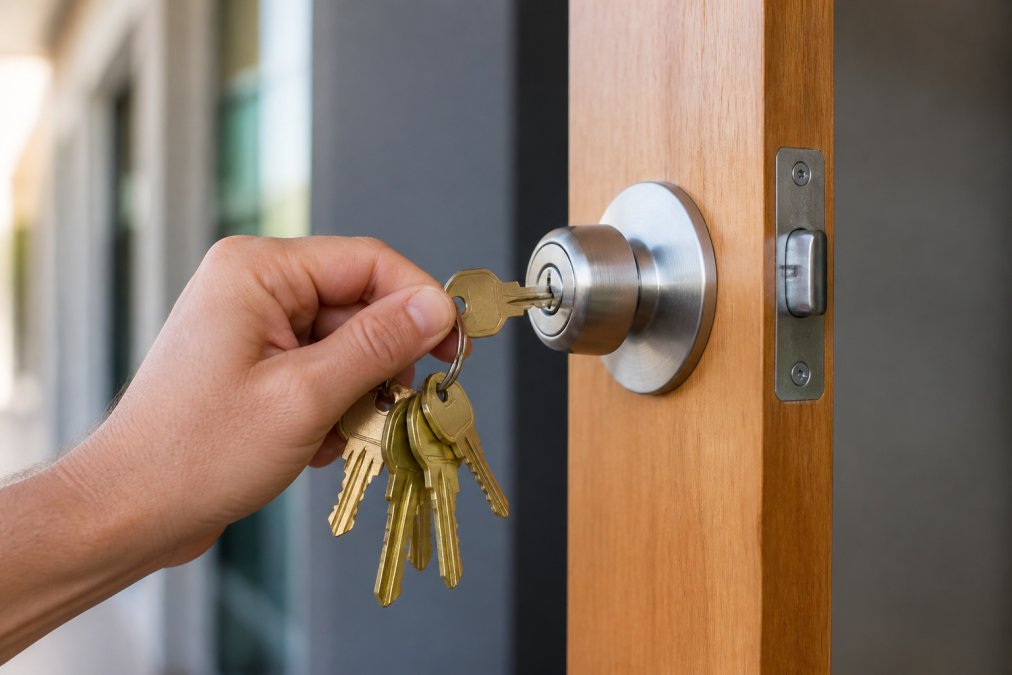
Discover the benefits of master key systems for homeowners, from key management to security. Learn how they work and what to expect. Get started today.
Table of Contents
- How Master Key Systems Work
- The Benefits of Master Key Systems for Homeowners
- Pros and Cons of Master Key Systems
- Residential Master Key System Cost
- Key Hierarchy Planning for Your Home
- Smart Lock Integration and Emergency Access Protocols
- Frequently Asked Questions
Last Updated: September 16, 2026
How Master Key Systems Work
A master key system is a coordinated lock setup where one key opens several locks while individual keys open only their assigned door. A master key system is a coordinated lock setup where one key opens several locks while individual keys open only their assigned door.
The core idea: different keys carry different access levels, and the hardware recognizes that difference. Below, we'll cover how that hierarchy is engineered and where a master key setup makes sense for a house.
The Pin Tumbler and Key Hierarchy Explained
Every lock in a master key system uses a pin tumbler mechanism, the same design found in most residential cylinder locks. Spring-loaded pins sit at specific heights inside the cylinder; a key's cuts push each pin into position so the cylinder can turn.
The trick with master keying is that the pins accept more than one key. A single cylinder can be pinned so two keys with different bitting patterns both align the pins. That's what lets a master key and a change key open the same door while a different change key opens only one.

Master Keys, Change Keys, and Grand Master Keys
A change key opens one lock only. A master key opens every lock in its group. A grand master key sits above both and opens every group in a larger property, useful for multi-unit homes or a main house with a detached garage and guest suite.
The full set of access levels is a key hierarchy, documented in a keying chart mapping every lock to every key that opens it.
The Benefits of Master Key Systems for Homeowners
The biggest benefit of master key systems for homeowners is fewer keys to carry and tighter control over who opens what. Instead of a jangling ring with a key for every door, you carry one key and hand out limited keys to family, cleaners, or a dog walker.
Convenience and Time Savings
One key for the whole house removes the daily friction of a crowded ring. It also simplifies life for anyone needing regular access: a housekeeper gets a change key for the service entrance, a nanny one for the side door, and neither can open your home office or safe room.
Key Management and Organization
Key management is where most homeowners struggle, and where a master key setup earns its keep. A key control policy backed by a keying chart tells you how many keys exist, who holds each, and what each opens.
Common practices that keep a system organized:
- Number and log every key issued, with the holder's name and date
- Store the keying chart somewhere secure and separate from the keys
- Use a restricted keyway so blanks can't be copied at a hardware store
- Rekey or replace a lock the moment a key goes missing
Pros and Cons of Master Key Systems
The pros and cons of master key systems come down to one trade-off: you gain convenience and centralized control, but a single lost master key compromises every lock in the group. Understanding that before you commit separates a system that works from one you regret.
Pros:
- One key opens multiple doors, reducing daily hassle
- Clear access privileges for family, staff, and service providers
- Easier key management with a documented hierarchy
- Simple to expand when you add a door or a new unit
Cons:
- A lost master key exposes every lock in its group
- Restricted systems cost more upfront and limit where you can get keys cut
- Poorly planned hierarchies get expensive to fix later
- Older or cheap locks may not accept master keying cleanly
| Factor | Master Key System | Individual Locks |
|---|---|---|
| Keys carried | One per access level | One per door |
| Lost key risk | Affects whole group | Affects one door |
| Setup cost | Higher upfront | Lower upfront |
| Management effort | Centralized, chart-based | Scattered |
| Best for | Multi-door homes, rentals | Single-door simplicity |
Residential Master Key System Cost
| Tier | Typical Scope | What Drives the Price |
|---|---|---|
| Entry-level | 3-5 doors, existing builder-grade locks rekeyed | Labor to repin cylinders, new keys cut |
| Mid-range | 5-10 doors, some new cylinders, restricted keyway | New hardware, restricted blanks, keying chart |
| High-security | Whole-home, multi-unit, or grand master hierarchy | High-security cylinders, patent-protected keyways, full documentation |
Because these variables swing widely, get a quote based on your actual doors and hardware. For current pricing, reach out directly at 615-810-7304.
Home Insurance Implications
Does a master key system affect your homeowners insurance? It can, but indirectly. Most standard HO-3 policies don't offer a specific discount for master keying, because the system doesn't reduce fire, weather, or liability risk the way a monitored alarm or impact-resistant roof might.
Where it can matter is in two places:
- Security-related discounts. Some carriers offer premium credits for documented access-control measures. A restricted keyway system with a written keying chart and logged key issuance can support a claim that your home has controlled access, similar to how a deadbolt upgrade or smart lock may qualify. Ask your agent whether your carrier recognizes it.
- Claims and liability. If a key is lost and a theft occurs, an insurer may ask how access was controlled. A documented key hierarchy and a rekey record show you took reasonable steps, which can help during a claim review.
Key Hierarchy Planning for Your Home
Planning a key hierarchy before any lock is pinned is the step most homeowners skip, and it determines whether the system stays manageable. Decide your access levels first, then let the hardware follow.
A practical way to plan it:
- List every door and opening you want on the system
- Group doors by who should access them (family, staff, guests)
- Assign an access level to each group
- Decide where a master or grand master key is needed
- Have a locksmith build the keying chart from that plan.
Smart Lock Integration and Emergency Access Protocols
Modern smart locks and mechanical master key systems can coexist, and for many homes that's the best of both: a mechanical key as physical backup, plus app-based access control for daily entry and key tracking. Two gaps are worth planning for in detail.
Smart Lock Integration
Some electronic locks support multiple user codes and app-based permissions that mirror a mechanical hierarchy: a permanent code for a family member, a recurring schedule code for a housekeeper, a one-time guest code for a visitor, the same scoping a change key provides, just digital.
- Which system is authoritative for each door, mechanical, digital, or both
- Whether the smart lock has a physical keyway at all; many do, and that keyway can be pinned into your mechanical hierarchy
- What happens on power or connectivity failure, battery dead, Wi-Fi down, hub offline
Emergency Access Protocols
A master key system concentrates risk, so build a plan before you need it. The failure modes:
- Lost master key, treat it as a full-group compromise. Every lock the master opens is now suspect. Rekey the group and update the keying chart rather than hope the key stays lost.
- Lost change key, scope the damage. Only the locks that key opens are affected, so you can rekey just that group.
- Lock failure or dead battery, if a smart lock dies, the mechanical keyway is your entry. If a mechanical lock fails, you need a locksmith or a secondary entry point.
- Lockout with no key, know your locksmith's after-hours process.
A practical emergency plan:
- Keep one sealed master key off-site with a trusted person, clearly labeled and stored separately from the keying chart.
- Document an emergency contact and your locksmith's after-hours number.
- Record which locks each key opens so a rekey can be scoped quickly.
- Decide in advance whether a lost master triggers a full rekey or a partial one.
- Review the plan whenever you add a door, a tenant, or a new key holder.
Frequently Asked Questions
What are the disadvantages of master key locks?
The main disadvantage is that a lost master key compromises every lock in the system. There is also the risk of unauthorized duplication if you do not use a restricted keyway. Additionally, if the master key is stolen, you will need to rekey the entire home, which costs more than rekeying a single lock. For homeowners, the convenience usually outweighs these risks when proper key control is maintained.
Is it legal for a homeowner to install a master key system?
Yes, it is legal for a homeowner to install a master key system in a single-family home. There are no federal laws prohibiting it. However, if you live in a multi-unit building or a homeowners association, check your HOA rules or local ordinances first. For most detached homes, you can work with a licensed locksmith to design and install a system without any legal issues.
How does a master key system differ from a standard keyed-alike system?
A keyed-alike system uses one key for multiple locks, but there is no hierarchy. A master key system adds a tiered structure: a master key opens all doors, while change keys open only specific doors. This means you can give a housekeeper a key that opens the kitchen and laundry room but not your bedroom. Keyed-alike offers convenience; master keying offers convenience plus access control.
What security risks should homeowners consider before installing a master key system?
The biggest risk is a lost or stolen master key. If it falls into the wrong hands, every lock in the system is compromised. You should also avoid cheap, non-restricted key blanks that can be duplicated at any hardware store. Work with a locksmith who uses restricted keyways and maintains a keying chart. That way, you control who gets keys and can audit key inventory.
Why Nashville drivers choose Lock it All Locksmithing
We are a locally owned, licensed and insured mobile locksmith serving Nashville, Antioch, Brentwood, Franklin, Smyrna, La Vergne, Murfreesboro, Hermitage and Mt. Juliet. You speak directly with the technician who does the work, get an honest price before we dispatch, and we arrive in a fully stocked service vehicle so most jobs finish in a single visit — usually within 20 to 45 minutes of arriving. No towing, no dealership appointment, no surprise fees.
How the visit works
- Tell us the details: call, text or send the quote form with your vehicle's year, make and model, or a description of your lock problem.
- Get an exact price: we quote parts, cutting, programming and travel up front.
- We come to you: our mobile workshop meets you at home, work or roadside.
- Done on the spot: keys are cut, programmed and tested with you before we leave.
Areas we serve
Nashville, Antioch, Brentwood, Franklin, Smyrna, La Vergne, Murfreesboro, Hermitage and Mt. Juliet. If you're outside these areas, call 615-810-7304 to confirm whether we can help.
What our customers say
Best locksmith in town excellent service and great price !!
— Adrian Fiorito, 5 stars.Very wonderful service, strong quality, great prices, and it does not take long.
— George Yacoub, 5 stars.Great customer service - Professional - Fast Highly recommend.
— Jan Daoud, 5 stars.
Rated 5 stars across 100+ verified Google reviews. Call or text 615-810-7304 or email info@lia-locksmith.com.